
True Ethnic Origins of Nigeria’s Past Presidents and Heads of State
200 views
Skip to first unread message

Farooq A. Kperogi
Feb 15, 2020, 6:15:13 PM2/15/20
to USAAfrica Dialogue
Saturday, February 15, 2020
True Ethnic Origins of Nigeria’s Past Presidents and Heads of State
By Farooq A. Kperogi, Ph.D.
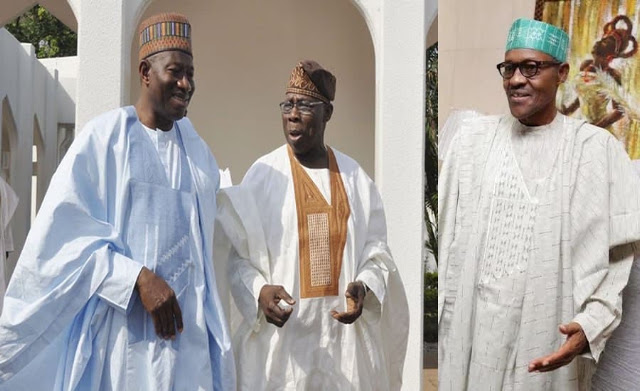

Twitter: @farooqkperogi
Nigeria’s education system robs Nigerians of basic knowledge about their country and its people. That’s why although ethnic identity is a central part of Nigeria’s national imagination, most Nigerians know awfully little about the ethnic identities of their rulers.
In the absence of accurate, official information, most people have resorted to assumptions, guesswork, and outright falsehoods on the ethnic origins of their rulers—and on most things about the country, leading me to once characterize Nigeria as a “know-nothing nation” in my August 10, 2013 column.
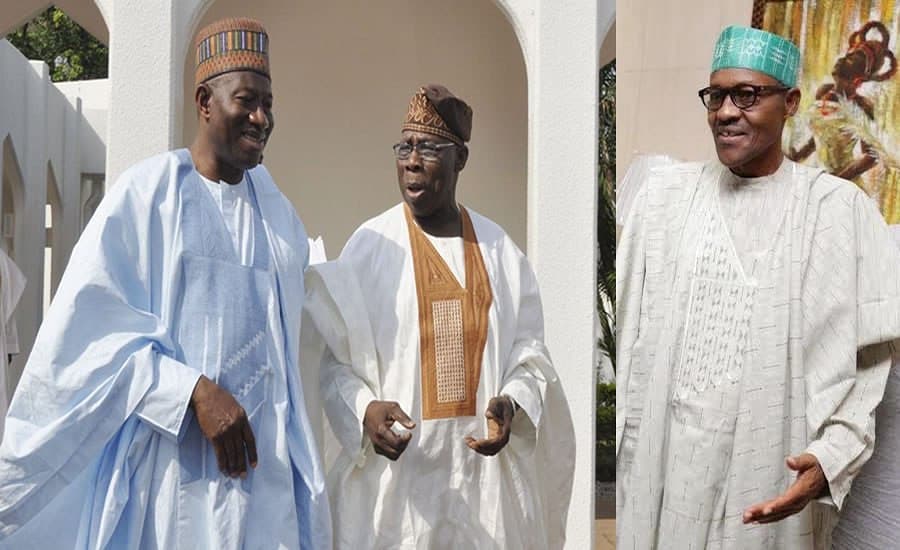
I have chosen to dedicate today’s column to providing accurate, verifiable information about the ethnic identities of Nigeria’s past presidents and heads of state.
1. Abubakar Tafawa Balewa. Several people, particularly in the South, have assigned a Hausa, Fulani, or “Hausa-Fulani” ethnic identity to Nigeria’s first Prime Minister. But he was neither ethnically Hausa nor Fulani. Of course, if he was neither Hausa nor Fulani, he couldn’t conceivably be “Hausa-Fulani.”
He came from a small ethnic minority group called the Gere, whom Hausa people call Bagere or Bageri (singular) and Gerawa (plural). Gere is not mutually intelligible with Hausa or Fulfulde. It’s a wholly separate ethnic group that traces distant roots from what is now Chad.
As I pointed out in my January 23, 2016 column titled “Gere:Sir Abubakar Tafawa Balewa’s Real Ethnic Group,” a 1905 Journal of the Royal African Society article by a G. Merrick titled “Languages in Northern Nigeria” said the Gere are “closely related to the Bolewa [a minority language spoken mostly in Fika Emirate in Yobe State] and living to the west of them.”
2. Thomas Aguiyi-Ironsi: There is no question that Aguiyi-Ironsi, who became Head of State after Tafawa Balewa’s assassination, was Igbo from Umuahia in what is now Abia State.
3. Yakubu Gowon: Although he was raised in Wusasa near Zaria, which is home to Fulani Christians, his parents were Angas (also called Ngas) from what is now Plateau State. Angas is an Afro-Asiatic language like Hausa, but it is mutually unintelligible with Hausa.
As I pointed out in my April 3, 2016 column titled “Nigerian Languages are More Closely Related Than You Think,” “Another surprising fact about Nigeria’s language family classification is that Hausa, the most prominent member of the Afro-Asiatic family in Nigeria, shares the same ancestor with the Angas of Plateau State. In fact, just like Hausa, Angas belongs to the Chadic subfamily of the Afro-Asiatic language family. Yet two ethnic groups couldn’t be more culturally different than the Hausa and the Angas.”
4. Murtala Mohammed: Murtala Mohammed's paternal identity is the subject of elaborate, long-standing speculations. Sanusi Lamido Sanusi, who is now Emir Muhammadu Sanusi II, once wrote that Murtala Mohammed was Fulani. A few other people from Kano say the same thing. But several other people say it was only Murtala’s mother that was Fulani from Kano.
His paternal identity is shrouded in controversy. But the most credible clue to his paternal identity, in my opinion, is the assertion that his father was from northern Edo State. A man by the name of Austin Braimoh, who says he is Murtala’s paternal first cousin, wrote in a February 19, 2016 Vanguard article titled “Remembering Murtala Mohammed” that Murtala’s father's name was Dako Mohammed and that he migrated to Kano from the village of Igbe in the Auchi area of Edo State after briefly living in Lagos.
“It is well documented that General Murtala Mohammed made efforts to reach out to his paternal relations before his demise,” he wrote. “Two months into his tenure as Head of State, he was at Auchi to confer with the Otaru of Auchi Alhaji Guruza Momoh. He invited him to join him to that year’s Hajj in Mecca. On his way out of Auchi, he directed that a mosque be erected at Aviele, near Auchi in a predominantly Muslim settlement. The mosque was completed after his death and named after him.”
Given the number of people with “Auchi” ancestry who rose to prominence in the Kano society, including the legendary Isyaku Rabiu, this claim isn't far-fetched.
5. Olusegun Obasanjo: Obasanjo’s Owu ethnicity is well-known. There is nothing to add or take away from it. Of course, the Owu are a subgroup of the Yoruba ethnic group.
6. Shehu Shagari: Shehu Shagari’s Fulani ethnicity is also well-known. Although he also spoke Hausa, he self-identified as Fulani. His great-grandfather founded the town whose name he adopted as his last name.
7. Muhammadu Buhari: Apart from being phenotypically Fulani like Shagari, Buhari also never missed an opportunity to proclaim his Fulani ethnic identity. In fact, at 18, when he applied to enlist in the Nigerian military, he gratuitously mentioned his ethnicity. “I have the honour to apply for regular service in the Royal Nigerian Army,” he wrote on October 18, 1961. “My name is Muhammadu Buhari and I am a Fulani.”
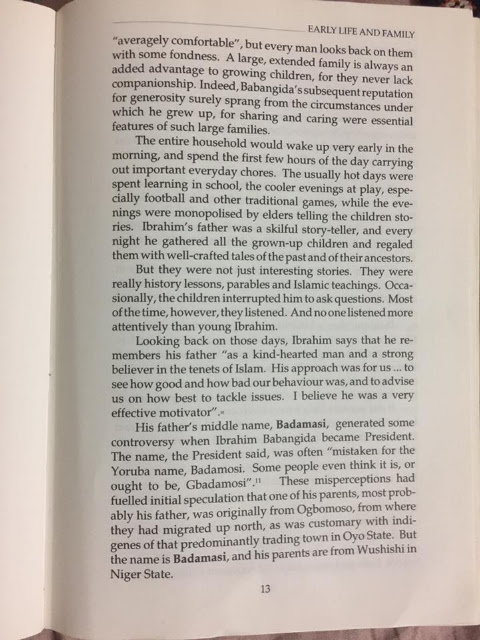
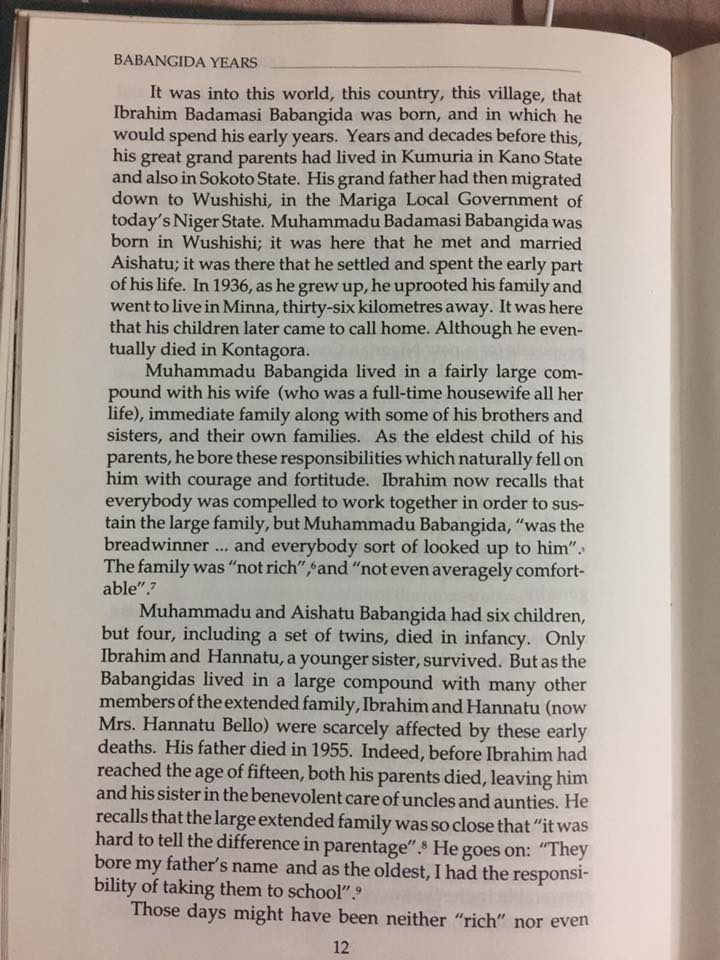
8. Ibrahim Babangida: IBB’s ethnic identity is surprisingly a magnet for controversy and speculations. He has been called Gbagyi (whom Hausa people call Gwari), Nupe, and even Yoruba from Ogbomoso or Osogbo. But he told journalists and his biographers at different times that his immediate ancestors were Hausas from Kano who migrated to what is now Niger State.
I’d rather go with his self-definition of his ethnic identity than the evidence-free claims of others.
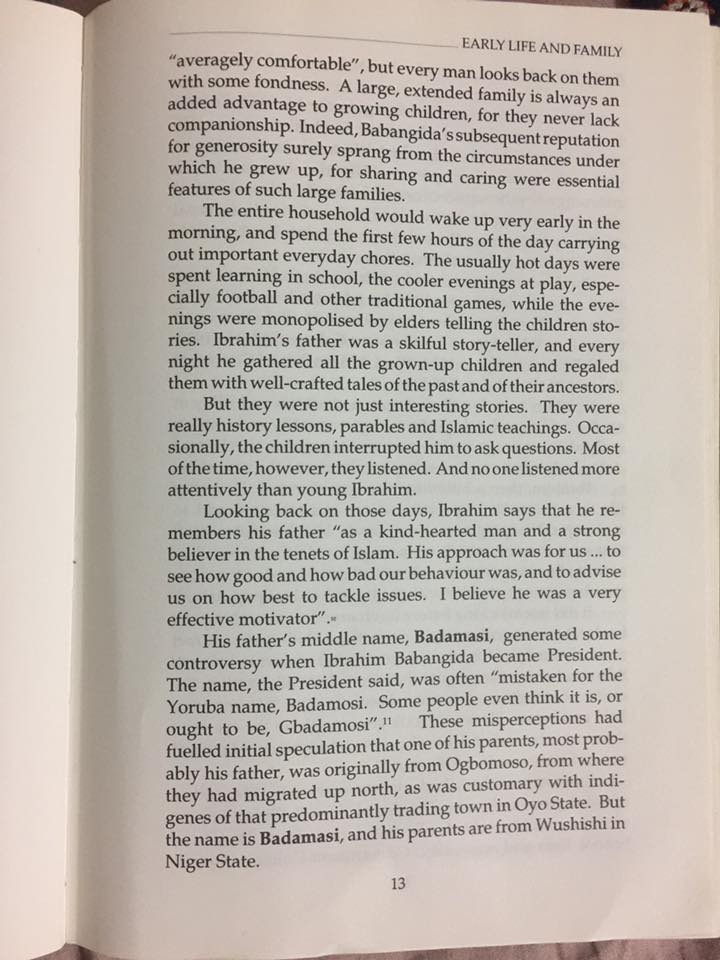
9. Abdulsalami Abubakar: Because Minna, where Abubakar was born, was founded by the Gbagyi, people have also assumed that he is Gbagyi. But he told a biographer that he was born to Hausa parents. Since Hausas are not native to Minna, it must mean that, like IBB, his immediate ancestors came to Minna from Nigeria’s northwest.
10. Umaru Musa Yar’adua: Yar’adua has been erroneously called “Fulani” because of his phenotypic features, but his immediate paternal ancestors are actually Tuaregs, possibly from Mauritania. The Tuaregs are a branch of the Berber cluster in North Africa. Many Tuaregs (whom Hausa people call Buzu) in northern Nigeria tend to be mistaken for Fulani because of the similarities in their physical features. I got to know that the Yar’Adua family are Tuaregs when I lived in Katsina town in the late 1990s.
Another prominent Tuareg family in northern Nigeria that people mistake for Fulani is the Baba-Ahmed family in Kaduna State.
11. Goodluck Jonathan: Jonathan is often mistaken for an Ijaw, but he is not. He is from a small ethnic group called the Ogbia (or Ogbinya), which is linguistically and ethnically unrelated to Ijaw. As of 2006, according to records, the Ogbia were a little over 266,000.
As I pointed out in my August 3, 2013 column titled “What’s REALLY President Goodluck Jonathan’s Ethnic Group?” while Ijaw belongs to the Atlantic-Congo branch of the Niger-Congo language family, Ogbia belongs to the Central Delta subphyla, but historians say the ancestors of the Ogbia people most likely migrated to their present location from present-day Edo State. Ogbia has its own dialects, which are all mutually intelligible, according to Ethnologue. They are Agholo (or Kolo), Oloibiri, and Anyama.
Concluding Thoughts
A distribution of the paternal ethnic identities of Nigeria’s presidents and heads of state shows that the Hausa and the Fulani each had two, and Yoruba, Igbo, Angas, Ogbia, Tuareg, and Etsako (or Afenmai) each had one.
Of course, that’s simplistic. Identity in northern Nigeria is more complex than that. Religion is a more important marker of identity than ethnicity is. For instance, although Abubakar Tafawa Balewa was Gere, he was culturally Hausa and was indistinguishable from a Hausa or Fulani Muslim.
Nonetheless, in the interest of historical accuracy, it doesn’t hurt to be familiar with the facts about the ethnic identities of Nigeria’s past and present presidents and heads of states.
Postscript:
The omission of Sani Abacha from the list wasn't deliberate; it was an oversight. Abacha was a Kanuri man who was raised in Kano. His prominent Kanuri facial marks were the most visible stamps of his Kanuri ethnic identity.
So I'd rephrase the first paragraph of my concluding thoughts to, "A distribution of the paternal ethnic identities of Nigeria’s presidents and heads of state shows that the Hausa and the Fulani each had two, and Yoruba, Igbo, Angas, Kanuri, Ogbia, Tuareg, and Etsako (or Afenmai) each had one.
Nnamdi Azikiwe had no executive powers and Ernest Shonekan was an extension of IBB's regime. In any case, the Igbo and Egba/Yoruba identities of Azikiwe and Shonekan are not in doubt.
Postscript:
The omission of Sani Abacha from the list wasn't deliberate; it was an oversight. Abacha was a Kanuri man who was raised in Kano. His prominent Kanuri facial marks were the most visible stamps of his Kanuri ethnic identity.
So I'd rephrase the first paragraph of my concluding thoughts to, "A distribution of the paternal ethnic identities of Nigeria’s presidents and heads of state shows that the Hausa and the Fulani each had two, and Yoruba, Igbo, Angas, Kanuri, Ogbia, Tuareg, and Etsako (or Afenmai) each had one.
Nnamdi Azikiwe had no executive powers and Ernest Shonekan was an extension of IBB's regime. In any case, the Igbo and Egba/Yoruba identities of Azikiwe and Shonekan are not in doubt.
Farooq A. Kperogi, Ph.D.
Associate Professor
Journalism & Emerging MediaSchool of Communication & Media
Social Science Building
Room 5092 MD 2207
402 Bartow Avenue
Kennesaw State University
Kennesaw State University
Kennesaw, Georgia, USA 30144
Cell: (+1) 404-573-9697
Personal website: www.farooqkperogi.com
Cell: (+1) 404-573-9697
Personal website: www.farooqkperogi.com
Twitter: @farooqkperogi
Author of Glocal English: The Changing Face and Forms of Nigerian English in a Global World
"The nice thing about pessimism is that you are constantly being either proven right or pleasantly surprised." G. F. Will
"The nice thing about pessimism is that you are constantly being either proven right or pleasantly surprised." G. F. Will

Ibrahim Abdullah
Feb 16, 2020, 11:05:57 AM2/16/20
to usaafric...@googlegroups.com
Farooq:
I don’t like doing ethnicity because of obvious reason—it takes away from the conservation what really needs to be discussed. That said I wonder aloud why you should accept what people say they are when we very well know the context in which some claims/counter claims are made. Chronicling an account of the past can be very very messy.
1.) Abacha had a playmate who taught math at ABU—Sani Mu’azu. According to him Abacha’s dad sold “debino” at Kofar Mata; he was originally a migrant from Abeche in present day Chad. And his alleged Kanuri marks are to be found not only in Keffin Hausa, south of Borno, but also in Chad, north of Borno.
2.) Taureg ancestry for Yar’ adua? The Yar Padua family do have blood ties with the sarauta clan in Musawa, Katsina. Yusuf Bala Usman was a blood cousin of Shehu Yar Adua. And Bala was not only Fulani but a pruoud scion of the Katsina saurauta with no claims to Tuareg ancestry.
--
Listserv moderated by Toyin Falola, University of Texas at Austin
To post to this group, send an email to USAAfric...@googlegroups.com
To subscribe to this group, send an email to USAAfricaDial...@googlegroups.com
Current archives at http://groups.google.com/group/USAAfricaDialogue
Early archives at http://www.utexas.edu/conferences/africa/ads/index.html
---
You received this message because you are subscribed to the Google Groups "USA Africa Dialogue Series" group.
To unsubscribe from this group and stop receiving emails from it, send an email to usaafricadialo...@googlegroups.com.
To view this discussion on the web visit https://groups.google.com/d/msgid/usaafricadialogue/CAPq-FWt37WECWcv7Y7iWaOwGb9oABAL%3D4L-6hi9P%2BbP0bpK5zg%40mail.gmail.com.
Farooq A. Kperogi
Feb 16, 2020, 11:34:30 AM2/16/20
to USAAfrica Dialogue
Thanks for the additional information. Abacha's Kanuri ancestry is not in doubt. The boundary between Chad and Borno is a colonial invention and therefore artificial. I also come from a border community, so I know.
The Yar'adua family is related to the Katsina Sarauta through their maternal side. But their paternal side is Tuareg, according to people who know them in Katsina.
Farooq
Sent from my phone. Please forgive typos and omissions.
To view this discussion on the web visit https://groups.google.com/d/msgid/usaafricadialogue/0AAAEE3B-AA66-44DC-8B1D-C67EEECBC8B9%40gmail.com.

kojo
Feb 16, 2020, 2:32:57 PM2/16/20
to usaafric...@googlegroups.com
This beautiful article was just to educate us of the origins of Nigeria's Heads of State? Why?
------------------------------------------
True Ethnic Origins of Nigeria’s Past Presidents and Heads of State
By Farooq A. Kperogi, Ph.D.
Twitter: @farooqkperogi
Nigeria’s education system robs Nigerians of basic knowledge about their country and its people. That’s why although ethnic identity is a central part of Nigeria’s national imagination, most Nigerians know awfully little about the ethnic identities of their rulers.
--
Listserv moderated by Toyin Falola, University of Texas at Austin
To post to this group, send an email to USAAfric...@googlegroups.com
To subscribe to this group, send an email to USAAfricaDial...@googlegroups.com
Current archives at http://groups.google.com/group/USAAfricaDialogue
Early archives at http://www.utexas.edu/conferences/africa/ads/index.html
---
You received this message because you are subscribed to the Google Groups "USA Africa Dialogue Series" group.
To unsubscribe from this group and stop receiving emails from it, send an email to usaafricadialo...@googlegroups.com.
To view this discussion on the web visit https://groups.google.com/d/msgid/usaafricadialogue/CAPq-FWt37WECWcv7Y7iWaOwGb9oABAL%3D4L-6hi9P%2BbP0bpK5zg%40mail.gmail.com.
andoh

Anthony Akinola
Feb 16, 2020, 3:16:32 PM2/16/20
to usaafric...@googlegroups.com
Quite an interesting expose . It would be appreciated by scholars who are interested in the minutest details of history.
Anthony Akinola
To view this discussion on the web visit https://groups.google.com/d/msgid/usaafricadialogue/CAG5Rs%2BNq9BefXo5gqtc2bUokj-eE3N889zF5Tg_%3D0hE6o5Q7OA%40mail.gmail.com.

Julius Eto
Feb 17, 2020, 2:49:00 PM2/17/20
to USAAfrica Dialogue
Dear Farooq/Abdullah,
Does Buhari have foreign Fulani ancestry? Any links/ties to Niger Republic?
Does Buhari have foreign Fulani ancestry? Any links/ties to Niger Republic?
To view this discussion on the web visit https://groups.google.com/d/msgid/usaafricadialogue/CAPq-FWsTd7ei2ZdPTm%2B%3DRW_YpQ9UgYmed8vjT1KNw5aGHvg1LQ%40mail.gmail.com.
Ibrahim Abdullah
Feb 17, 2020, 3:18:13 PM2/17/20
to usaafric...@googlegroups.com
Yes---via Maradi; but these are unverifiable claims. In my view they are similar to the Tuareg claims for the Katsina sarauta that Farooq has accepted uncritically. That oral tradition is popular in Katsina though it's historicity has longed been questioned. It is the Hamitic hypothesis all over again.
Sent from my iPhone
On 17 Feb 2020, at 7:48 PM, 'Julius Eto' via USA Africa Dialogue Series <usaafric...@googlegroups.com> wrote:
To view this discussion on the web visit https://groups.google.com/d/msgid/usaafricadialogue/69981810.2987142.1581964395970%40mail.yahoo.com.
Reply all
Reply to author
Forward
0 new messages