| DEADLINES
RESEARCH PAPERSMcLaren, D., & Corry, O. (2023). Our Way of Life is not up for Negotiation!”: Climate Interventions in the Shadow of ‘Societal Security. Global Studies Quarterly, 3(3), ksad037.Abstract‘Climate security’ conventionally refers to climate change being a multiplier of threats to national security, international peace and stability, or human security. Here we identify a hitherto overlooked inverted climate security discourse in which climate responses (rather than climate impacts) are held to pose an existential threat to dominant fossil fuel-dependent ‘ways of life’, justifying extraordinary measures—societal climate security. In doing so, we seek to make three novel contributions. First, we set out how societal securitization applies beyond a national frame and in relation to transnational threats like climate change, arguing it promotes not just exceptional measures but also palliative ones that avoid challenging incumbent identities. Second, we draw on recent evidence and extant literatures to show that 'societal climate security' already has substantial material emanations in the form of exceptional measures, deployed domestically against climate protestors and externally against climate migrants, in the name of societal order and cohesion. Third, we turn to wider climate policy implications, arguing that societal securitization tilts policy agendas further away from rapid mitigation pathways and toward promissory measures such as ‘geoengineering’—schemes for future, large-scale technological interventions in the climate system—that may appear less threatening to established societal identities. While there are sound ecological and humanitarian rationales to research such technologies, in the context of societal securitization these can be appropriated to defend dominant ‘ways of life’ instead. To conclude, we reflect on how, were it attempted, deployment of solar geoengineering for societal security would affect security politics more widely.
Alberto Boretti (2023). A Perspective for Radiative Cooling Materials. ACS Appl. Opt. Mater.AbstractRadiative cooling (RC) is a technique that allows objects to cool down by radiating heat to cold outer space, even during the daytime. Different materials offer unique opportunities and face distinct challenges when used for RC applications. Understanding these characteristics helps in selecting the most suitable materials for specific cooling requirements, taking into account factors such as thermal stability, emissivity, fabrication techniques, and cost-effectiveness. The various materials that have been explored for RC applications have their own set of challenges and opportunities, specific to the application, which are here discussed.
MacMartin, D. G., Kravitz, B., & Goddard, P. (2023). Transboundary effects from idealized regional geoengineering. Environmental Research Communications.Abstract
Regional geoengineering, by reflecting sunlight over a very limited spatial domain, might be considered as a means to target specific regional impacts of climate change. One of the obvious concerns raised by such approaches is the extent to which the resulting effects would be detectable well beyond the targeted region (e.g., in neighboring countries). A few studies have explored this question for targeted regions that are still comparatively large. We consider idealized simulations with increased ocean albedo over relatively small domains; the Gulf of Mexico (0.23% of Earth's surface) and over the Australian Great Barrier Reef (0.07%), both with negligible global radiative forcing. Applied over these very small domains, the only statistically significant non-local changes we find are some limited reduction in summer precipitation in Florida in the Gulf of Mexico case (adjacent to the targeted region). The lack of transboundary effects suggests that governance needs for such targeted interventions are quite distinct from those for more global sunlight reflection.
WORKING PAPERSAbstractAccording to the latest IPCC Working Group I report (2021), changes in the climate in recent decades are widespread, rapid, intensifying, and unprecedented in at least the last 2,000 years. The global mitigation efforts under the Paris Agreement have been inadequate to reach the target of stabilizing warming below 1.5°C. Thus, it is likely that interest in solar geoengineering (SG) as an additional option to address climate change may increase in coming years. The latest IPCC Working Group II report (2022) concludes that SG could offset some of the effects of increasing greenhouse gases (GHGs) on global and regional climate but also notes large uncertainties and risks involved in large-scale deployment of SG. In this context, we assess the need for promoting SG research in India. We conducted an expert opinion survey of mainly researchers and a few individuals from government departments and civil society members who have some level of expertise in climate change and knowledge of SG. A literature review, examination of funded research projects, and survey results indicate very limited research in India on SG, and even more limited social science research. SG research in India is largely focused on modeling the climate hazards, and government support for research (currently only from the Department of Science and Technology) is very limited.The survey indicates that a majority of experts in India believe that SG research should be a priority area, with overall support for a national policy focusing on modeling, risk and im-pact assessments, and policy analysis. A majority also indicate that the government departments should be the dominant funding agencies for research and international collaborations should be encouraged. The survey highlighted the need for transparency, public consultation, disclosure of all SG research, and monitoring by a government interministerial committee. Finally, respondents indicated a need for a governance protocol and international collaborations due to the risks involved and transboundary nature of impacts.
AbstractIn 2021 the Saami Council asked Harvard to suspend research related to stratospheric aerosol injections, a form of geoengineering. Their intervention raises far-reaching questions regarding the appropriateness of geoengineering as a response to climate change, but also regarding the status of indigenous voices in this debate. I make two main points. It behooves us (i.e., places that influence decisions regarding climate change) to engage indigenous voices also as a way of addressing one type of moral corruption in climate change (that only voices from the present can engage on what to do about it). Absent actual representation of future generations, engaging with the ecological stance typically associated with indigenous groups (who display remarkable commonality in this regard) is the best we can do. Secondly, while critics rightly associate geoengineering with the mindset that caused climate change, it still seems wise to continue research into stratospheric aerosol injections. But advocacy in this domain has performative dimensions and itself might trigger reactions and counter-reactions. So taking this stance entails follow-up obligations to help make sure geoengineering is not used to defeat efforts at emission reductions.
REPORTS
WEB POSTS
UPCOMING EVENTS
PODCASTS“In this week’s episode, host Kristin Hayes talks with Tyler Felgenhauer, a research director and senior research scientist at Duke University, about social science issues that are associated with solar geoengineering. Felgenhauer discusses different technologies that can facilitate solar geoengineering, the risks and benefits of these technologies, how international cooperation could affect the deployment of solar geoengineering, and recent social science research on solar geoengineering. Attend the upcoming “Solar Geoengineering Futures” conference on September 28 and 29 at Resources for the Future to join the ongoing discussion around solar geoengineering.”
YOUTUBE VIDEOSHPAC Anton Keskinen, Arctic Momentum Conference in Finland | Robbie Tulip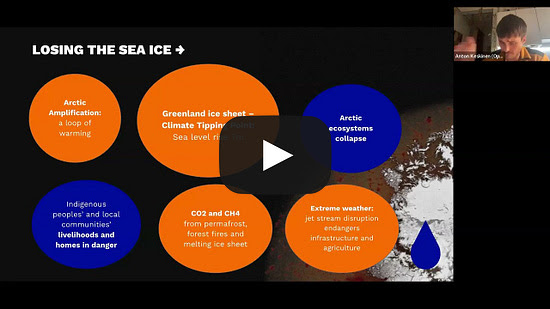 A New Paradigm: Climate Repair – Anni Pokela | Operaatio Arktis  | |


