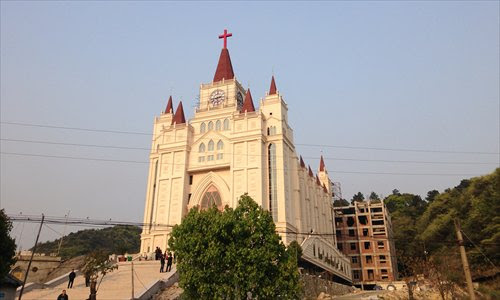
政策有变?

220 views
Skip to first unread message

Yang, Fenggang

unread,
Apr 6, 2014, 11:50:11 PM4/6/14
to Chine...@googlegroups.com
这个研判未必准确,欢迎批评指正。
如果研判接近实际,影响必将深远。

@杨凤岗:近日不断传出消息,浙江温州等地正在强拆多间基督教堂和十字架,联想到河南南乐教案情形,显示打击对象已经从家庭教会转向三自教会。如果不顾信众情感坚持强拆,这可能意味着中央政策有变,不再顾及宗教事物五性中的群众性,这是宗教政策的文革化转变,只不过矛头对准整个基督教。狮子醒了,就是这样?
图片地址:http://ww2.sinaimg.cn/large/502310b2jw1ef6va4ukrcj20cs0tzn0g.jpg
新浪手机微博 weibo.cn


Sent from my iPhone

Yang, Fenggang

unread,
Apr 7, 2014, 12:16:10 AM4/7/14
to <chinesesssr@googlegroups.com>
不过我还想指出:文革期间关闭了所有宗教场所,却未能消灭宗教。而且,基督徒人数从文革前的一百万增加到之后的三百万。这是来自中国官方的数字(1982年19号文件)。打击无效,只是制造与民冲突而已。万望掌权者三思而行。杨凤岗

Sent from my iPhone
> --
> 您收到此邮件是因为您订阅了 Google 网上论坛的“ChineseSSSR”论坛。
> 要退订此论坛并停止接收此论坛的电子邮件,请发送电子邮件到chinesesssr...@googlegroups.com
> 要向此网上论坛发帖,请发送电子邮件至 chine...@googlegroups.com
> 通过以下网址访问此论坛:http://groups.google.com/group/chinesesssr
> 要查看更多选项,请访问 https://groups.google.com/d/optout

YING, Fuk-tsang

unread,
Apr 7, 2014, 2:52:19 AM4/7/14
to chine...@googlegroups.com

印象中,溫州在十多年前(2000年?)也有一次大規模的清拆違規宗教建築的行動,那次我聽說基督教方面採取「順服」的態度,清拆後分散聚會。反觀這次,信眾卻起來護堂抗爭。南樂方面也有維權律師介入。
我認為,不論中央的政策是否有任何調整,但民間的維權意識,已有很大發展。甚至在教會方面,也不再以默忍、順服的態度回應。
邢福增

xpleelee

unread,
Apr 7, 2014, 3:07:48 AM4/7/14
to chinesesssr
据我的观察与信息,这似乎只是一时一地的处理方式。除了教堂之外,浙江地区的民间寺庙也被拆了不少,某些地方多达上千座。当然,这种“三改一拆”,把握不好,则会带来比较复杂或者是运作偏差的后果。


李 向 平
国家社会科学基金学科规划项目评审专家
华东师范大学社会学系主任
宗教与社会研究中心主任
Prof. Xiang-ping, Li,
Head,Department of Sociology
Director, Centre on Religion and Society,
East China Normal University,Shanghai,
Mobile phone : 13917539056
Blog : http://lxp0711.blog.hexun.com/


------------------------------------------------------------------
发件人:yin...@cuhk.edu.hk <yin...@cuhk.edu.hk>
发送时间:2014年4月7日(星期一) 14:52
收件人:chinesesssr <chine...@googlegroups.com>
主 题:Re: [ChineseSSSR] 政策有变?


印象中,溫州在十多年前(2000年?)也有一次大規模的清拆違規宗教建築的行動,那次我聽說基督教方面採取「順服」的態度,清拆後分散聚會。反觀這次,信眾卻起來護堂抗爭。南樂方面也有維權律師介入。
我認為,不論中央的政策是否有任何調整,但民間的維權意識,已有很大發展。甚至在教會方面,也不再以默忍、順服的態度回應。
邢福增


On 7 Apr, 2014, at 12:16 pm, Yang, Fenggang <fy...@purdue.edu> wrote:


--
您收到此邮件是因为您订阅了Google网上论坛中的“ChineseSSSR”论坛。
要退订此论坛并停止接收此论坛的电子邮件,请发送电子邮件到chinesesssr...@googlegroups.com
要发帖到此论坛,请发送电子邮件至chine...@googlegroups.com
通过http://groups.google.com/group/chinesesssr访问此论坛。
要查看更多选项,请访问https://groups.google.com/d/optout

Nathaniel Yuan

unread,
Apr 7, 2014, 4:39:56 AM4/7/14
to chine...@googlegroups.com
1.我也认为此类事件是地方性的,似乎很难上升到全国政策的层面。

2.南乐教案,我认为引发地方政府强烈打压体制内教会的主要原因是,南乐教会同工到北京上访,这一举动严重威胁到地方利益共同体。在这一点上南乐教案与2009年临汾教案存在相似性。

3.这十年来中国民间社会的权利意识大为增长;基督徒群体的权利意识也有很大改观,在权利意识变迁方面,基督教与民间社会存在一致性。

4.较之于其他地域的基督教,温州基督教,无论处于灰色市场的抑或红色市场的,其生存与发展空间不可谓不大。基督教镶嵌到地方社会政治当中,政教关系呈现出一种非冲突的、融合的模式。正如有书曰温州基督教在建设中国的耶路撒冷。即使在温州,基督教(其他宗教亦如此吧)的权益都很难有保障。教堂存废,就领导一句话的事儿。

袁浩
--
YUAN, Hao
Ph.D Candidate in Religious Studies Program
Department of Cultural and Religious Studies
The Chinese University of Hong Kong

Tel: 852-53987519
Email: yuanzhua...@gmail.com
Address: Room 320, Leung Kau Kui Building, CUHK, Shatin, NT, HK

xpleelee

unread,
Apr 7, 2014, 6:08:26 AM4/7/14
to chinesesssr
对滴,民间信仰也罢,佛道教也好,甚至基督教会,很大地方已经嵌入其中,构成为一种地方利益共同体。基督教的团体特征,容易构成维权形式;民间信仰没有主体,说拆就拆了。而且拆的人,大多请的是外地人,以避免地方冲突。


李 向 平
国家社会科学基金学科规划项目评审专家
华东师范大学社会学系主任
宗教与社会研究中心主任
Prof. Xiang-ping, Li,
Head,Department of Sociology
Director, Centre on Religion and Society,
East China Normal University,Shanghai,
Mobile phone : 13917539056
------------------------------------------------------------------
发件人:袁浩 <yuanzhua...@gmail.com>
发送时间:2014年4月7日(星期一) 16:39
收件人:chinesesssr <chine...@googlegroups.com>
主 题:Re: 答复:[ChineseSSSR] 政策有变?

1.我也认为此类事件是地方性的,似乎很难上升到全国政策的层面。

2.南乐教案,我认为引发地方政府强烈打压体制内教会的主要原因是,南乐教会同工到北京上访,这一举动严重威胁到地方利益共同体。在这一点上南乐教案与2009年临汾教案存在相似性。

3.这十年来中国民间社会的权利意识大为增长;基督徒群体的权利意识也有很大改观,在权利意识变迁方面,基督教与民间社会存在一致性。

4.较之于其他地域的基督教,温州基督教,无论处于灰色市场的抑或红色市场的,其生存与发展空间不可谓不大。基督教镶嵌到地方社会政治当中,政教关系呈现出一种非冲突的、融合的模式。正如有书曰温州基督教在建设中国的耶路撒冷。即使在温州,基督教(其他宗教亦如此吧)的权益都很难有保障。教堂存废,就领导一句话的事儿。

袁浩
2014-04-07 15:07 GMT+08:00 xpleelee <xple...@aliyun.com>:

--
YUAN, Hao
Ph.D Candidate in Religious Studies Program
Department of Cultural and Religious Studies
The Chinese University of Hong Kong

Tel: 852-53987519
Email: yuanzhua...@gmail.com
Address: Room 320, Leung Kau Kui Building, CUHK, Shatin, NT, HK

Yang, Fenggang

unread,
Apr 7, 2014, 11:27:01 AM4/7/14
to chine...@googlegroups.com
这一波整治三自教会的行动,未必仅局限于浙江省,只不过浙江省一级的领导表现的很“勇猛”。根据微博中的众多消息,已经有很多教堂接到通知,拆掉十字架,甚至拆掉教堂,有些地方甚至动用了武警,已经拆除或正在拆除。浙江很多地方负责人说,来自省里的压力很大。当然,这些消息都有待证实。可惜中国的记者不能报,国外的记者没法报。

让人不明白的是,为什么要专拆房顶上的十字架呢?那既不占地,也不影响交通,只是因为领导觉得碍眼?抑或专门对信徒觉得神圣的十字架开刀?

关于三江教堂,有威胁说要给炸掉。也有说教堂可以留下,但是附楼要拆。看到一条微博消息说,要么全拆,要么拆掉二楼以上。这就更是莫名其妙了。占地就那么多,往上多建几层,又有何妨?

如果领导真是这样说的,这只能说明,这是专门跟基督教会过不去。还有其他什么更好的解释吗?我真的想像不出来。

微博上有关拆除基督教堂和十字架的照片有一些。虽然有人说,也在拆除民间宗教庙宇,但是,我还没看到这样的照片。从学者的田野调查中看到浙江有很多祠堂建的很辉煌,高端大气上档次,也有不少很有规模的民间宗教庙宇。到目前为止还没听到、看到祠堂和庙宇被强拆。综合来看,我还是觉得这一波整治似乎专门针对基督教而来,其他拆整不过是掩人耳目的陪衬而已。

这波整治有可能是浙江省领导的自主决策,也有可能有中央的授意或默许,或者省领导对于中央未言明之意的揣摩和投机。究竟如何,相信在不久的将来会明晰起来。

总书记访问曲阜,令儒家人士很兴奋;总书记访问欧洲提了提佛教,佛家人士很兴奋。但是,仔细阅读报道,都似乎有一点一厢情愿的过度解读之嫌。我宁愿相信官方将会坚持基本平等地对待各个宗教的,因为那样更有利于社会和谐安定。如果宗教倾斜政策已经成为既定方针,诸神之争的时代就真的要来临了。

无论如何发展,这都是宗教研究者的大好机遇,需要如实记录,实事求是地分析。

普度大学 杨凤岗

何 慕古

unread,
Apr 7, 2014, 12:09:52 PM4/7/14
to chine...@googlegroups.com
坊间已经流传了一段时间有关浙江省委书记夏宝龙的敌基督情绪,这一点基本上构成了温州信徒对这个事件的解释。我前天向某位领导了解到,夏确实个人色彩比较浓,而且全国至少在形式上坚持宗教自由,只有浙江表现得很出格,在他看来,这确实也是浙江的地方行动。那么这是不是由中央授意或支持,信徒中间也有很多猜测,有人甚至认为这是故意要试探基督教会的底线,在浙江做试点。(意义何在呢?)也有人觉得是夏宝龙为故意贴近中国梦的政治意识形态而采取的政治行动。(虽传言他跟习不和,但他也在会议上不断强调发扬儒释道这些中国文化)
无论如何,我的感受是,中国梦的意识形态重新又突出了基督教的“洋教”叙事,相对而言,这种民族主义和国家主义为基础的政治,更是合法化汉传佛教为“中国的”宗教文化。不管怎样,最近几年wz有几处相当华丽的寺庙建筑得到审批和兴建(前市委书记陈德荣去台湾视察,亦对台湾某寺庙大加称赞),相比之,教堂的审批确实比较困难(这恰恰也是违章的外在条件)。


Jack


Sent from my iPhone

Li 李Daniel 灵

unread,
Apr 7, 2014, 12:20:02 PM4/7/14
to chine...@googlegroups.com
比较认同向平兄的解释。---李灵
 

Subject: Re: 答复:答复:[ChineseSSSR] 政策有变?
From: hmug...@gmail.com
Date: Tue, 8 Apr 2014 00:09:52 +0800
To: chine...@googlegroups.com

Yang, Fenggang

unread,
Apr 7, 2014, 12:35:50 PM4/7/14
to chine...@googlegroups.com
从感觉上说,我也宁愿接受李向平教授的解释,但是目前证据不足,需要有证据。

我也并不是说,针对基督教的整治一定会达到预期效果,在地方上,教会确实已经嵌入社区共同体。只不过,这种来自省里或更高层的整治,只能激化与信众的矛盾。信众抗争显然正在进行中。我看不明白,为什么领导要这样做?

杨凤岗

Mark

unread,
Apr 7, 2014, 2:34:56 PM4/7/14
to chine...@googlegroups.com
在中国的拆除基督教堂不是很可怕,历史已经证明了;在美国的拆除几乎所有世界宗教都认可的伦理更可怕,历史将会证明。在这样一个罕见的时代,“自由”和“人权”都急需重新定义。宗教社会学家不可能回避意识形态的立场;即使能够,也无法回避伦理立场;即使能够,也无法回避良知的立场。

Hoffman

unread,
Apr 7, 2014, 3:22:28 PM4/7/14
to chine...@googlegroups.com
Hi Dr. Yang,

I have a Chinese friend who is a Christian and lives in china. He's a scholar  is doing research for a book on children's rights in china and he's coming at it from a Christian perspective.  I told him about this group and he's interested. How can I get him connected with this group?


Thanks,
Hoffman 

Sent from my iPhone

Shuming Bao

unread,
Apr 7, 2014, 9:32:48 AM4/7/14
to chine...@googlegroups.com
这里可能不是那么简单,需要一些实地调查研究才能作出客观分析。国内很多违规建筑(包括不少新建宗教场所),可能事先都未得到正式批准。有些可能得到低层地方政府默许,有些则先斩后奏。这类现象在国内非常普遍,也是一种中国特色。如果按规办事,可能很多事都无法按正常程序办成。尤其带来的政府与民间的矛盾比较普遍(如小产权房)。宗教场所的纠纷更容易引起社会关注。如何处理现存问题,逐步实现规范化的管理体制乃是改革过程中所面临的一大挑战。

Best

Shuming Bao


Nathaniel Yuan

unread,
Apr 7, 2014, 10:49:28 PM4/7/14
to chine...@googlegroups.com
一個地方政府的宗教政策文件:
中共沙门镇委员会  沙门镇人民政府关于印发《沙门镇宗教和民间信仰活动场所违法建筑专项整治工作实施方案》的通知
--
您收到此邮件是因为您订阅了Google网上论坛中的“ChineseSSSR”论坛。
要退订此论坛并停止接收此论坛的电子邮件,请发送电子邮件到chinesesssr...@googlegroups.com
要发帖到此论坛,请发送电子邮件至chine...@googlegroups.com
通过http://groups.google.com/group/chinesesssr访问此论坛。
要查看更多选项,请访问https://groups.google.com/d/optout

Daniel Li

unread,
Apr 8, 2014, 1:32:50 AM4/8/14
to chine...@googlegroups.com
这个文件岂不是证明了向平兄的所见所述?至少从文件上看,此次行为不仅不是针对基督教,也不是针对任何宗教,而只是针对宗教活动场所(庙宇、堂会等的“违建问题”)的问题,文件还特地说明“与信仰无关”。如果说明见背后的动机、内涵新的精神,等等,妄加猜测也难以成为“证据”,对吧?


2014-04-08 10:49 GMT+08:00 Nathaniel Yuan <yuanzhua...@gmail.com>:
Boxbe This message is eligible for Automatic Cleanup! (yuanzhua...@gmail.com) Add cleanup rule | More info

一個地方政府的宗教政策文件:
中共沙门镇委员会  沙门镇人民政府关于印发《沙门镇宗教和民间信仰活动场所违法建筑专项整治工作实施方案》的通知
2014-04-08 0:09 GMT+08:00 何 慕古 <hmug...@gmail.com>:
--
您收到此邮件是因为您订阅了Google网上论坛中的“ChineseSSSR”论坛。
要退订此论坛并停止接收此论坛的电子邮件,请发送电子邮件到chinesesssr...@googlegroups.com
要发帖到此论坛,请发送电子邮件至chine...@googlegroups.com
通过http://groups.google.com/group/chinesesssr访问此论坛。
要查看更多选项,请访问https://groups.google.com/d/optout


--
YUAN, Hao
Ph.D Candidate in Religious Studies Program
Department of Cultural and Religious Studies
The Chinese University of Hong Kong

Tel: 852-53987519
Email: yuanzhua...@gmail.com
Address: Room 320, Leung Kau Kui Building, CUHK, Shatin, NT, HK

--
您收到此邮件是因为您订阅了Google网上论坛中的“ChineseSSSR”论坛。
要退订此论坛并停止接收此论坛的电子邮件,请发送电子邮件到chinesesssr...@googlegroups.com
要发帖到此论坛,请发送电子邮件至chine...@googlegroups.com
通过http://groups.google.com/group/chinesesssr访问此论坛。
要查看更多选项,请访问https://groups.google.com/d/optout


--
李灵
基督教与中国研究中心总干事,《中国基督教研究》总编辑
Tel:(62 6)308-3530      Email:global...@gmail.com
 Address:1520 W Cameron Ave.    West Covina,   CA   91790

Nathaniel Yuan

unread,
Apr 8, 2014, 2:11:22 AM4/8/14
to chine...@googlegroups.com
不管是否存在相关性,官方文件肯定会声称“这与信仰无关”,难道会说这与信仰有关?

官方文件仅仅是解读社会现实的一个维度而已,没人会天真到只停留在文件的层面,而相信他们的一切陈述。在当下处境中,宗教问题往往被转换成治安问题、消防问题、违章建筑问题等等。

袁浩

Li 李Daniel 灵

unread,
Apr 8, 2014, 2:15:19 AM4/8/14
to chine...@googlegroups.com
有“洞见”和没“洞见”就是不一样,我就是看不到没有表露出来的“维度”,无奈!谢谢开导。
 

Date: Tue, 8 Apr 2014 14:11:22 +0800

Subject: Re: 答复:答复:[ChineseSSSR] 政策有变?

Jack Chueng

unread,
Apr 8, 2014, 2:39:11 AM4/8/14
to chine...@googlegroups.com
这个文件不仅仅涉及到“违章场所”,还涉及到了私设(可能并没有违章的)家庭聚会点,似乎与“三改一拆”的理念本身有些出入;另外,它针对“小”寺“小”庵列了好多,很有意思。最重要的是,它是去年年底的通知文件,我们现在需要省里给到各县市的通知文件,无论是口头的还是非口头的,不然确实只有猜测,没有证据。
不过反过来说,虽然我们暂时看不到政府行动的内在理由(如果有的话),但教会的“猜测”本身却构成了一个事实,这个“事实”是推动教会行动的理据。

杰克

郭利平

unread,
Apr 8, 2014, 11:29:30 PM4/8/14
to chine...@googlegroups.com

http://blog.sina.com.cn/s/blog_68f61b310101t69r.html


评为拆除十字架叫好的理由

基甸


几天前(43日)在旅途中在微博上转发了一首北村老师的诗(图片),跟最近浙江温州地区政府拆除基督教会十字架有关。我的微博承蒙(或者说不幸被)王东成老师和司马南先生转发、评论,引来大量为拆除十字架叫好及斥责基督教为“邪教”的“挺拆”评论。我收集了其中部分放在我的博客上,立此存照:http://t.cn/8saKAtK


北村兄写的是诗,当然以抒情为主(其情我有同感),并不涉及事件细节。几天前我对事件的了解也很有限。这几天看了很多关于这个事件的消息和评论,谈几点感想:


1)被勒令拆除十字架的多个温州教会都是合法的“三自”教会(或者至少是挂靠三自的教会,尽管神学等方面也许更接近家庭教会)。所以这是合法登记、被政府批准并接受政府监管的教会。司马南在这件事情上拼命渲染温州教会有“海外敌对势力”“策应”、被“海外敌对势力”“渗透”的阴谋论,也许是出于他爱对异己者进行政治构陷的坏习惯。但阴谋论就是阴谋论,与事实无关。挺拆评论中也有大量斥责欧美帝国主义和宗教沙文主义的义愤填膺的言辞,同样是扯得太远,我感觉可能评论者对什么是三自教会,为什么教会必须要挂靠三自才有合法性,等等,恐怕也不了解。


2)挺拆者特别大义凛然的理由(也是司马南特别强调的),是温州教会的建筑属于“违章建筑”,宗教信徒也应该守法,绝不能凌驾于法律之上。这个理由听起来还是蛮正当的,理论上也是对的。圣经也确实教导基督徒要顺服权柄,除非是明显的恶法,基督徒应该尽量遵纪守法、与人和睦。如《温州基督徒关于政府“强拆十字架及教堂”的联合声明》( http://t.cn/8sSrdks  所表述的:


“部分教堂的某些楼层如果存在违建,有其较复杂的历史、区域性的形成因素。我们敦请教会谦卑自察,诚恳地接受政府和舆论的监督,补办相关手续,并恳请政府酌情处理。惟愿双方秉承公义,友好协商,共谋福祉。”(由此也可见挺拆评论中大量指责教会态度蛮横的言辞是非常先入为主、并不实事求是的。)


如果“违章”属实,我也希望教会接受监督,尽可能遵纪守法,而不是制造声势,鼓动对立情绪。但是这件事情牵涉的今日中国的政教关系的问题,远比这更复杂。我看到的很多基督徒都在微信、微博上转发的消息,都讲到这次浙江的强拆十字架及教堂行动,很可能至少是省一级的统一部署(温州附近教堂比较密集,所以首当其中),而且执行拆除的干部跟教会明确讲十字架“太显眼”,显得基督教太兴旺,所以政府希望拆。(刚刚又收到一条消息:“全省所有宗教场所不能亮灯,国道、省道及高速公路两旁十字架分期拆除放在建筑立面上,强力推进非法宗教场所的整治,推进三拆一改涉及宗教和民间信仰场所的违章建筑的处置工作。”也许并非单单针对基督教,但主要是针对基督教。)拆十字架跟拆违章建筑实际上并不是同一回事——如果教会愿意在违章建筑方面让步、跟政府协商,而政府仍然坚持要拆十字架,那就不仅仅是违章的问题了。另外挺拆评论里面大量的帖子都把“说盖1800平,最后盖了10000平”作为违章的证据,但这两个数字(如果属实的话)也仅仅是众多被要求拆除十字架的教会当中的一个而已,并不能代表还有很多的其它教会。


3)更复杂、更深沉的政教关系问题,是政府如何对待比三自更多的大量“家庭教会”的问题。很多义愤填膺挺拆的人,恐怕对这方面的问题也知之甚少。家庭教会在中国的处境非常困难,一直被政府视为“敌对势力”,处于遭受打压的状态。但另一方面政府至少在表面上还是希望给外界“我们也有宗教自由”的印象,所以很多时候这种打压都会借用一些台面上冠冕堂皇的理由,比如限制出版发行基督教的书会用“非法经营”的罪名,阻扰教会聚会会用“消防检查不合格”等等诸如此类的理由。归根到底说白了,如果真要讲“法律至上”,那么你可以说家庭教会的存在和所有行为,从头到尾,都是“非法”、“违法”的,以前是,今天仍然是,而且不远的将来打压可能还会更加严厉。在这样的情况下,其实所有家庭教会租用、借用的场地在理论上都是“非法宗教场所”,家庭教会正在和将要遭受的打压其实比强拆十字架更加严酷。挺拆人士试图把教会跟政府的关系描述成教会蛮横无理、局高临下而政府委曲求全、镇压不力的样子,实在是把哪个是鸡蛋、哪个是石头全然搞颠倒了。这当然是中国的特殊国情。在这样的现状当中,非基督徒朋友是像很多挺拆人士一样因为反感基督教而站在“石头”一边,为打压叫好,甚至鼓噪呼吁政府加大力度镇压“邪教”,还是即使不认同基督徒的信仰也要抱着“丧钟为谁而鸣”的态度维护公民的基本信仰自由和宗教自由,或者继续假装外宾不愿意了解真相,我想不同的人会有不同的选择。


4)我想请基督徒朋友们也看一看我收集的这些挺拆评论(http://t.cn/8saKAtK )。其中也许有“五毛”,甚至奉旨为打压制造舆论的帮凶,但我相信也有一些确实是出于自发的对基督教的反感和厌恶。我想请基督徒朋友一起来思考,我们对基督教在中国的发展是否过分盲目乐观(一些基督徒还老爱转一些第一夫人唱哈利路亚、航天英雄赞美上帝、某某高官是基督徒之类的帖子)?如果这里面有自发的、代表非基督徒民众态度的评论,这对我们又有什么样的提醒?今天和未来的中国社会,在很多政治、社会议题上,不同的群体当中都有非常不同甚至水火不容的立场和诉求,很容易形成对立和撕裂(不只是政府和民众之间,而且是民众与民众之间),基督徒身处这样的境况,应该如何努力在坚持信仰的同时尽力与人和睦,谦卑、友好,积极正面地见证我们的信仰,见证上帝的爱?具体到温州的基督教,在这次事件以前就有基督徒朋友对温州教会,尤其是对温州的基督徒商人和企业家的信仰实践有一些批判和反思(例如颜新恩牧师的这篇文章:http://blog.sina.com.cn/s/blog_5231e4240102ef29.html )。这几天我也看到一些基督徒对这次事件的反思自察(比如邱有恩的这篇文章:http://user.qzone.qq.com/441457644/blog/1396700870 ——尽管有一些基督徒觉得在这个时候维权最重要,或者邱也有“外宾”之嫌)。


5)我想更深一层的反思,是在当下中国的国情之中,基督徒到底应该如何“捍卫十字架”?十字架肯定不是基督徒要崇拜的“偶像”,有形的教堂上的十字架固然有其标志性,但毕竟不是基督徒信仰的最重要的部分,教堂的宏大、亮丽、显眼也不等于教会真正有复兴。从属灵上说,十字架代表的恰恰是舍己、受苦、坚韧,也是不与世俗妥协,不求世俗的光鲜和“成功”(包括挂靠三自的问题——我个人比较同意王怡牧师的看法:http://www.weibo.com/1760959281/AE9e6r7Cd )。所以真正的十字架若是在我们的心中、在我们的生命里,即使外在的十字架被强拆,教会仍然可以屹立不倒(正如过去六十多年家庭教会在中国的历史所见证的)。反之,如果我们的属灵生命中没有真正的十字架,世人看重什么我们也看重什么,别人怎么做生意我们也怎么做生意,那么即使十字架高耸入云、一千米以外就能看到(没有雾霾的话),即使教堂壮丽辉煌、济济一堂,教会仍然无法在这个时代做上帝光明的使者、荣耀的见证。


春安!
郭利平

普世社会科学研究所 
www.pacilution.com
电话:86-10-88550877-13

涂怡超

unread,
Apr 9, 2014, 3:34:29 AM4/9/14
to chine...@googlegroups.com
感谢分享,很受启发!

Yang, Fenggang

unread,
Apr 9, 2014, 3:05:17 PM4/9/14
to chine...@googlegroups.com

是否主要针对基督教而来?这份来自温州地区一个教会的公告是一个证据,如果其中所言属实,显然是针对基督教而来。当然,这还是孤证,尚须更多证据才能下定论。

如果各位发现这段期间针对其他宗教和民间信仰的整治行动,请传上图片或文件来与大家分享。或者观察记录也很好。

做宗教研究需要看政府文件,但不能只看政府文件。如果只看文字,这份拆改通知甚至都没有列明教会名称。这是个高明手法吗?

所以,更重要的是还要看实际在发生什么,还需要了解执政者和执法者说了什么,做了什么。还需要了解宗教信徒和群体经历了什么。

以“违建”为名整治,为什么那么多“违建”不整治?单挑基督教会进行整治?现代法律讲究平等,选择性执法,问题多多。

问题多多是个现实,我们作为研究者,不求改变现实,只是需要实事求是地观察、记录、分析、解释。


普度大学 杨凤岗


6c848babtw1ef9pf2k5flj20fw0oigrp.jpg

Mayfair Yang

unread,
Apr 9, 2014, 8:29:09 PM4/9/14
to chine...@googlegroups.com

因为我曾在温州调查民间信仰,而在英文文章上谈过2000 年间的温州拆除宗教场所情况,想与大家分享文章。请见附上的文章 743 至747 页。

2000年的温州拆除大概1,200 个非登记的宗教场所,不是只对着基督教,而也拆了不少寺庙道观神庙。 当时这个活动主要发生在温州地区,也有附近的金华市。其他浙江地区没有受到影响。 可是在西方的报道比较重视基督教受到的打击。 


杨美惠


-- 
Prof. Mayfair Yang
Religious Studies Department
East Asian Cultural Studies Department
University of California
Santa Barbara,  CA  93106
USA
Spatial Struggles JAS 2004.pdf

zd...@umac.mo

unread,
Apr 9, 2014, 10:47:49 PM4/9/14
to chine...@googlegroups.com
谢谢杨老师分享研究成果。另外西方较重视基督教被打击,究其原因,除了基督教的国际因素之外,是否也有一个各种宗教场所被拆的比例问题。比如,如果寺庙道观神庙100个中拆1个(1%)和基督教100个中拆10个(10%)的感觉是不一样。当然我是瞎猜。还真需要数字来说明。澳门大学郝志东

--
您收到此邮件是因为您订阅了Google网上论坛中的“ChineseSSSR”论坛。
要退订此论坛并停止接收此论坛的电子邮件,请发送电子邮件到
chinesesssr...@googlegroups.com
要发帖到此论坛,请发送电子邮件至
chine...@googlegroups.com
通过
http://groups.google.com/group/chinesesssr

访问此论坛。
要查看更多选项,请访问
https://groups.google.com/d/optout。[attachment "Spatial Struggles JAS 2004.pdf" deleted by ZDHao/UMAC]


Fenggang Yang

unread,
Apr 17, 2014, 10:38:00 AM4/17/14
to chine...@googlegroups.com
这个报道不是西方媒体的:

Concern rises in Wenzhou as Christianity booms in capitalist fashion
Global Times | 2014-4-17 19:58:02 
By Zhang Yu in Wenzhou
 E-mail   Print

Sanjiang Church under construction. Photo: Zhang Yu/GT


Freshly daubed in red paint on the left façade of Sanjiang Church in Yongjia county, Wenzhou, in China's eastern Zhejiang Province, is a large Chinese character chai, meaning "to demolish."

A symbol of China's rapid urbanization in the past three decades, the same character has been painted on the walls of old neighborhoods, factory buildings and illegal structures all over China before they made way for new high-rises, highways and commercial complexes.

But a province-wide controversy was triggered when the same fate befell the brand new Protestant church early this April, in a city where the large Christian population, about 15 percent of a total of 9 million, has provided the nickname "China's Jerusalem."

The local government has ordered the gigantic church, rising over 50 meters from a stretch of farmland, and one-storey houses to be dismantled. Construction of the Gothic-style church, with its pointed arches, ornate façade, high spire and pinnacles, has already cost more than 20 million yuan ($3.2 million) over three years and is still ongoing.

The local Yongjia government called the church a "model project" just last September. Now it is declaring it illegal.

Not far away, modern skyscrapers, which form the zigzagging skyline of Wenzhou's city center, rise on the other side of the Oujiang River which separates Yongjia county from downtown Wenzhou.

Just 50 meters away from the church, a highway is being built, and an ambitious 20-billion-yuan commercial project aimed at "turning southern Yongjia into Wenzhou's Pudong New Area" has just started.

Sanjiang Church is not the only church that is the subject of a demolition order.

According to local Christians, from late March, at least eight churches in Wenzhou and several in the rest of Zhejiang Province have received written or oral orders from local governments to either dismantle buildings or remove crosses.

Local Christians believe this is a demolition campaign targeting Christianity. After Sanjiang Church received the demolition order, thousands of Protestants from Yongjia and other parts of Wenzhou, who heard the news from church members or through social media, flocked to Yongjia to protect the church.

"Wenzhou's officials have always been very tolerant toward Christianity. We think this is an order from the provincial government," Martin Xu, a local Christian businessman, told the Global Times. His view was shared by many Christians at the site.

Some drew up a petition to the provincial government of Zhejiang, calling for it to cease removing crosses and dismantling churches.

"The government should protect people's right to freedom of religion, as is granted by the Constitution," the petition read.

Over 1,000 pastors in Wenzhou's churches and hundreds of Protestants in China and abroad have signed the petition, Zheng Leguo, the Wenzhou preacher who drafted the petition, told the Global Times.

The Chinese character chai on the wall of Sanjiang Church. Photo: Zhang Yu/GT


Legal destruction


Officials from Wenzhou's Three-Self Patriotic Movement (TSPM), China's government approved Protestant church, however, do not share the indignation of local Christians.

Most of the churches facing demolition orders, including Sanjiang, are registered under the TSPM, while others are underground churches, also known as house churches. 

"All the orders were issued in accordance with Zhejiang Province's 'three revise and one demolition' campaign. The governments' actions are completely legal," an official with TSPM, who refused to be named, told the Global Times in a phone interview.

According to an official document issued by the People's Government of Zhejiang Province in February 2013, "three revise and one demolition" is a three-year campaign aimed at hastening urbanization and "building a more beautiful Zhejiang."

The document urged local governments to carry out the campaign vigorously by "revising" old neighborhoods, old industrial sites and urban villages and demolishing illegal structures by 2015. The official said the movement didn't touch upon religious buildings last year. This year religious buildings are being targeted too.

"All the churches that received demolition orders are illegal. Some have illegal structures and some were built without a permit as a religious building. To solve the problem quickly, some local governments ordered churches that do not have a religious permit to take down the crosses to avoid being too conspicuous," the TSPM official said. 

"So far, no crosses have actually been taken down. We understand that crosses are a symbol of Christian belief so we are negotiating," he said.

An official with the Bureau of Ethnic and Religious Affairs of Wenzhou responded similarly.

Sanjiang Church is quadruple the size permitted by the government, and has been built on agricultural land where religious buildings are not allowed to be built, a document by the Yongjia government said.

The local government has agreed not to dismantle the entire Sanjiang Church but only remove part of its annex after negotiations with the church.

Local Christians gather at Sanjiang Church on April 4 to protect it from being demolished. Photo: Zhang Yu/GT


Oversized churches


Local Christians are not happy with the official replies.

"We admit that many churches are not completely legal. This is because the provincial government hardly ever grants permits for large churches. Since there is a need for larger churches here in Wenzhou, it's been a common practice for churches to be built larger than is permitted and local governments always cut us some slack," Zheng Leguo said.

A man in charge of a church in Haining's Dingqiao county, who was verbally asked to take down its cross, also admits the church hasn't got all the required permits.

"It takes years to finish all the applications, so we applied and built the church at the same time," the man surnamed Li said.

The national regulations state that the permit to build a church needs to be granted by the provincial government. To reach that level, an applicant has to start with the neighborhood committee or village then go up to get the approval of the county, city and provincial level religious affairs offices. Approvals from the urban planning bureaus and housing administration offices are also required.

"Basically, it takes a very long time to get the final approval of a building permit for Christian churches. It is unsurprising that, in order to meet the needs of believers, some churches start construction before receiving the final approval," said Fenggang Yang, Professor of Sociology and Director of the Center on Religion and Chinese Society at Purdue University, who has been following the incident closely on the Internet. 

"Not only is it difficult to get the permit to build a new church, it is even more difficult to make renovations for the purpose of expanding the sanctuary. The government agencies are often reluctant to grant such permits," he said.

Some Christians have argued that the government has selectively implemented the law on Christian buildings since other illegal structures near the churches did not receive demolition orders.

Li Xiangping, a professor of religion at East China Normal University, said, "The written document of 'three revise and one demolition' shows no bias against religion. But in actual implementation, there might have been a bias, because orders to dismantle crosses don't seem to make sense."

Yang said, "Honestly speaking, in China today, what can you accomplish without violating some kind of rules? There are a myriad of rules, but some rules are seriously outdated, some rules are arbitrarily made, and some rules are selectively enforced."

Sanjiang Church from inside. Photo: Zhang Yu/GT


Religious business


The rapid expansion of Wenzhou's Christian population is closely connected with Wenzhou's history of entrepreneurism and status as a pioneer in economic reform and commercialization since the late 1970s, observes Cao Nanlai, an associate professor at Renmin University of China's School of Philosophy.

Cao is the author of Constructing China's Jerusalem, a 2010 book published by the Stanford University Press about Christianity in contemporary Wenzhou based on over two years' field research.

Characterized by its small to medium manufacturing businesses and private capitals, Wenzhou's commercial success was dubbed "the Wenzhou model of development" in the mid-1980s and created a new wealthy class who ran private businesses.

"Wenzhou's boss Christians ran the churches with the same philosophy as they ran their businesses. They bought and expanded churches and capital, built churches and did a great job marketing Christian ideas and church activities, which made Christianity a powerful religion in Wenzhou," Cao told the Global Times.

Also, since Wenzhou is cut off by mountains, it enjoyed a relatively high level of religious freedom and religious activities received little interference.

"Unlike in many other places in China where Christianity is marginalized, in Wenzhou it is almost mainstream. Many local officials, if they are not Christians themselves, have Christian relatives, friends and classmates," Cao said. One aspect of this is that many Christians proudly give their companies Christian names, such as the Canaan Technology Group or the Shenli (literally "God power") Group.

But just as some economists have pointed out that Wenzhou's model of development isn't sustainable, its development of Christianity has also had problems.

"The growth of Christianity in Wenzhou is in a phase when the speed and size of expansion is valued over other aspects. Local Christians built large churches and tall crosses which religiously represent blessings of God and nearness to heaven. But it's also a kind of display. Wenzhou Christians want to show how capable they are, blessed by God, and how morally superior they are to others," Cao said. 

Other issues include a blurred line between private assets and church assets.

In the course of this rapid development, however, many laws were ignored, and the fact that the church put too much emphasis on using tangible aspects to attract converts instead of via theological discussions, he said.

sdzhaojie2013

unread,
Apr 17, 2014, 9:20:49 PM4/17/14
to chine...@googlegroups.com
    从事中国近现代史研究的历史学家们注意到,2008年以来,中国社会正在经历改革开放以来的第二次重大转向——“民族主义转向”。康晓光的两本书很能反映这一点。
      2005-2007年康晓光完成了《中国归来——当代中国大陆文化民族主义运动研究》,但当时只能从新加坡出版。
      2008-2010年康晓光完成《阵地战——关于中华文化复兴的葛兰西式分析》,由中国社会科学文献出版社出版。
     这件事,远没有某位作者出版一两本书那么简单。其中所释放的信息,已经引起当代历史学研究的重视。社会科学家们如果留意,也能从中看出中国社会“有变”。


--
山东大学犹太教与跨宗教研究中心
                  zhaojie

zd...@umac.mo

unread,
Apr 17, 2014, 11:17:34 PM4/17/14
to chine...@googlegroups.com
"May you live in interesting times" 是一句英语的咒语,据说英译来自自冯梦龙的《醒世恒言》:宁为太平犬,莫作乱离人后来人们又把它说成是宁为太平狗,不作乱世人。现在我们似乎就是被这个咒语给套住了。康先生的著作没有看过,但是不知道他所谓中华文化是否包括少数民族文化,但是看内容简介似乎没有。如果说费孝通先生发明的中华民族涵盖了少数民族(行得通行不通是另外一回事),那么康先生的中华文化并没有包括少数民族的文化,如藏文化、伊斯兰文化等,而只是汉文化而已。那样的话,不是分裂国家吗?康先生的罪行很像刘晓波的罪行呢。还有可爱、可亲、和平的醒狮现在要召之即来,来之能战,战之必胜。看来我们都是无奈地生活在interesting times里面了。真是可惜可悲可叹!澳门大学郝志东


From:        sdzhaojie2013 <sdzhao...@163.com>
To:        "chine...@googlegroups.com" <chine...@googlegroups.com>
Date:        04/18/2014 09:21 AM
Subject:        Re:Re: 答复:答复:[ChineseSSSR] 政策有变?
Sent by:        chine...@googlegroups.com


    从事中国近现代史研究的历史学家们注意到,2008年以来,中国社会正在经历改革开放以来的第二次重大转向——“民族主义转向”。康晓光的两本书很能反映这一点。
      2005-2007年康晓光完成了《中国归来——当代中国大陆文化民族主义运动研究》,但当时只能从新加坡出版。
      2008-2010年康晓光完成《阵地战——关于中华文化复兴的葛兰西式分析》,由中国社会科学文献出版社出版。
     这件事,远没有某位作者出版一两本书那么简单。其中所释放的信息,已经引起当代历史学研究的重视。社会科学家们如果留意,也能从中看出中国社会“有变”。


--
山东大学犹太教与跨宗教研究中心
                  zhaojie

在 2014-04-17 22:38:00,"Fenggang Yang" <yangfe...@gmail.com> 写道:
这个报道不是西方媒体的:

Concern rises in Wenzhou as Christianity booms in capitalist fashion
Global Times | 2014-4-17 19:58:02
By Zhang Yu in Wenzhou

Share on twitter

Share on facebook

Share on sinaweibo

Share on linkedin


More Sharing Services
0


 E-mail  Print


Sanjiang Church under construction. Photo: Zhang Yu/GT


Freshly daubed in red paint on the left façade of Sanjiang Church in Yongjia county, Wenzhou, in China's eastern Zhejiang Province, is a large Chinese character chai, meaning "to demolish."

A symbol of China's rapid urbanization in the past three decades, the same character has been painted on the walls of old neighborhoods, factory buildings and illegal structures all over China before they made way for new high-rises, highways and commercial complexes.

But a province-wide controversy was triggered when the same fate befell the brand new Protestant church early this April, in a city where the large Christian population, about 15 percent of a total of 9 million, has provided the nickname "China's Jerusalem."

The local government has ordered the gigantic church, rising over 50 meters from a stretch of farmland, and one-storey houses to be dismantled. Construction of the Gothic-style church, with its pointed arches, ornate façade, high spire and pinnacles, has already cost more than 20 million yuan ($3.2 million) over three years and is still ongoing.

The local Yongjia government called the church a "model project" just last September. Now it is declaring it illegal.

Not far away, modern skyscrapers, which form the zigzagging skyline of Wenzhou's city center, rise on the other side of the Oujiang River which separates Yongjia county from downtown Wenzhou.

Just 50 meters away from the church, a highway is being built, and an ambitious 20-billion-yuan commercial project aimed at "turning southern Yongjia into Wenzhou's Pudong New Area" has just started.

Sanjiang Church is not the only church that is the subject of a demolition order.

According to local Christians, from late March, at least eight churches in Wenzhou and several in the rest of Zhejiang Province have received written or oral orders from local governments to either dismantle buildings or remove crosses.

Local Christians believe this is a demolition campaign targeting Christianity. After Sanjiang Church received the demolition order, thousands of Protestants from Yongjia and other parts of Wenzhou, who heard the news from church members or through social media, flocked to Yongjia to protect the church.

"Wenzhou's officials have always been very tolerant toward Christianity. We think this is an order from the provincial government," Martin Xu, a local Christian businessman, told the Global Times. His view was shared by many Christians at the site.

Some drew up a petition to the provincial government of Zhejiang, calling for it to cease removing crosses and dismantling churches.

"The government should protect people's right to freedom of religion, as is granted by the Constitution," the petition read.

Over 1,000 pastors in Wenzhou's churches and hundreds of Protestants in China and abroad have signed the petition, Zheng Leguo, the Wenzhou preacher who drafted the petition, told the Global Times.


The Chinese character chai on the wall of Sanjiang Church. Photo: Zhang Yu/GT


Legal destruction


Officials from Wenzhou's Three-Self Patriotic Movement (TSPM), China's government approved Protestant church, however, do not share the indignation of local Christians.

Most of the churches facing demolition orders, including Sanjiang, are registered under the TSPM, while others are underground churches, also known as house churches.

"All the orders were issued in accordance with Zhejiang Province's 'three revise and one demolition' campaign. The governments' actions are completely legal," an official with TSPM, who refused to be named, told the Global Times in a phone interview.

According to an official document issued by the People's Government of Zhejiang Province in February 2013, "three revise and one demolition" is a three-year campaign aimed at hastening urbanization and "building a more beautiful Zhejiang."

The document urged local governments to carry out the campaign vigorously by "revising" old neighborhoods, old industrial sites and urban villages and demolishing illegal structures by 2015. The official said the movement didn't touch upon religious buildings last year. This year religious buildings are being targeted too.

"All the churches that received demolition orders are illegal. Some have illegal structures and some were built without a permit as a religious building. To solve the problem quickly, some local governments ordered churches that do not have a religious permit to take down the crosses to avoid being too conspicuous," the TSPM official said.

"So far, no crosses have actually been taken down. We understand that crosses are a symbol of Christian belief so we are negotiating," he said.

An official with the Bureau of Ethnic and Religious Affairs of Wenzhou responded similarly.

Sanjiang Church is quadruple the size permitted by the government, and has been built on agricultural land where religious buildings are not allowed to be built, a document by the Yongjia government said.

The local government has agreed not to dismantle the entire Sanjiang Church but only remove part of its annex after negotiations with the church.


Local Christians gather at Sanjiang Church on April 4 to protect it from being demolished. Photo: Zhang Yu/GT


Oversized churches


Local Christians are not happy with the official replies.

"We admit that many churches are not completely legal. This is because the provincial government hardly ever grants permits for large churches. Since there is a need for larger churches here in Wenzhou, it's been a common practice for churches to be built larger than is permitted and local governments always cut us some slack," Zheng Leguo said.

A man in charge of a church in Haining's Dingqiao county, who was verbally asked to take down its cross, also admits the church hasn't got all the required permits.

"It takes years to finish all the applications, so we applied and built the church at the same time," the man surnamed Li said.

The national regulations state that the permit to build a church needs to be granted by the provincial government. To reach that level, an applicant has to start with the neighborhood committee or village then go up to get the approval of the county, city and provincial level religious affairs offices. Approvals from the urban planning bureaus and housing administration offices are also required.

"Basically, it takes a very long time to get the final approval of a building permit for Christian churches. It is unsurprising that, in order to meet the needs of believers, some churches start construction before receiving the final approval," said Fenggang Yang, Professor of Sociology and Director of the Center on Religion and Chinese Society at Purdue University, who has been following the incident closely on the Internet.

"Not only is it difficult to get the permit to build a new church, it is even more difficult to make renovations for the purpose of expanding the sanctuary. The government agencies are often reluctant to grant such permits," he said.

Some Christians have argued that the government has selectively implemented the law on Christian buildings since other illegal structures near the churches did not receive demolition orders.

Li Xiangping, a professor of religion at East China Normal University, said, "The written document of 'three revise and one demolition' shows no bias against religion. But in actual implementation, there might have been a bias, because orders to dismantle crosses don't seem to make sense."

Yang said, "Honestly speaking, in China today, what can you accomplish without violating some kind of rules? There are a myriad of rules, but some rules are seriously outdated, some rules are arbitrarily made, and some rules are selectively enforced."


Fenggang Yang

unread,
May 8, 2014, 9:53:38 PM5/8/14
to chine...@googlegroups.com
刚刚收到一封匿名电子邮件,内容如下(原文已有加色)。欢迎你的评论。如果有人能够证实或证伪这份文件内容,可以在这个学术群里分享,或者电邮联系:

          三改一拆处置方案


1工作目标:纠正地方宗教发展过快、场所过多、活动过热现象,要求进行专项整治,预期一年内落实成效。

2工作原则:

(1)           各民宗干部要做狮子型干部,看清十字架背后的政治问题,坚决抵御渗透。

(2)           依法依规,用非宗教方式处理宗教问题。

(3)           坚持“拆、改、用”相结合,疏堵结合

(4)           分级分阶段各县市落实责任

3工作内容

(1)           解决十字架宗教标识超高,过亮问题,清查重拆高速公路、国道、省道旁边的十字架。分期分批将十字架从屋顶移下建筑物。

(2)           七个必拆、四个暂缓、一个严格控制

(3)           拆除一批、整合一批、改造一批

(4)           研究解决合法宗教活动场所的土地、产权遗留问题。

4进度安排

201312-201402 调查摸底,制定计划阶段

201403-201409 全面实施整治阶段

201410-201412 总结验收巩固阶段

5工作措施

(1)           实行一把手责任制,省民宗委 冯志礼主任亲自挂帅。莫幸福主任等副手配合。

(2)           落实责任,各县市以党委书记牵手落实拆违工作。

(3)           将次列入全年考核,实行一票否决,2014民宗部门考核指标

(4)           建立责任追究机制

(5)           维护稳定明确底线

注意1:特别是非法基督教活动场所的整治

注意2:避免引起境外媒体、人权组织关注,对我宗教政策进行恶意攻击

注意3:各县市避免人员伤亡情况

注意4:避免大规模群体性事件

注意5:避免出现大规模越级上访事件

注意6:统战一部分宗教圣职人员

(6)           要从土地、规划、建设等有关法律去查处,防止授人以柄。紧紧抓住教职人员队伍这个关键,发挥爱国爱教积极作用,防止矛盾计划,要认真妥善制定拆除方案,确保一次拆除成功。

6分阶段安排

11-2月:统计通知,制定处置方案,成立三改一拆办公室,拆违小组组织培训。

22-3月:调研、起草《浙江省加强民间信仰事务管理的意见》,征集各方意见。

33-9:整治阶段,每月10日各县市保送拆违进展情况,15日发布行动简报、通报拆违情况。省民宗委领导带队11县市进行督导。

49月:开展提高检查方案,通知等

511-12月:组织全省督查

6)汇总、通报督查结果,考核业绩。


专项工作组,  宗教三处。

冯志礼:杭州、温州  配合机关干部:高成锋、金伟

吴彩星:金华、衢州                楼剑涛、楼跃文

(舟山、湖州)(嘉兴、丽水)(宁波、绍兴、台州)


黄海波

unread,
May 9, 2014, 1:40:50 PM5/9/14
to chine...@googlegroups.com
此“文件”很难证实或证伪。
粗分析下,不是正式“文件”,格式文句不符合政府公文规范。且有错别字。正式公文出现错字的可能性极小。
一些用法也不符合政府用语。如“莫幸福主任等副手配合”,“副手”一词不可能出现在正式公文中,“副主任”就直接写“副主任”,口语中才会象文中那样讲。。
政府公文也不可能说“圣职人员”,一般用“教职人员”。


Nathaniel Yuan

unread,
May 9, 2014, 8:33:27 PM5/9/14
to chine...@googlegroups.com
黃老師:

該文件不是原稿,不是複印稿,而是照原稿打出來的,因此排版、打字都出現問題並不奇怪。

本指望浙江基督教事件塵埃落定,有關人士可將原稿公之於眾。但受高瑜一案,我估計這位仁兄不會公佈原稿了。

袁浩


Jack Chueng

unread,
May 25, 2014, 5:52:52 AM5/25/14
to chine...@googlegroups.com
1:冯、高、金三人确实在三江这个事情上,是在温州做“指导”。
2:另外,政府对“美国渗透势力”非常警惕,对温州的“中国的耶路撒冷”称号非常反感。
3:“信仰自由”不会动摇。

来自一个县官的访谈。


<Mail Attachment.png>

Ray Wang

unread,
May 26, 2014, 3:08:53 AM5/26/14
to chine...@googlegroups.com
跟各位前辈报告本周调研的成果:
跟全国基督教两会及一些省级两会的人谈过,基本上的看法是:
1.两会对此已经表达过前所未有的坚定意见,
支持温州教会争取合理的权益。
2.从事实上看,教会与地方政府都有各自该付的责任,超限建设是事实,但政府事前默许丶事後不给改正或就地合法的机会也说不过去。
3.浙江两会没有发挥应有的协调作用。
此外,此行转了北京丶上海丶南京丶福州,并没有发现类似浙江的情形,甚至看到许多新建教堂的工程。彷间传闻大规模打压公开教会的消息应不是事实。爱德印刷厂也沒有停工。
没有访问温州,因此仅供参考。也欢迎就此提出不同意见与讨论。
王韵
政治大学


zhangzhipeng1973

unread,
May 26, 2014, 8:56:02 PM5/26/14
to chinesesssr
王老师的调研结论应该比较符合实际。与我所了解的情况差不多。非常佩服王老师的研究精神,也很主张学者的现场调查,中立表达,客观批评,这或许是学者的重要功能之一。

                                          南京  张志鹏


------------------------------------------------------------------
发件人:Ray Wang <rayd...@hotmail.com>
发送时间:2014年5月25日(星期日) 23:05
收件人:chinesesssr <chine...@googlegroups.com>
主 题:Re: 答复:答复:[ChineseSSSR] 政策有变?

跟各位前辈报告本周调研的成果:
跟全国基督教两会及一些省级两会的人谈过,基本上的看法是:
1.两会对此已经表达过前所未有的坚定意见,
支持温州教会争取合理的权益。
2.从事实上看,教会与地方政府都有各自该付的责任,超限建设是事实,但政府事前默许丶事後不给改正或就地合法的机会也说不过去。
3.浙江两会没有发挥应有的协调作用。
此外,此行转了北京丶上海丶南京丶福州,并没有发现类似浙江的情形,甚至看到许多新建教堂的工程。彷间传闻大规模打压公开教会的消息应不是事实。爱德印刷厂也沒有停工。
没有访问温州,因此仅供参考。也欢迎就此提出不同意见与讨论。
王韵
政治大学
2014-05-25 17:52 GMT+08:00 Jack Chueng <hmug...@gmail.com>:

--
您收到此邮件是因为您订阅了Google网上论坛中的“ChineseSSSR”论坛。
要退订此论坛并停止接收此论坛的电子邮件,请发送电子邮件到chinesesssr...@googlegroups.com
要发帖到此论坛,请发送电子邮件至chine...@googlegroups.com
通过http://groups.google.com/group/chinesesssr访问此论坛。

Yang, Fenggang

unread,
Jun 2, 2014, 10:14:53 AM6/2/14
to chine...@googlegroups.com
An important report about the changing church-state relations in China.

New York Times

Church-State Clash in China Coalesces Around a Toppled Spire

By IAN JOHNSON

Continue reading the main storyVideo
PLAY VIDEO|4:11

China Chafes at Christianity’s Growth

China Chafes at Christianity’s Growth

As Christianity continues its rapid rise in China, some believers feel discriminated against by public policies and say that the government favors traditional Chinese religions.

Credit

Continue reading the main storyShare This Page
Continue reading the main story

 Top Stories

This article and others like it are part of our new subscription.
Learn More »

WENZHOU, China — For nearly a year, the Sanjiang Church was the pride of this city’s growing Christian population. A landmark in the fast-developing northern suburbs, its 180-foot spire rose dramatically against a rocky promontory. Wenzhou, called “China’s Jerusalem” for the churches dotting the cityscape, was known for its relaxed ties between church and state, and local officials lauded the church as a model project.

Late last month, however, the government ordered it torn down, saying it violated zoning regulations. After fruitless negotiations and a failed effort by the congregation to occupy the church, on April 28 backhoes and bulldozers knocked down the walls and sent the spire toppling to the ground.

“People are stunned,” said one member of the congregation, who asked that she be identified only by her English name, Mabel, out of fear of government reprisals. “They have completely lost faith in the local religious authorities.”

This urban area of nine million in eastern China, nestled between rugged mountains and a jagged coastline, has moved to the center of a national battle with a Communist Party increasingly suspicious of Christianity and the Western values it represents. Since March, at least a dozen other churches across Zhejiang Province have been told to remove their crosses or have received demolition orders, a significant escalation in a party campaign to counter the influence of China’s fastest-growing religion.

Photo
A state-sanctioned church in Wenzhou, run by the Three-Self Patriotic Movement. Churches across Zhejiang Province have been told to take down crosses. CreditSim Chi Yin for The New York Times

The government has defended its actions, saying the churches violated zoning restrictions. However, an internal government document reviewed by The New York Times makes it clear the demolitions are part of a strategy to reduce Christianity’s public profile.

The nine-page provincial policy statement says the government aims to regulate “excessive religious sites” and “overly popular” religious activities, but it specifies only one religion, Christianity, and one symbol, crosses.

“The priority is to remove crosses at religious activity sites on both sides of expressways, national highways and provincial highways,” the document says. “Over time and in batches, bring down the crosses from the rooftops to the facade of the buildings.”

The Sanjiang demolition in particular drew national attention because the church was officially sanctioned, not one of the independent, underground churches that often run afoul of the government. Moreover, a central ally of President Xi Jinping played a decisive role in its destruction.

The case created a backlash even in government-controlled religious circles, with prominent theologians at government seminaries publicly criticizing the handling of it.

“Nothing hurts the people more than bulldozing their church,” Chen Yilu, head of the government-sponsored Nanjing Union Theological Seminary, the country’s most influential, said in an interview. “It was handled too aggressively.”

Gao Ying, dean of the official Yanjing Theological Seminary in Beijing, said: “The Sanjiang Church was a legal and registered congregation. I think they deserved a better outcome.”

The leveling of the Sanjiang Church came amid growing tensions not only between Christianity and the Communist government, but also between Christianity and other religions. It was preceded by a local petition accusing the church of destroying the area’s feng shuigeomantic principles that underlie traditional Chinese folk religion. Others complained that churches were crowding out traditional temples, which compete for space in the hilly region.

“As Christianity becomes stronger, it jostles up against other religions,” said Mayfair Yang, a professor at the University of California, Santa Barbara, who has done field work on religious land conflicts in Wenzhou.

Continue reading the main story

MONGOLIA

N. KOREA

Beijing

S. KOREA

Shanghai

ZHEJIANG

Wenzhou

CHINA

TAIWAN

400 MILES

Increasingly, those other religions are receiving greater support from the Communist Party. In March, Mr. Xi praised Buddhism for its contributions to China. And late last year, on a visit to Confucius’ hometown, he picked up two volumes on Confucianism and, in a reversal of the party’s longtime antagonism, issued a rare endorsement: “I need to read these books very carefully.”

While churches in China are mainly privately financed — Sanjiang was built with $5.5 million in donations — traditional religious sites have expanded with strong government support. The government has also made a U-turn on how it treats indigenous religious practices. Just a decade ago, the Communist Party condemned fortunetelling, feng shui and many traditional funerary rites as “feudal superstition.” Now, these are protected under government programs to support “intangible cultural heritage.”

Christianity, however, is seen by some in the government as a colonial vestige at odds with the party’s control of political and social life.

“There’s also uneasiness that some of these Christian religions are getting infusions of logistical and financial and doctrinal support from abroad,” Professor Yang said.

Protestantism is also linked to a national debate about “universal values.” Some Chinese Protestants argue that rights such as freedom of expression are God-given, and thus cannot be taken away by the state. These beliefs have led many Protestants to take up human rights work. A disproportionate number of lawyers handling prominent political cases, for example, are Protestant.

Fenggang Yang, a professor of religion at Purdue University, said that Protestantism did not directly challenge the state, but that leaders had come to see it that way.

“The political threat of Christianity to the regime has been exaggerated by some officials,” he said. “So much so that it’s become a shared perception by top officials.”

Officials refused to comment for this article, but in reports in the government-run news media, they have said they are simply trying to come to grips with the sometimes anarchic construction in this freewheeling city.

Wenzhou has demolished 32 million square feet of buildings, mostly commercial properties, since last year, according to news reports. Officials were quoted as saying that Sanjiang Church was built without proper zoning, taking up five times the 20,000 square feet allowed by its permits and sitting on land zoned for agricultural use. Non-Christian religious sites are being torn down, too, they said, including a smaller folk religion temple near the church.

Photo
The Sanjiang Church, torn down in April, is now a pile of rubble on a hillside. Officials said it violated zoning laws, but a government document talked about reducing Christianity’s profile.CreditSim Chi Yin for The New York Times

“Right now, certain believers online suspect that the government ‘selectively operates law’ in the case of forced demolition of Sanjiang religious facility,” a Wenzhou official was quoted as saying in the government-run Morning Express newspaper. “Here, we’d like to restate that we will continue to abide by the party’s religious policy, respect religious freedom of the people and provide protection for legal religious venues.”

The church’s problems seem to have begun with a visit to the region in October by the provincial party secretary, Xia Baolong, a close ally of President Xi. Visiting a new economic zone north of Wenzhou, Mr. Xia was reportedly disturbed that a religious building, especially one seen as representing a foreign belief, dominated the skyline. The next month, members of the congregation said, they were told to remove the cross atop their church’s steeple.

“Xia Baolong came to inspect last autumn, and he saw the cross,” said an official in the Wenzhou government’s religious hierarchy. “He said: ‘Take down the cross. It’s so high, and it’s not appropriate.’ But the people said: ‘Well, we’ve already put it up there, and from a faith point of view, it’s our faith, the cross. How can we take it down?’ ”

Officials argued that the church violated zoning rules, but the provincial policy paper suggests that argument was a tactical cover. The paper, called “Working Document Concerning the Realization of Handling of Illegal Religious Buildings,” said the policy would face international scrutiny so officials should be careful to cloak their effort under the guise of cracking down on building codes. “Be particular about tactics, be careful about methods,” it said, urging officials to focus on the idea of “illegal construction.” “This is crucial to investigate and prosecute from the perspective of laws and regulations to avoid inviting heavy criticism.”

The document is undated, but government religious officials say it was issued last summer by the Wenzhou administration of religious affairs in conjunction with a government bureau charged with demolishing illegal buildings.

In March, the government increased the pressure, saying if the cross was not removed and most of an auxiliary building torn down, the entire church would be demolished.

Senior members of the congregation and Wenzhou officials tried to broker a deal. But in interviews, they said they were opposed by a majority of the congregation, who would not agree to remove the cross, and by provincial officials working for Mr. Xia, who insisted that the church was illegal and must be torn down.

The 2011 agreement to build the church had been signed by the congregation and by the local bureau of religious affairs, representing the government. That the religious affairs bureau now says it did not get the land rezoned strikes many as an internal government problem. So, too, does the argument that the church was bigger than planned, a violation that officials and members of the congregation agree the government encouraged.

“They said, ‘This will be your last church for 20 years, so make it big,’ ” said a member of the Sanjiang congregation involved in the negotiations. “They also told us that the development zone was a big project and needed a big church as a sign of how this was an outward-looking community.”

An official in the city’s religious affairs bureau acknowledged that “officials said it could be bigger, but perhaps this was a mistake.”

The provincial government announced this month that it had arrested two Wenzhou officials and was investigating another three in connection with the church. The accusations against them appear to be that they approved the church’s prominent location and size.

Sim Chi Yin contributed reporting from Wenzhou. Lucy Chen and Mia Li contributed research from Beijing.

A version of this article appears in print on May 30, 2014, on page A4 of the New York edition with the headline: A Toppled Spire Points to a Church-State Clash in China. Order Reprints|Today's Paper|Subscribe


(1)           实行一把手责任制,省民宗委冯志礼主任亲自挂帅。莫幸福主任等副手配合。

Yang, Fenggang

unread,
Jun 2, 2014, 10:41:45 AM6/2/14
to chine...@googlegroups.com
纽约时报中文网的这篇报道有深度。

倒塌的基督教堂和当代中国政教冲突

IAN JOHNSON 2014年05月30日
神父庞文夏(音)在北京的圣母无原罪主教座堂里做弥撒。

Jonah M. Kessel

神父庞文夏(音)在北京的圣母无原罪主教座堂里做弥撒。

温州——近一年来,三江教堂一直是这座城市日益增多的基督徒心目中的骄傲。这座教堂高达180英尺(约合55米)的尖顶,矗立在嶙峋的峭壁上,显得蔚为壮观。它在这座城市迅速发展的北部郊区成为了一个地标。由于城市景观中点缀着不少教堂,温州有了“中国的耶路撒冷”的称号。这里以教会与政府关系和缓而著称,地方官员也曾称赞这座教堂是样板工程。

然而上个月底,政府却下令拆除三江教堂,称其违反了规划要求。与政府的谈判无果而终,教众占据教堂的努力也以失败告终。4月28日,挖掘机和推土机拆毁了教堂的墙壁,尖顶轰然坠地。

  • Sim Chi Yin for The New York Times

  • 中国温州,在国家认可的天主教三自爱国运动教堂里举行的周日早间弥撒。

  • 查看大图今年4月被拆除的三江教堂现已成为山坡上的一堆废墟。
  • Sim Chi Yin for The New York Times

“人们都震惊了,”一名信徒说。“他们对当地宗教官员完全失去了信心。”由于担心政府报复,这位信徒要求只用她的英文名梅宝(Mabel)。

位于中国东部的这座城市有900万人口,坐落于巍峨的山峦和崎岖的海岸之间。共产党对基督教及其代表的西方价值观疑心越来越深重,在由此而起的一场全国性斗争中,温州被推到了风口浪尖。从3月以来,在浙江全省,至少还有其他十几座教堂被责令移除十字架,或收到拆除令。为了对抗中国增长最为迅猛的宗教的影响力,共产党开展了一场运动,此次的举动标志着运动的显著升级。

政府对自己的举措做出了辩解,称教会违反了规划要求。然而《纽约时报》查阅到的一份政府内部文件清晰地显示,拆除教堂是限制基督教公众影响的战略的一部分。

长达九页的浙江省政策声明中称,政府的目标是管理“场所过多”、“过热”的宗教活动,而且文件中只明文提及了基督教这一种宗教,也只提到了十字架这一种标志物。

“重点拆除高速公路、国道、省道线两侧宗教活动场所的十字架,”文件中写道。“分期分批把十字架从屋顶移到建筑立面上来。”

三江教堂的拆除尤其引来了全国的关注,因为这座教堂受到官方的批准,并不是那种经常与政府发生龃龉的独立地下教会。此外,在拆除教堂的动作中,中国国家主席习近平的一个重要盟友扮演了决定性的角色。

即使在政府控制的宗教圈子里,这起案例也引起反弹。在政府的神学院供职的著名神学家对此事的处置提出了批评。

“没有什么比拆除教堂更能伤害人们,”在金陵协和神学院担任领导职务的陈逸鲁在接受采访时表示。“这件事情的处理太激烈了。”这所学院受政府资助,是中国最有影响力的神学院。

由官方批准成立的燕京神学院院长高英说:“三江教会是一个合法的、经过注册的教会。我认为他们应该得到更好的结果。”

三江教堂被拆除之时,不仅基督教与共产党政府之间的关系日益紧张,基督教与其他宗教之间也出现了紧张情况。在教堂拆除前,当地曾有人提出投诉,称教堂破坏了这个地区的风水,这种涉及建筑位置的原则是传统的中国民间宗教的基础。其他人也抱怨,由于会争夺这片丘陵地区的土地,这些教堂挤走了传统的庙宇。

“随着基督教的壮大,就会挤压其他宗教,”加州大学圣巴巴拉分校(University of California, Santa Barbara)教授杨美惠(Mayfair Yang)说。她曾在温州对涉及宗教的土地冲突开展过实地研究。

其他宗教从共产党手中得到了越来越多的支持。3月,习近平称赞了佛教对中国做出的贡献。去年年末,在拜访孔子故里时,他拿起两本关于儒家的书籍,一反共产党长期的反儒家态度,罕见地表达了支持:“这两本书要仔细看看。”

在中国,教堂主要是由私人出资建设的,三江教堂就是靠约合550万美元的捐款建起的。但传统的宗教场所却在强力的政府支持下得以扩张。政府对本土宗教习俗的态度也出现了逆转,仅仅十年前,共产党还谴责算命、风水,及许多传统丧葬风俗是“封建迷信”。但现在,这些都受到了旨在支持“非物质文化遗产”的政府项目的保护。

然而在政府内部一些人看来,基督教是殖民主义残余,与党对政治和社会生活的控制存在冲突。

杨美慧教授说,“还有一点也让政府感到不安,即有部分基督教会正从国外获得后勤、资金和教义方面的支持。”

新教教义还和一场关于“普世价值”的全国性辩论有关。一些中国新教教徒提出,言论自由等权利是上帝赋予的,因此不能被国家剥夺。这种观念导致了许多新教徒开始从事人权工作。例如,在代理知名政治案件的律师中,新教徒占有很高的比例。

美国普渡大学(Purdue University)宗教学教授杨凤岗说,新教教义没有直接挑战中国现政府,不过中国领导人已经逐渐在这么看了。

他说,“基督教对政权的政治威胁被一些官员夸大了。夸大得很厉害,以致于这已成为高层官员的一种共识。”

多名官员拒绝为本文发表评论,不过在官方新闻媒体的报道中,他们表示,自己只是在设法控制这座较为自由的城市里不时出现的不服政府规定的施工行为。

新闻报道称,自去年以来,温州拆除了300万平方米的建筑,其中大多数是商业地产。报道援引官员的话称,三江教堂的建设没有经过合理的规划手续,建筑面积是获批的1800平方米的五倍,而且占用了规划的农业用地。他们表示,非基督教的宗教场所也有被拆除的,其中包括该教堂附近的一座规模较小的民间宗教寺庙。

官方媒体《今日早报》援引一名温州官员的话称,“目前,网上个别信徒针对三江违法宗教建筑强拆情况,质疑政府‘选择性执法’。在此,我们重申,我们将一如既往地坚持党的宗教政策,尊重群众的宗教信仰自由,对合法宗教活动场所依法予以保护。”

这座教堂的问题似乎始自去年10月,当时,习近平的亲信、浙江省委书记夏宝龙来到该地区。据报道,在视察温州北部的新经济区时,夏宝龙对一座宗教建筑在天际线中如此显眼感到相当不快,尤其是它被视为代表着外国信仰。当地信众称,在接下来的那个月,他们被要求拆除教堂尖塔上方的十字架。

温州市政府宗教事务部门的一名官员说,“夏书记去年秋天来视察,看见了这个十字架。他说:‘把它拿下来。太高了,不合适。’可是当地人说:‘啊,我们已经放上去了,从信仰的角度看,十字架就是我们的信仰。我们怎么能把它拿下来呢?’”

官员们辩称,教堂违反了规划,然而省里的政策文件表明,这一理由是策略性的幌子。这份名为《“三改一拆”涉及宗教违法建筑处置工作实施方案》的文件称,该政策将受到国际社会的密切关注,所以官方应该以严格实施建筑条例为理由,谨慎地采取行动。“要讲究策略、注意方法,”文件表示,并且敦促各级官员把重点放在“非法建筑”的概念上。“要从法律法规去查处,防止授人以柄。”(点击此处阅读文件节选)

这份文件没有落款日期,不过政府宗教官员表示,它是温州市民族宗教事务局和管理违章建筑拆除事务的另一政府部门于去年夏天联合下发的。

今年3月,政府的施压力度加大了,宣称如果教堂方面不自行拆除十字架及大部分的附属建筑的话,就要拆掉整座教堂。

教区的资深信众和温州市官员试图促成双方达成协议。然而,他们在采访中表示,此举遭到了大部分信众的反对,后者不同意移除十字架,而据夏宝龙手下的省级官员透露,他坚称这座教堂违章,必须被拆除。

2011年达成的教堂修建协议的签订方分别是教区和代表政府的宗教事务局。该局如今表示,协议并未允许改变这片地的规划用途。在许多人看来,这属于政府内部问题。同样地,关于教堂违规扩建的提法也如此。官员和信众一致认为,扩建受到了政府的鼓励。

参与协商的一名三江教区信徒表示,“他们说,‘这是你们今后20年里修的最后一座教堂,盖大点。’他们还对我们说,这个开发区是个大项目,需要一座大型教堂作标志,显示这里很开放。”

温州市民族宗教事务局的一名官员承认,“官方是说过可以建大点,不过大概是犯了错。”

省政府本月宣布,已拘捕与三江教堂事件有关的两名温州官员,同时正在调查其他三人。对他们的指控似乎是,他们批准把教堂建在显眼的位置,而且允许它盖得这么大。

Sim Chi Yin自温州对本文有报道贡献。Lucy Chen和Mia Li自北京对本文有研究贡献。

翻译:张薇、王童鹤


要在网络上查看此讨论,请访问https://groups.google.com/d/msgid/chinesesssr/CFB24EF6.F2EF%25fyang%40purdue.edu
要查看更多选项,请访问https://groups.google.com/d/optout

Yang, Fenggang

unread,
Jun 2, 2014, 10:46:45 AM6/2/14
to chine...@googlegroups.com
看看这份官方文件,所谓“三改一拆”实质就是针对基督教,不知道还能怎样辩解?

“三改一拆”涉及宗教违法建筑处置工作实施方案 2013

2014年05月30日

一、工作目标与原则

……纠正一些地方宗教发展过快、场所过多、活动过热现象,促进我省宗教健康、有序、规范、合理发展。

……用大约一年的时间开展专项整治工作,力争在半年内,取得阶段性成效,一年内,取得突破性进展和显著成效。

二、主要工作内容

(一)解决十字架等宗教标志物超高、亮灯等问题。对全省宗教活动场所建筑屋顶十字架等标志物进行全面清查整改,除特殊宗教节庆日外,一律不得亮灯;重点拆除高速公路、国道、省道线两侧宗教活动场所的十字架;分期分批把十字架从屋顶移到建筑立面上来。

(三)建立长效工作机制。尽快研究制定宗教活动场所选址、建筑规模、外观形态、建筑风格等的规范和技术标准,要符合宗教传统也要体现民族特色,还要与周边环境相协调。

三、进度安排

(一)调查摸底、制定计划阶段(2013年12月——2014年2月)

各级民宗部门要做好辖区“三改一拆”涉及宗教和民间信仰场所违法建筑的调查摸底工作。要查清未批准的、非法的宗教活动场所(包括基督教私设聚会点)的数量和建筑面积;查清经登记场所超出规划许可建设(少批多建)的数量和面积;查清十字架等宗教标志物等情况。各设区市汇总有关数据报送当地“三改一拆”办的同时,要报送省民宗委。

(二)全面实施整治阶段(2014年3月——2014年9月)

……

(三)总结验收巩固阶段(2014年10月——2014年12月)

……

(五)维护稳定,明确底线。根据前几次小庙小庵整治的经验教训,每次对非法宗教活动场所的整治,特别是非法基督教活动场所的整治,都会引起境外媒体和一些所谓人权组织的高度关注和炒作,对我宗教信仰自由政策进行恶意攻击。各级政府和有关部门必须高度关注动态,明确底线,要求在整治中不出现人员伤亡情况,不出现大规模群体性事件,不出现大规模越级上访事件,不出现重大舆情,特别是网络舆情。必须完善工作预案,落实应对举措,切实维护社会稳定……

要把“三改一拆”涉及宗教违法建筑处置工作作为今年民族宗教工作的重中之重来抓。

要做好宗教团体、宗教界人士的教育引导工作,把他们的思想统一到省委省政府的决策上来,服务大局。

讲究策略,注意方法。要紧紧抓住“违法建筑”这个关键,要从土地、规划、建设等有关法律法规去查处,防止授人以柄……


要在网络上查看此讨论,请访问https://groups.google.com/d/msgid/chinesesssr/CFB2593F.F307%25fyang%40purdue.edu
要查看更多选项,请访问https://groups.google.com/d/optout

John Wang

unread,
Jun 3, 2014, 7:07:56 AM6/3/14
to chine...@googlegroups.com
我注意到一个宗教社会学可能解释不了的现象:
三江事件中有一个视频,是浙江党委书记夏宝龙(汉语释义:华夏奉为宝贝的一条龙)的讲话,他说:那个十字架那么高那么大,太剌眼了,首要的就是要把它拆掉。言下之意,他看见十字架就感到不舒服。
为什么有人看见十字架就不舒服呢?他这话是否具有代表性?
还有,实际上各种邪教也是讨厌十字架的。
如果当朝主要官员看十字架不顺眼,邪教又如此猖獗,还有居心叵测的民粹主义者在一旁准备落井下石,那么基督教在中国的命运将遭遇到多重考验。
哈米吉多顿场景即将揭幕?

王再兴,湖北文理学院 


要在网络上查看此讨论,请访问https://groups.google.com/d/msgid/chinesesssr/CFB259FE.F30E%25fyang%40purdue.edu
要查看更多选项,请访问https://groups.google.com/d/optout

zd...@umac.mo

unread,
Jun 6, 2014, 9:39:20 AM6/6/14
to chine...@googlegroups.com
继续探讨(澳大郝志东转):

基督教辦強拆教堂講座,講者稱事件嚴重衝擊教會

Tags: 三改一拆, 十字架, 強拆, 教堂, 浙江

刊登日期: 2014. 06. 06

基督教辦強拆教堂講座,講者稱事件嚴重衝擊教會 thumbnail
「溫州十架──浙江強拆教堂與內地宗教自由」講座。圖片來源:時代論壇

香港基督教團體合辦「溫州十架──浙江強拆教堂與內地宗教自由」講座,詳述浙江省政府清拆教堂及十字架事件的背景、內容,對當地教會的影響,以及與內地宗教自由的關係何在。

據《時代論壇》報道,是次講座由香港教會更新運動、香港中文大學基督教研究中心、基督教中國宗教文化研究社及《時代論壇》於五月廿九日合辦,約一百六十人參加。

中文大學崇基學院神學院副院長邢福增在講題「『十』的政治與拆『十』的政治」中,指出「三改一拆」行動是二零一三年浙江省政府為了推進新型城市化而開始的。除了基督教堂受影響,也有不少不同宗教的場所受影響。

他指出,省政府曾特別就宗教場所的清拆召開三次全省會議,而一些官方文件中,也用上「封建」、「迷信」等已多年沒用的字眼來形容民間宗教,「冷戰色彩很強」。

邢教授表示,在大環境中,從文件中可看出現屆政府強調宗教滲透、國家安全、意識形態鬥爭等議題,同樣有冷戰時期的味道。

他又在會上播放了由國防大學信息管理中心於去年六月份製作的紀錄片《較量無聲》。

該紀錄片長達九十二分鐘,在去年三中全會開啟前兩周左右突然在網絡上曝光,其中內容提及西方在中國開展「隱密式的傳教活動」,「在社會底層輸入西方的信仰體系」,以及有「明確目標的西方宗教滲透」。

邢福增總結稱,從十字架的政治看,中央政府有意抵禦宗教滲透,爭取意識形態領域的主導權;從拆十字架事件的政治看,地方政府亦試圖以「非宗教方法」處理宗教問題,從中針對發展過快、場所過多及活動過熱的宗教作出整治。

他續指出,是次全省運動乃由上而下,通過無神論學習的提倡,希望瓦解黨幹部與宗教團體的關係,結果令當地三自或家庭教會,均受到嚴重衝擊。

另一講者、溫州教會傳道人朱建忠,在席上展示了很多當地教會和十字架被拆的相片,以及一些信徒對事件的反應和反思。

從他提供的相片顯示,有信徒對事件感到沮喪,也有的積極找尋方法維持聚會。

朱建忠認為,是次教堂被拆事件屬個案和全國通令之間;省政府的清拆行動是拆違也是違拆,因溫州的確不少違規的教堂建築,但今次一些清拆卻超出了違規的範圍。

他也從事件中作出信仰思考,指縱使教堂被拆,信徒仍應持守盼望,「溫州一九五九年仍是無宗教城市,之後基督教會開始發展,至七十年代開始有培靈會。而二千年當地也曾有很多家庭教會被拆,卻因此興起當地牧者的神學學習及交流。」

朱建忠又認為,即使遭遇困境,但牧者仍能發揮其宣講的能力牧養信徒。他勉勵信徒藉此事成為合一的契機,嘗試走出地域之限,宣講主道。

胡志偉牧師則指出,這次事件顯出國家向國民承諾宗教信仰自由與實際操作時有所矛盾。他引用香港時事評論員程翔最近的言論說:「不思考、不辯別、不反抗,無形中默許了邪惡的存在」。

胡牧師盼望香港教會領袖能就這事,思考自身的立場及表達意見,不應當作是個別事件,並指出事實上,香港政府亦正在削弱教會權力。他期望象徵解除地上執政的十字架,能在香港及溫州發光發熱。

【完】來源:《時代論壇》,天亞社編輯。


From:        "'zhangzhipeng1973' via ChineseSSSR" <chine...@googlegroups.com>
To:        "chinesesssr" <chine...@googlegroups.com>
Date:        05/27/2014 08:56 AM
Subject:        答复:答复:答复:[ChineseSSSR] 政策有变?
Sent by:        chine...@googlegroups.com


          三改一拆处置方案


2工作原则:

(1)           各民宗干部要做狮子型干部,看清十字架背后的政治问题,坚决抵御渗透。

(2)           依法依规,用非宗教方式处理宗教问题。

(4)           分级分阶段各县市落实责任

3工作内容

(2)           七个必拆、四个暂缓、一个严格控制

(3)           拆除一批、整合一批、改造一批

(4)           研究解决合法宗教活动场所的土地、产权遗留问题。

4进度安排

201312-201402 调查摸底,制定计划阶段

201403-201409 全面实施整治阶段

201410-201412 总结验收巩固阶段

5工作措施

(1)           实行一把手责任制,省民宗委冯志礼主任亲自挂帅。莫幸福主任等副手配合。

(2)           落实责任,各县市以党委书记牵手落实拆违工作。

(3)           将次列入全年考核,实行一票否决,2014民宗部门考核指标

(4)           建立责任追究机制

(5)           维护稳定明确底线

注意1:特别是非法基督教活动场所的整治

注意2:避免引起境外媒体、人权组织关注,对我宗教政策进行恶意攻击

注意3:各县市避免人员伤亡情况

注意4:避免大规模群体性事件

注意5:避免出现大规模越级上访事件

注意6:统战一部分宗教圣职人员

6分阶段安排

49月:开展提高检查方案,通知等

511-12月:组织全省督查

6)汇总、通报督查结果,考核业绩。


专项工作组, 宗教三处。

>写道:

不过反╣2来说,虽然我们暂时看不到政府行动的内在理由(如果有的话),但教会的“猜测”本身却构成了一个事实,这个“事实”是推动教会行动的理据。

yuanzhua...@gmail.com> wrote:

访问此论坛。
要在网络上查看此讨论,请访问
https://groups.google.com/d/msgid/chinesesssr/a122a4b6-905b-47bc-8312-407c18b22cb7%40aliyun.com
要查看更多选项,请访问
https://groups.google.com/d/optout


Yang, Fenggang

unread,
Jul 4, 2014, 9:56:00 AM7/4/14
to chine...@googlegroups.com
遭受打压的基督徒又有一群发出声音,相信这样的发声会越来越多,越压越多。政府如果继续这样强力打压下去,结果只能是导致对抗升级。值得学者和各界留心观察和研究。--杨凤岗

河南省南阳众召会的公开信

时间:2014-07-04 12:18 来源:wnee...@gmail.com 作者:Admin 点击:25975次

继浙江省苍南县地方召会后,河南省南阳地区众召会也发表他们致内蒙古反邪教协会与《北方新报》的公开信。


南阳地区众召会致内蒙古自治区反邪教协会和《北方新报》记者的公开信


内蒙古自治区反邪教协会会长:您好! 

内蒙古《北方新报》记者杨合:您好!

2014年6月25日,内蒙古《北方新报》发表题为:《“呼喊派”夜晚秘密聚会危害社会稳定》一文,其中引述内蒙古自治区反邪教协会的话说:“呼喊派”邪教又名“神的教会”、“地方召会”, 是由李常受于1962年在美国创立的邪教组织;凡是自称“地方召会”或“地方教会”,都是“呼喊派”邪教的特征。“地方召会”的信徒,主要学习《话在肉身中显现》教义理论”;河南省南召县信徒严某,陷入“呼喊派”不能自拔,竟然将自己9岁的独子带上山残忍地杀害。”我们对此特别向你们提出以下四个问题:

、“关于称地方召会是呼喊派邪教的问题”:

    1999年10月30最高人民法院、最高人民检察院发布《关于办理组织和利用邪教组织犯罪案件具体应用法律若干问题的解释》,明确将《刑法》第三百条所指的邪教组织表述为:冒用宗教、气功或者其他名义建立,神化首要分子,利用制造、散布迷信邪说等手段蛊惑、蒙骗他人,发展、控制成员,危害社会的非法组织。对照“两高”的《解释》,地方召会不是我国法律意义上的“邪教”。

1、地方召会不是冒用宗教的邪教,绝对不是法律意义上的邪教

    地方召会的基本信仰和实行均属正统合乎圣经,正如国内外基督教权威机构,富勒神学院所发表的:地方召会是合乎历史与基于圣经的基督教信仰。所以,地方召会无冒用宗教之嫌;不存在我国法律规定的邪教特征。

2、地方召会没有社会危害性

    “两高”的《解释》所指社会危害性:一是严重危害国家安全和社会政治稳定;二是严重危害公共安全与社会管理秩序;三是严重侵害公民的生命权、健康权、财产权和人身自由。但从1983年至今,真正地方召会被处理的案例,其中没有从事社会危害性犯罪活动的个案。所以,地方召会不是危害社会的邪教。

3、地方召会没有神化首要分子

    当国内有人错误的宣称并崇拜“常受主”的时候,我们立即作出强烈的反抗;后来,李常受本人得知自己在中国大陆被一些违法犯罪集团冒用为教主,他就明确表态:“我得到确实的消息说,在你们那里把我当作神拜,称我为主,称我为王,这话我实在觉得极不妥当……,请求你们把这件事完全停下来。绝不可以把任何人当作神来拜,或称他为主,为王,这实在是等于拜偶像,更是亵渎神,得罪神的。”所以我们见证地方召会没有神化首要分子。

反之,地方召会信徒爱国守法的行为是构建和谐社会的积极因素:

   首先,地方召会没有政治图谋。我们相信政府和执政的、掌权的都是神所设立的,圣经明确地教导我们,没有权柄不是从神而来的,在上有权柄的,人人都当服从;凡抗拒掌权的,就是抗拒神的设立,抗拒的必自招处罚;我们相信神设立政权管理人是要维持人类的和平、社会的安定与人民生活的平安。因此,在我们中间从未出现过影响政府、反对政府的事件,也从未出现过对政府不满的言论。

    其次,地方召会要求信徒遵守国家法律,不得从事扰乱社会秩序的违法活动。我们过正常的基督徒生活时,尊重国家的法律及所在地的政府,在任何社会制度下作遵纪守法、维护和平的优良公民;我们认为不论教会团体或个人,即使遭受任何不公正的对待,在任何情况下,都不应该违反法律,不以任何形式对抗政府,不示威,不游行,更不能造反,只是根据圣经纯正信仰简单地顺服、接受,或在国家法律、政府法令所允许的范围内寻求申明和解决的途径。例如,已过年日,因种种原因造成的误解,在我们中间有相当弟兄姊妹因纯正的基督徒信仰而蒙受牢狱之苦。虽然如此,弟兄姊妹总是默默地承受,不仅不怨恨政府,反而为政府祷告。这绝非一般公民的道德所能达到的,这充分体现了基督徒在遭受无理对待时所活出的最崇高道德标准。

    第三,地方召会绝对禁止从事危害公民的生命权、健康权、财产权和人身自由的犯罪活动。我们一贯教导信徒珍视生命,倡导良好健康生活方式,主动配合医学界对疾病的诊疗,甚至让濒临绝境的人因为常常喜乐而生活在爱的阳光里;并且常常鼓励信徒正确的理财,不敛取信徒财物,并充分维护信徒享有人身自由权利。    

贰、“关于用恢复本圣经书籍的是邪教的特征”:

2013年5月23日,中国基督教神学教育委员会副主任、南京金陵协和神学院副院长王艾明博士在《自治:中国基督教唯一合理的教制设计》一文中指出:“就中国的政教关系而言,我们要澄清围绕着倪柝声、李常受和召会的三种误读,从而要做出相应的切割。可以说,甚至在很大的范围和程度上,这三种误解正在演绎成谎言和诽谤,并最终危及这一特殊的基督徒群体的声誉和基本权利。”

王艾明牧师还指出,从严格的学术考证来看,世界各地召会传统所使用的《圣经》(恢复本)其实是诸多汉译圣经正典之一。官方刊物《天风》原主编梅康钧牧师也指出,李常受所编著的《圣经》(恢复本)乃是忠于希腊原文,保持和合本“信、达、雅”的精神,及站在前人翻译者肩膀上的著作,是神借着圣言、圣灵与基督徒的生活关联,并在个人的灵修生活中发挥作用的译本。

叁、关于“地方召会信徒主要学习《话在肉身显现》教义理论”的问题:

一、凡略知《话在肉身显现》一书的人,都公认此书是“东方闪电”实际神的邪教书籍,内容极端邪恶反动,为全能神教会出版物;属“东方闪电”邪教徒学习的主要教义理论书籍。

二、纵然有信徒个人在读《话在肉身显现》一书,也不能把《话在肉身显现》视为“地方召会”的读物;又譬如在基督教里若有信徒个人读《佛经》,不能把《佛经》视为基督教的读物一样;更不能说基督徒主要学习《佛经》教义理论。

三、就算“地方召会”个别信徒在读《话在肉身显现》一书,难道你不准许他为了揭穿、证实此书的错误所在而读吗?

四、如果你能证实某“地方召会”有信徒读《话在肉身显现》为着学习教义理论,你就随便把个人的行为说成整个“地方召会”的行为吗?

请问作为一个自治区级的反邪教协会、一个报社记者,你们为什么把“地方召会”所批判的异端邪教书籍,直接说成是“地方召会”信徒主要学习的“教义理论”?你们故意混淆宣传就是为着邪教化“地方召会”吗?请问你们有何居心?
肆、关于南召县“呼喊派”信徒严某杀害自己独生儿子的问题:

南召县地方召会的信徒无人知道这事,这实在是地方召会莫须有的事。再说,南召县在2000年以前根本就没有地方召会。至于这是不是某邪教团体内所发生的事,我们不得而知。但你们的宣传很容易叫人产生一个很强的错误印象,认为南召县‘呼喊派’信徒严某残忍地杀害自己的独生儿子是地方召会信徒所为。你们这样的做法根本就是以讹传讹,故意诽谤,蓄意陷害“地方召会”。你们严重地误导社会舆论,使许多优秀的基督徒无端地“被邪教”,不仅名誉和尊严受到严重损害。在一些地方,还牵连到子女亲属,严重影响到他们正常的生活、学习和工作。

人非圣贤,孰能无过。”我们真诚的盼望:内蒙古自治区反邪教协会和《北方新报》记者杨合,能本着对历史负责、对职业忠信、向社会尽责的态度,严肃认真的更正业已发生的错误。跨出这一步固然需要勇气,但是“过而能改,善莫大焉。”

致礼!

  河南省南阳地区众地方召会

2014年7月3日


(1)           实行一把手责任制,省民宗委冯志礼主任亲自挂帅。莫幸福主任等副手配合。

Yang, Fenggang

unread,
Jul 24, 2014, 9:46:59 AM7/24/14
to chine...@googlegroups.com
打压基督教的“拆毁运动”仍在继续,而且升级,对于保护十字架而有手无寸铁的基督徒大打出手。

如果有机会,我想问一问中国的有关方面领导和宗教学学者:教堂上的十字架违反了什么法规?强拆过程合乎哪个法?违法的行政是否应该立即停止了?这究竟是浙江一省一地的地方长官的独断专行,还是得到党国中央的默许甚至鼓励?这样不惜与信教“群众”对立,难道不是放弃了中共自己正在宣传的“群众路线”吗?,不是放弃了1982年中共中央19号文件有关宗教“五性”中的“群众性”吗?这不说明当前这种针对基督教的打击措施,已经背弃19号文件所确定的团结信教群众的基本方针政策吗?如果基督教信众不再被当作”群众“,这不说明目前的宗教政策倒退到文革时期的斗争路线了嘛?

请各位代为问问,或者帮俺解惑。那些还在为浙江省的打压运动做各种辩解的人,无论是否学者,以实事求是为原则,拿出点有力证据来好么?

普度大学 杨凤岗

Sinosphere - Dispatches From China
 

Christians in Wenzhou Fight to Keep Church’s Cross

By KIKI ZHAO
 July 24, 2014 6:53 am
Photo
Salvation Church in Wenzhou on Monday evening.
Salvation Church in Wenzhou on Monday evening.Credit Courtesy of Zheng Leguo

As rain brought by Tropical Storm Matmo poured down around them on Thursday, several dozen Christians, weary after a bloody confrontation with the police earlier in the week, stood guard at Salvation Church in Wenzhou, determined that the authorities would not take down their cross.

The standoff at Salvation Church is just the latest incident in the eastern city sometimes dubbed “China’s Jerusalem” for its many churches, as the local authorities have pressed forward with a campaign of “regulating religious sites and activities.” In recent months, according to ChinaAid, a Christian organization based in the United States, scores of churches in Zhejiang Province, where Wenzhou is located, have lost crosses, been demolished or received demolition notices. Although officials have often cited violations of zoning regulations, an internal provincial policy statement indicates that the campaign is aimed specifically at Christian institutions and symbols. The statement says to remove crosses, first those by highways, then “over time and in batches, bring down the crosses from the rooftops to the facade of the buildings.”

In April, the landmark Sanjiang Church in Wenzhou was torn down, despite protests from thousands of local Christians. In June, Salvation and about two dozen other Protestant churches received notices from the county government to remove their crosses. Since then, local Christians have resisted and taken turns guarding their churches.

“Each night we have several dozen brothers staying in every one of these churches, guarding them,” a man who would give only his surname, Chen, said by voice message. Chen, 27, said he regularly attends services at Salvation Church.

On Thursday, however, the mood among the congregants at Salvation was somber as word came that the director of the church, under pressure from the government, had agreed to remove the cross.

“My heart is broken,” said another man who has been guarding the church every night since the Monday morning melee with the police and strongly opposes removing the cross. “It’s so disappointing,” said the man, also surnamed Chen. “We’ve defended the church and we shed blood, but he compromised to agree that the cross be removed. May God have mercy on him.”

He said he was afraid that the police would return after the storm passes, and try once again to bring down the cross. “The storm came here today; they didn’t come,” he said. “I don’t know if they’ll come back tomorrow. We will defend the cross to the death.”

Photo
Li Qianbo displayed the wounds he said he received when he was beaten by the policy early Monday while defending Salvation Church.
Li Qianbo displayed the wounds he said he received when he was beaten by the policy early Monday while defending Salvation Church.CreditCourtesy of Li Qianbo

Early Monday, as more than 300 Christians stood guard in and around Salvation Church, witnesses said, about the same number of police officers and other uniformed personnel moved on the church. In the confrontation, more than 50 people were injured, four seriously, according to a local pastor who compiled a list of the injured.

Uniformed men had lined up outside the gate around 3 a.m., said Ye Wanjing, a Christian from a nearby township who had driven an hour to help defend Salvation Church. “Several minutes later — they didn’t say anything to us — one of the men shouted ‘Go! Go!’ They rushed toward us and beat whoever they saw near the gate.”

Over the next hour, the witnesses said, the men, many armed with electric batons, chased and beat the defending Christians. One of the severely beaten was a 30-year-old man surnamed Zhang, according to his father. “His nose and forehead were broken,” the father said by phone. “They beat his head, and I’m worried about his eyesight.”

The confrontation Monday morning showed local officials’ determination to remove the cross, said Yang Fenggang, a sociology professor and director of the Center on Religion and Chinese Society at Purdue University in Indiana. “This blood, injuries — these won’t stop them.”

“The central government is responsible,” said Mr. Yang by telephone. “It’s obvious Zhejiang’s policies and behaviors are tolerated by the central government or even encouraged.”

Since April, when the government began tearing down churches, he said, these officials have been very persistent in pursuing their goals. “They threaten church leaders, pressure Christians who work in the government,” he said. “They come back once every Christian is exhausted.”

If Christian resistance cannot prevent crosses from being removed in Zhejiang, he said, it was possible that similar measures might be taken in other provinces in the next year or two. Referring to the clash at Salvation Church on Monday, he said, “If similar things happen again but don’t get any attention from the outside world, this crackdown may continue.”


From: <Yang>, Purdue University <fy...@purdue.edu>
Reply-To: "Chine...@googlegroups.com" <Chine...@googlegroups.com>
要在网络上查看此讨论,请访问https://groups.google.com/d/msgid/chinesesssr/CFDC2A3B.E5C2%25fyang%40purdue.edu
要查看更多选项,请访问https://groups.google.com/d/optout

Yang, Fenggang

unread,
Jul 25, 2014, 6:20:01 PM7/25/14
to chine...@googlegroups.com
下面这位美联社记者最初想用她的调查说明这次的拆毁行动不仅是针对基督教的,而是有些佛教寺庙也被拆除了。然而,当她开始调查以后,她所能找到的其他拆除的寺庙的可以实证的消息,都只显示是”小寺小庵“即民间宗教的小庙,她没办法找到相当大型的佛教寺庙被拆被改,也没有找到其他非宗教场所的违法建筑的拆除。其实,为了掩盖针对基督教的性质,有些小寺小庙甚至有一定规模的佛教寺庙被拆改,也是可能的,但是那应该属于collatory damage,改变不了针对基督教的事实。

如果真的以违建为名拆改,有多少政府大楼和公司大楼需要在”三改一拆“中拆改呢?恐怕是很多的,但是却只对基督教堂采取强力拆毁行动。而且,如果以违建为名,这些合法教堂合法手续建立起来的教堂上的十字架违反了哪项规定?规定是否合情合理?其实,这是有人想以此来羞辱基督徒罢了。

这位记者对我的话的引用有不准确之处:我表述的意思是,所谓基督教对于政权的威胁,是被夸大了的,是被官员认为的,perceived。基督徒大部分对于政治没有兴趣,只要允许他们的宗教自由,就会相安无事的,只不过教会这种性质使得他们对于直接的侵权行为会有更坚定的抗拒(河南南乐教案是个典型)。政府官员担心他们有政治目标,但实际上,中国今天的基督徒大部分没有自觉的政治意识和政治行动的,但是,被逼无奈时,倒有可能更多地思考政治问题了。

杨凤岗

Toppled Crosses in China Spur Defiance

WUXI VILLAGE, China — Jul 25, 2014, 4:44 AM ET
By DIDI TANG Associated Press
Associated Press

The battle started when a government-hired crew tore down the metal cross atop the one-room church in this village surrounded by rice paddies last month.

The next day, a church member used his own welding torch to put it back. He was promptly detained and questioned for 10 hours on the charge of operating a welding business without a license.

A week later, the crew came back to remove the cross. Once again, church members put it back up, now tattered and a little shorter.

The church in the eastern village of Wuxi, about 480 kilometers (300 miles) south of Shanghai, has had its water and electricity cut off. Officials have attempted to install surveillance cameras and inquired about several church members' work and their children's schooling — a veiled threat that jobs and education might be at risk. But the congregation is not giving up.

"I won't let them take down the cross even if it means they would shoot me dead," said Fan Liang'an, 73, whose grandfather helped build the church in 1924.

Across Zhejiang province, which hugs China's rocky southeastern coast, authorities have toppled — or threatened to topple — crosses at more than 130 churches. In a few cases, the government has even razed sanctuaries.

Authorities say the churches in question had violated building codes, even though they generally won't specify which ones. They also deny that they are specifically targeting churches, and point to the demolition of other tens of thousands of other buildings, religious and non-religious, that have apparently broken regulations.

But experts and church leaders in Zhejiang, the only province where the incidents are happening, believe there is a campaign to repress Christianity, which has grown so rapidly as to alarm the atheist Communist government.

It comes at a time when Beijing has been tightening ideological controls, placing more restrictions on journalists, rights lawyers — many of whom are Christians — and political activists since President Xi Jinping took office in early 2013.

The incidents speak to the power of symbols, and the emotions they evoke.

"The cross is the glory of us Christians," said Cai Tingxu, who left his cosmetics shop in Shanghai to protect his hometown church in rural Zhejiang after hearing authorities warned they would tear down the cross. "Jesus was nailed to the cross for us. My heart ached to learn that the government wants to remove the cross."

Estimates on the numbers of Christians in China vary widely because the government does not count religious affiliation. Official 2010 figures put them at 23 million. These are registered members of the state-sanctioned churches, which are closely monitored by the government.

But China also has vast numbers of underground believers who meet in secret. The Pew Research Center estimated there were 58 million Protestants in China in 2011, along with 9 million Catholics in the year before. Other experts say there could be more than 100 million.

These estimates are up from the widely accepted figure of 1 million Christians in 1950, and may even rival the size of the 85 million-member Communist Party.

The church's dramatic growth — and Christians' loyalty to God above all else — has alarmed authorities, said Yang Fenggang, a Purdue University sociologist and leading expert on religious matters in China.

Although Chinese Christians are generally apolitical, their weekly gatherings and mutual support could prove dangerous if the movement adopts political objectives, he said. The church is "resilient in resisting government pressures and persecutions."

A possible reason Zhejiang province has come under scrutiny is that it is home to Wenzhou, a city of 8 million that has so many churches dotting its streets and hillsides that it is called "China's Jerusalem."

More than a tenth of Wenzhou's residents are Protestant Christians — some fourth-generation believers — the highest proportion of any major Chinese city, according to Cao Nanlai, an anthropologist who has studied and written a book about Christianity in Wenzhou. The high percentage is largely due to early missionary efforts and the city's relative isolation, nestled between the sea and mountains. Half the province's 4,000 churches are located here.

The city is known for its entrepreneurial vigor, and has tens of thousands of family-run workshops making shoes, toys, furniture and other products. The believers here appear to have applied that same eagerness to starting new churches, Cao said.

For years, the city's Christians had close relationships with local authorities, and many believers, ironically, are also members of the ostensibly atheist Communist Party or hold civil servant jobs, he said.

City officials even encouraged churches to build big as a way to draw attention and investment from Chinese Christians abroad, and some churches appeared to compete to build the largest sanctuaries and tallest crosses — including one that stands 63 meters (200 feet) tall.

But late last year, authorities began asking churches not to light up their crosses at night. The reason given was to help reduce carbon emissions, pastors and church members in the city say. The orders appeared to be coming from the provincial government, but were carried out by city officials.

Then in April, the local government in Yongjia county suddenly demanded that an unapproved portion of a large church be torn down — even though officials had tacitly allowed the church to build five times the approved square footage. Decades of unbridled development and onerous red tape has made it the norm to build before obtaining pages of approval stamps from myriad government agencies.

Despite protests from the congregation and supporters, demolition crews tore down the entire structure, and the hillside where it was located is now covered in tree saplings.

Since then, rooftop crosses at many churches along major roads in and around Wenzhou have been removed, and vaguely-worded notices against unspecified illegal structures have been delivered to churches in outlying areas. Cao, the scholar on Christianity, said the cross removals and demolitions reflected the occasional flexing of political muscle by authorities to show who's in control.

Pastors and church elders say government workers have told them in private that the goal is to remove the crosses. Officials have promised they will stay away from churches if the symbols are removed but have threatened those who resist with demolition.

"This is clearly discrimination against our religion and to crack down on our belief," said Wang Yunxian, a church elder in Wenzhou.

On Monday, several dozen police clashed with people defending the Salvation Christian Church in Wenzhou as police attempted to remove the church's cross, said Zheng Changye, a 36-year-old member of another church who said he had rushed over to the scene. He said three people were seriously injured and six detained for questioning. In the end, the police left without having taken the cross down, he said. City police contacted Friday said they didn't know about the confrontation.

Yang, the Purdue professor, said it was difficult to imagine what sort of building codes the crosses would violate.

"The only reason I can think of is that the Zhejiang authorities intend to humiliate Christians by taking down the symbol sacred to them," he said. The campaign could be tacitly approved by Beijing, which has not interfered publicly, or it might merely be a political gamble by the provincial leadership to win praises, he said.

A senior Zhejiang government official insisted that authorities weren't targeting churches, "but only structures in violation of codes.

"Those with ulterior motives are singling out churches, but we also have torn down temples and nunneries, and we have strictly followed the law in removing illegal structures," said the official, who insisted on anonymity because he wasn't permitted to speak on the record to the media.

In Yongjia county, the government says it has demolished thousands of illegal structures totaling 3 million square meters, including businesses, residences and religious sites.

Some churches have taken steps to protect their crosses.

Cai, the man who left his cosmetics shop in Shanghai, now takes turns with other members to guard Yayu Christian Church in Yaxia village around the clock. They are camped out on a balcony overlooking an expanse of ripening rice paddies to spot any demolition crew coming down the road.

Early one morning, watchers spotted a truck approaching and quickly mobilized about 100 people to block the men from coming up the steps to the sanctuary, successfully thwarting them, Cai said.

In nearby Zengshan village, after church members received a government warning in early July to remove its cross, members piled up rocks in front of the main gate and dumped a couple of sheds behind it. It also raised banners urging the authorities to respect Chinese law on religious freedom and proper procedures for demolition.

"The cross is our life, and there is no room for compromise," said Pastor Xie Zuokua. "With no other means, we are resorting to our own abilities to defend the cross."

To Xie, it's clear this is more than just a matter of building code violations.

"It's the symbol of the death of Jesus and it's the symbol that people can be saved," he said. "So if they want to come and tear down the cross — that's because they are discriminating against us Christians."


要在网络上查看此讨论,请访问https://groups.google.com/d/msgid/chinesesssr/CFF68284.F586%25fyang%40purdue.edu
要查看更多选项,请访问https://groups.google.com/d/optout

wenyu xie

unread,
Jul 26, 2014, 10:04:46 AM7/26/14
to chine...@googlegroups.com
这只不过是夏宝龙的一箭双雕:一方面借机整顿佛教寺庙,发展佛教(乱七八糟的小寺庙破坏了佛教的形象);另一方面同时打击基督徒的气势,阻拦基督教的发展。不过,我相信,这次拆十字架事件只会让基督教发展更快!至于宗教自由,本来无一物,如果谁想要,就留着用好了。

谢文郁


)所表述的:
如果“违章”属实,我也希望教会接受监督,尽可能遵纪守法,而不是制造声势,鼓动对立情绪。但是这件事情牵涉的今日中国的政教关系的问题,远比这更复杂。我看到的很多基督徒都在微信、微博上转发的消息,都讲到这次浙江的强拆十字架及教堂行动,很可能至少是省一级的统一部署(温州附近教堂比较密集,所以首当其中),而且执行拆除的干部跟教会明确讲十字架“太显眼”,显得基督教太兴旺,所以政府希望拆。(刚刚又收到一条消息:“全省所有宗教场所不能亮灯,国道、省道及高速公路两旁十字架分期拆除放在建筑立面上,强力推进非法宗教场所的整治,推进三拆一改涉及宗教和民间信仰场所的违章建筑的处置工作。”也许并非单单针对基督教,但主要是针对基督教。)拆十字架跟拆违章建筑实际上并不 是同一回事——如果教会愿意在违章建筑方面让步、跟政府协商,而政府仍然坚持要拆十字架,那就不仅仅是违章的问题了。另外挺拆评论里面大量的帖子都把“说盖1800平,最后盖了10000平”作为违章的证据,但这两个数字(如果属实的话)也仅仅是众多被要求拆除十字架的教会当中的一个而已,并不能代表还有很多的其它教会。


3)更复杂、更深沉的政教关系问题,是政府如何对待比三自更多的大量“家庭教会”的问题。很多义愤填膺挺拆的人,恐怕对这方面的问题也知之甚少。家庭教会在中国的处境非常困难,一直被政府视为“敌对势力”,处于遭受打压的状态。但另一方面政府至少在表面上还是希望给外界“我们也有宗教自由”的印象,所以很多时候这种打压都会借用一些台面上冠冕堂皇的理由,比如限制出版发行基督教的书会用“非法经营”的罪名,阻扰教会聚会会用“消防检查不合格”等等诸如此类的理由。归根到底说白了,如果真要讲“法律至上”,那么你可以说家庭教会的存在和所有行为,从头到尾,都是“非法”、“违法”的,以前是,今天仍然是,而且不远的将来打压可能还会更加严厉。在这样的情况下,其实所有家庭教会租用 、借用的场地在理论上都是“非法宗教场所”,家庭教会正在和将要遭受的打压其实比强拆十字架更加严酷。挺拆人士试图把教会跟政府的关系描述成教会蛮横无理、局高临下而政府委曲求全、镇压不力的样子,实在是把哪个是鸡蛋、哪个是石头全然搞颠倒了。这当然是中国的特殊国情。在这样的现状当中,非基督徒朋友是像很多挺拆人士一样因为反感基督教而站在“石头”一边,为打压叫好,甚至鼓噪呼吁政府加大力度镇压“邪教”,还是即使不认同基督徒的信仰也要抱着“丧钟为谁而鸣”的态度维护公民的基本信仰自由和宗教自由,或者继续假装外宾不愿意了解真相,我想不同的人会有不同的选择。

4)我想请基督徒朋友们也看一看我收集的这些挺拆评论(http://t.cn/8saKAtK)。其中也许有“五毛”,甚至奉旨为打压制造舆论的帮凶,但我相信也有一些确实是出于自发的对基督教的反感和厌恶。我想请基督徒朋友一起来思考,我们对基督教在中国的发展是否过分盲目乐观(一些基督徒还老爱转一些第一夫人唱哈利路亚、航天英雄赞美上帝、某某高官是基督徒之类的帖子)?如果这里面有自发的、代表非基督徒民众态度的评论,这对我们又有什么样的提醒?今天和未来的中国社会,在很多政治、社会议题上,不同的群体当中都有非常不同甚至水火不容的立场和诉求,很容易形成对立和撕裂(不只是政府和民众之间,而且是民众与民众之间),基督徒身处这样的境况,应该如何努力在坚持信仰的同时尽力与人和睦,谦卑、友好,积极正面地见证我们的信仰,见证上帝的爱?具体到温州的基 督教,在这次事件以前就有基督徒朋友对温州教会,尤其是对温州的基督徒商人和企业家的信仰实践有一些批判和反思(例如颜新恩牧师的这篇文章:http://blog.sina.com.cn/s/blog_5231e4240102ef29.html)。这几天我也看到一些基督徒对这次事件的反思自察(比如邱有恩的这篇文章:http://user.qzone.qq.com/441457644/blog/1396700870——尽管有一些基督徒觉得在这个时候维权最重要,或者邱也有“外宾”之嫌)。
http://www.weibo.com/1760959281/AE9e6r7Cd)。所以真正的十字架若是在我们的心中、在我们的生命里,即使外在的十字架被强拆,教会仍然可以屹立不倒(正如过去六十多年家庭教会在中国的历史所见证的)。反之,如果我们的属灵生命中没有真正的十字架,世人看重什么我们也看重什么,别人怎么做生意我们也怎么做生意,那么即使十字架高耸入云、一千米以外就能看到(没有雾霾的话),即使教堂壮丽辉煌、济济一堂,教会仍然无法在这个时代做上帝光明的使者、荣耀的见证。
要在网络上查看此讨论,请访问https://groups.google.com/d/msgid/chinesesssr/CFF84C80.FDA8%25fyang%40purdue.edu
要查看更多选项,请访问https://groups.google.com/d/optout


sdzhaojie2013

unread,
Jul 26, 2014, 10:45:17 AM7/26/14
to chine...@googlegroups.com
可是,一个地方官出面“发展”一种宗教,“打击”另一种宗教,这合适吗?


--
发自 Android 网易邮箱


在2014年07月26日 14:34,'wenyu xie' via ChineseSSSR写道:
要在网络上查看此讨论,请访问https://groups.google.com/d/msgid/chinesesssr/1406356450.24436.YahooMailNeo%40web125206.mail.ne1.yahoo.com
要查看更多选项,请访问https://groups.google.com/d/optout
bightmlcontent
Reply all
Reply to author
Forward
0 new messages