
Demolition Delay Application: 155 North Beacon Street, Allston

Anthony D'Isidoro
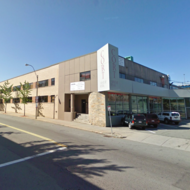
Demolition Delay Application: 155 North Beacon Street, Allston
The Boston Landmarks Commission (BLC) has received an application to demolish the commercial building at 155 North Beacon Street in Allston.
The BLC received a complete application to demolish the commercial building at 155 North Beacon Street in Allston, 02135.
We post each complete Demo Delay application to provide the public with information about proposed demolitions as early as possible in the Article 85 process. BLC staff has 10 calendar days from receiving an application to make a determination about historical, architectural, cultural, or urban design significance.
If you have input about the significance of this property, please send your feedback to b...@boston.gov before 5 p.m. on January 28, 2022.

David Strati
On Jan 20, 2022, at 10:09 PM, Anthony D'Isidoro <anthony...@msn.com> wrote:
--
To post to this group, send email to AllstonBr...@googlegroups.com
For more options, visit this group at http://groups.google.com/group/AllstonBrighton2006?hl=en
---
You received this message because you are subscribed to the Google Groups "AllstonBrighton2006" group.
To unsubscribe from this group and stop receiving emails from it, send an email to allstonbrighton...@googlegroups.com.
To view this discussion on the web visit https://groups.google.com/d/msgid/allstonbrighton2006/BYAPR01MB46131A3064670C5FB4681DA7AF5B9%40BYAPR01MB4613.prod.exchangelabs.com.
Anthony D'Isidoro
Mayor Michelle Wu announced that the City of Boston is holding a second set of virtual job fairs through the end of January for Boston residents to learn more about key employment opportunities with the City.
The job fairs are open to all Boston residents with the goal of reaching as many residents of Boston that are currently seeking employment opportunities. This initiative will serve as an opportunity for individuals across each of our neighborhoods who may not have considered working for the City to gain a better understanding of what departments do and what roles are available.
Through the end of January, several departments will participate in one or multiple job fairs, including: Boston Public Schools (BPS), Department of Innovation and Technology (DoIT), Boston Fire Department, Office of Police Accountability & Transparency, Environment, Parks and Recreation, Age Strong, and Operations
The second round of Job Fairs are on the following dates with the corresponding departments:
Sunday, January 23, 5:30 p.m.
Monday, January 24, 5:30 p.m.
Tuesday, January 25, 6:00 p.m
Wednesday, January 26, 5:30 p.m.
Thursday, January 27, 5:30 p.m.
Office of Police Accountability and Transparency
Saturday, January 29
10:00 a.m: Boston Public Schools
3:30 p.m: Boston Fire Department
Monday, January 31, 5:30 p.m.
Boston Public Health Commission
In addition to participating in various job fairs, Boston Public Schools launched the BPS Community Recruitment and Hiring Campaign in November 2021. The campaign is a targeted community-focused recruitment and engagement effort that provides members of the community with information about and support to begin and complete the BPS hiring process. These sessions will be offered on evenings and Saturdays and are available to support multilingual individuals. Our goal through the campaign is to provide “one-stop” hiring support available to candidates at all phases of our hiring process.
If an individual is unable to attend the upcoming January job fairs virtually, please complete this form to schedule a conversation with a relevant department’s Human Resources (HR) representative.
For questions regarding participation in the various job fairs, your principal point of contact with the City will be:
NAME: John Paul Gervais
EMAIL: johnpaul...@boston.gov
NUMBER: 671-635-5795
Mayor Michelle Wu today announced the City is seeking to hire several key Cabinet positions. The openings include two newly created Cabinet-level positions, a Green New Deal Senior Advisor, and a Chief of Planning. Additionally, the City is filling the critical roles of Chief Information Officer (CIO) and Chief of Human Services.
The open roles are as follows:
Senior Advisor, Boston Green New Deal
The Senior Advisor will help shape an cross-departmental approach to climate and equity-led governance and help make Boston a groundbreaking model of city leadership. The Senior Advisor, working in close partnership with the Mayor, the Chief of Environment, Energy, and Open Space (EEO), the Chief of Operations, Chief of Streets, Chief of Planning, School Superintendent, and other senior city officials will have primary responsibility for driving the initiatives of the Boston Green New Deal and Just Recovery Plan laid out by Mayor Wu.
The Senior Advisor will provide leadership on building climate resilient infrastructure and affordable housing, shape zoning and planning, transit, and environmental justice initiatives, and collaborate with other city departments to build and renovate schools and other public facilities to meet net-zero standards and advance the Mayor’s climate agenda.
As a member of the Mayor’s Cabinet, this individual will co-chair a Green New Deal Cabinet with Chief of Environment, Energy, and Open Space, Reverend Mariama White-Hammond, and work closely with community members and stakeholders, and City, State, and federal leaders to ensure citywide climate resiliency and the execution of the City’s carbon neutrality plans.
The City will be partnering with a search firm to support the hiring process for the Green New Deal Senior Advisor.
Chief of Planning
The Chief of Planning’s job is to build a Boston with and for everyone. This role will have primary responsibility for driving the Mayor’s vision for planning that advances the goals of a more equitable, resilient, transit-oriented, and affordable city. The Chief of Planning will have an unprecedented opportunity to be at the forefront of making this vision a reality.
The creation of a Cabinet-level Chief of Planning is the first step in Mayor Wu’s efforts to reform the City’s processes for planning and development. The Chief of Planning will serve as the Mayor’s point person to coordinate and direct all City plans, land use directives, and all related development policies and procedures. The Chief will play a central role in considering structural reforms to the Boston Planning & Development Agency (BPDA) while assuming a top leadership role in ongoing planning, zoning and development. From that position, the Chief will work with the BPDA Board, Director, and staff to advance reforms that ensure a planning-led approach to development review.
The Chief of Planning will also assume responsibility for advancing the City’s plans for zoning code reforms, spearhead public engagement initiatives to involve residents and community groups in planning, and coordinate with development review staff to ensure predictability and alignment between development and the City’s planning goals.
Chief of Human Services
The City is hiring a Chief of Human Services, who will help work toward a more equitable city, by ensuring that city services and opportunities for Boston residents are accessible and responsive to the needs of all.
The Chief of Human Services will lead the implementation of the Mayor’s human services agenda for Boston, overseeing key departments that provide services to city residents, and working in partnership with social service organizations and service providers across the city.
The departments within the Cabinet focus, in particular, on services for youth, seniors, veterans and persons with disabilities. Those departments deliver direct services, provide regulatory oversight, and build partnerships to help these constituents and all Boston’s residents thrive.
Chief Information Officer
The Chief Information Officer (CIO) is the City’s most senior IT leader, serving on the Mayor’s Cabinet and leading the Department of Innovation and Technology (DoIT). That Department helps connect the City’s more than 18,000 employees with the hundreds of thousands of constituents they serve.
The City is hiring for a CIO who will improve government operations and positively impact quality of life for Boston residents by expanding and leading the City's digital services, analytics capabilities, cybersecurity practices, broadband access, and internal and external facing technology tools, platforms, and infrastructure.
More details on the minimum requirements and core responsibilities, as well as a link to apply, are available on the City’s website for the Senior Advisor, Chief of Planning, Chief of Human Services, and Chief Information Officer
Anthony D'Isidoro
Hello Everyone,
Required reading. A comprehensive analysis of America's rental housing in 2022.
Tony
America's Rental Housing 2022 (Joint Center for Housing Studies of Harvard University: January, 2022)
Full Report: America's Rental Housing 2022 (harvard.edu)
Executive Summary
Rental housing demand came roaring back in the second year of the pandemic, reducing vacancy rates and driving up rents. Some of this rebound reflects the lack of inventory in the for-sale market, which has kept many higher-income renters from buying homes. At the same time, lower-income households that took the brunt of job losses during the lockdown still struggle to cover their rents. While unprecedented levels of federal assistance helped keep evictions down, the need for a permanent, fully funded housing safety net is more urgent than ever. A key element of that support must be to protect the existing stock against the threats from climate change.
REBOUND IN RENTAL MARKETS
After a cooldown early in the pandemic, rental housing markets heated up again in 2021. The Housing Vacancy Survey put the number of renter households at 44.0 million in the third quarter of the year, an increase of about 870,000 households from the first quarter of 2020. With this resurgence in demand, the overall rental vacancy rate dropped to just 5.8 percent—its lowest reading since the mid-1980s.
In the professionally managed apartment market, the number of renter households shot up by a record 4.8 percent in the third quarter of 2021 from a year earlier. Conditions in the higher-quality segment tightened the most, with vacancy rates falling 4.2 percentage points from the last quarter of 2020, to 6.2 percent. Vacancy rates also declined by more than a percentage point year over year in both the moderate- and lower-quality segments, to the 3.7–4.0 percent range. As a result, asking rents for all professionally managed apartments spiked in the third quarter, led by a 13.8 percent jump for units in higher-quality buildings.
Strong rental demand has kept the prices of apartment properties on the rise. Indeed, price appreciation was at a record high of 16.8 percent in October 2021, pushing capitalization rates down to just 4.1 percent in the third quarter. Despite soaring prices, favorable interest rates and ready access to capital helped to lift rental property acquisitions from early-pandemic lows. Indeed, multifamily mortgage originations surged in the third quarter, increasing by a record 105 percent.
The ownership of rental properties continues to shift from individuals to business entities. According to the latest Rental Housing Finance Survey, the share of rental properties owned by non-individual investors rose 8 percentage points from 2001 to 2018, to 26 percent. This trend may well have continued through the third quarter of 2021, when investor purchases of homes—many of which are ultimately converted to rentals—hit their highest level in two decades. Fully 74 percent of those purchases were single-family homes, a record-high share that indicates growing investor interest in single-family rental properties.
COVID’S LINGERING FINANCIAL IMPACTS
While most tenants managed to keep up to date on rent throughout the pandemic, some 15 percent of renter households were in arrears in the third quarter of 2021. At the same time, nearly a quarter of renter households reported that they had lost employment income in the previous four weeks.
Lower-income renters were especially hard hit by income losses and likely to fall behind on rent. Fully 23 percent of households with incomes below $25,000, along with 15 percent of those with incomes between $25,000 and $50,000, were behind on their payments in the third quarter of 2021. By comparison, just 5 percent of households making more than $75,000 owed back rent.
Disproportionately large shares of Black and Hispanic renter households have also had difficulty keeping up with their housing payments. Nearly a quarter of Black renters were behind on rent in the third quarter, as well as 19 percent of Hispanic renters. The share of Asian renter households in arrears was slightly lower at 18 percent, while the share of white renter households was half that, at 9 percent. This disparity reflects long-term discrimination in labor markets that has consigned many households of color to low-wage jobs in the service industry—the sector that suffered the most drastic job cuts over the past two years.
The pandemic’s financial impacts may extend well beyond missed rent payments. A recent Joint Center for Housing Studies analysis found that more than two-thirds of renters that had lost employment income had used multiple resources to cover their living expenses, including drawing down savings, increasing their credit card debt, and borrowing from friends and family. Many also spent their economic impact payments and increased unemployment insurance benefits on rent and other basic needs. Even households that ultimately fell behind on rent reported that they had borrowed from friends and family, potentially widening the pandemic’s spillover effects not only to landlords but also to the broader community.
EFFORTS TO STABILIZE RENTERS
Keeping renters in their homes has been a priority since early in the pandemic. The CARES Act moratorium on evictions, targeted to renters living in properties with federally backed mortgages, was put in place in March 2020 (Figure 2). After that moratorium expired in July, the Centers for Disease Control and Prevention (CDC) issued back-to-back holds on evictions in September 2020 and August 2021. The first CDC order extended to renters that met certain income requirements and attested to hardship, while the second was restricted to areas with high COVID transmission but still covered about 90 percent of renters.
At the same time, the federal government quickly expanded unemployment insurance benefits and issued economic impact payments, providing much-needed cash directly to households. Student loan deferrals, monthly child tax credit payments, and increased Supplemental Nutrition Assistance Program (SNAP) benefits also helped renter households weather the massive job layoffs.
But even with these income supports, millions of renters were unable to pay for their housing. Two subsequent bills passed in late 2020 and early 2021 provided Emergency Rental Assistance (ERA) to help households pay back-rent and cover their current housing and utility bills, ensuring their housing security while also stabilizing property owners’ incomes.
However, getting these funds into the hands of eligible renters posed significant challenges for state and local governments, many of which had to create assistance programs from scratch. In addition, the initial requirements for documenting hardship and income losses were burdensome to renters, and many households were either unaware of the assistance available or unsure of their eligibility. As a result, just 1 percent of funds from the first ERA allocation were spent in the first three months of the program. By the end of October 2021, however, the share of ERA1 funds disbursed was up to 49 percent, with support reaching just over 2.5 million households.
All of these measures have provided a backstop for many renter households that could well have lost their housing. Indeed, the Eviction Lab reports that eviction filings declined sharply at the beginning of the pandemic and remained 40 percent below historical averages in November 2021. While filings rose after the second CDC moratorium ended, the increase through the fall was smaller than expected. This suggests that some combination of emergency rental assistance, income supports, and landlord flexibility has forestalled evictions
ONGOING AFFORDABILITY CHALLENGES
Despite a strong economy, the share of renter households with cost burdens fell only marginally in the years leading up to the pandemic. In 2019, some 46 percent of renters were at least moderately cost burdened (spending more than 30 percent of income for rent and utilities), including 24 percent with severe burdens (spending more than half of income for housing). Although down from the peak of 51 percent in 2011, the overall share of cost-burdened renters was still nearly 6 percentage points higher in 2019 than in 2001.
The number of cost-burdened renter households also remained elevated in 2019, at 20.4 million—an increase of 38 percent from 2001. Still, there were 883,000 fewer households with cost burdens in 2019 than at the peak in 2014. All of this recent improvement reflects a decline in the number of cost-burdened households with incomes under $30,000.
Even so, lower-income renters still accounted for 62 percent of at least moderately cost-burdened households and 86 percent of severely burdened households.
Indeed, the cost-burdened share of renters earning under $30,000 has consistently held above 75 percent since 2001. Half of these lower-income renters with cost burdens are households with older adults or with children.
Dedicating a large share of income to rent and utilities leaves little left for other necessities, including food and healthcare. In 2019, the median renter household had $2,400 each month to cover expenses other than housing. But cost-burdened households with incomes below $30,000 had just $360 to spend each month, an amount that would not cover basic needs in even the most affordable areas of the country.
COMPETITION FROM HIGHER-INCOME RENTERS
Higher-income households have increasingly turned to the rental market in recent years, driving nearly 70 percent of total renter household growth between 2009 and 2019. The number of renters making at least $75,000 jumped by 48 percent over the decade, to 11.3 million. With this increase, the share of renter households in this income group rose from 20 percent to 26 percent.
At least part of the growing popularity of renting among higher-income households is due to tight conditions in the for-sale market. Skyrocketing home prices and low inventories have put homeownership out of reach for many would-be buyers. According to Zillow, typical home values were climbing at an 18.9 percent annual rate in September 2021, up from 5.7 percent the year before. Rising rents have also made it difficult for potential buyers to save for a down-payment on a home.
And given the growing number of amenity-rich rental units in desirable locations, some higher-income households simply prefer to rent. With new rental construction heavily concentrated in the core counties of major metropolitan areas in 2010–2019, the number of urban renter households was up by 1.4 million over the decade. At the same time, the increasing availability of rental options outside of central cities—in particular, single-family homes that provide more space for families—also spurred a 3.6 million increase in renter households in suburban and small metro locations.
But many households rent their housing out of necessity rather than choice. Fully 36 percent of all renter households make less than $30,000 a year. After centuries of discrimination in education and labor markets, nearly half of Black renters have such low incomes. The shares of Hispanic (34 percent), white (33 percent), and Asian (28 percent) renter households earning less than $30,000 are smaller but still substantial.
While the growing presence of higher-income households in the rental market has propped up demand in recent years, it has also fueled competition with moderate- and lower-income households for housing, especially in supply-constrained areas. In turn, this competition has driven up rents and ultimately contributed to the shortage of 1.5 million rental units that are both affordable and available to households making up to 80 percent of the area median income (HUD’s definition of low income). For households at the bottom end of the income scale, the shortage of affordable and available homes is fully 6.8 million units.
SHIFT TO LARGER MULTIFAMILY BUILDINGS
Strong demand from higher-income households has given a lift to rental construction. Through November 2021, multifamily housing starts reached a three-decade high of 466,000 units at a seasonally adjusted annual rate, far exceeding the 350,000 unit annual pace averaged from 2014 to 2020. In addition, more than 375,000 multifamily units were completed in 2020, the highest number since the 1980s. And with nearly 650,000 units under construction, the pipeline of new apartments coming on the market should remain robust for some time
Production of multifamily units is increasingly concentrated in larger buildings. Three-quarters of rentals completed in 2020 were in buildings with at least 20 apartments, including about half in buildings with at least 50 apartments. Meanwhile, single-family homes make up a small but growing share of newly completed rentals, up from 10 percent in 2014 to 13 percent in 2020.
Between the jump in multifamily construction and losses of smaller rental properties, the composition of the rental stock continued to shift toward units in larger buildings in 2014–2019. The number of rental apartments in structures with at least 20 units increased by 1.7 million over this period, lifting their share of all rentals from 20 percent to 23 percent. Although the number of apartments in buildings with 5–19 units increased by just 110,000, units in these mid-sized properties also accounted for 23 percent of the stock. At the same time, the number of apartments in buildings with 2–4 units was down by 270,000 units, reducing the share to only 17 percent. Although single-family rentals also fell by some 770,000 units, they still made up about a third of the rental stock in 2019.
CONSTRAINTS ON NEW SUPPLY
Rental housing is highly concentrated in just a few neighborhoods and is essentially absent in others, limiting the places where renters can live. Indeed, rental units make up less than 20 percent of the housing stock in nearly a third of the nation’s census tracts.
Single-family only zoning and other density restrictions block the development of multifamily housing in many communities, thereby excluding renter households from those neighborhoods. Given that people of color are more likely to have lower incomes and to rent rather than own their homes, the geographic concentration of rental housing helps to perpetuate patterns of racial and socioeconomic segregation.
The supply of low-cost units is constrained by these same regulatory barriers, as well as by the rising costs of construction that push developers to build for the upper end of the market. Materials and labor costs more than doubled from 2001 to 2019, and were up 9 percent year over year in July 2021 alone. Land prices also climbed 16 percent year over year in the second quarter of 2021, while the employment cost index for private industry construction workers rose 3 percent.
In consequence, the median asking rent for newly completed apartments jumped from $1,604 in the first quarter of 2020 to $1,715 a year later. Such high rents put newly built units out of reach for many moderate- and lower-income households. At the same time, the stock of low-cost rentals is shrinking amid rising rents, tenure conversions, and losses to disrepair. Indeed, the number of units renting for less than $600 fell by 3.9 million between 2011 and 2019, reducing their share of the rental stock from 32 percent to just 22 percent.
REINVESTMENT NEEDS OF THE AGING STOCK
With rental demand soaring, property owners boosted total nominal spending on improvements and maintenance from $43 billion in 2009 to $79 billion in 2019. Much of the increase was for major upgrades such as remodels, additions, and structural alterations, more than doubling improvement outlays to $57 billion. In contrast, spending on basic maintenance and repair projects rose by just $1 billion over the decade, to $22 billion in 2019. Landlord surveys in 2020 and 2021 suggest that some owners have deferred maintenance spending since the pandemic began.
But much more investment is essential to preserve the aging rental stock, particularly units at risk of loss to either weather-related events or disrepair. As it is, some 17.6 million occupied rentals—40 percent of the nation’s supply—are located in areas with at least moderate risk of annual losses from natural hazards. More than a fifth (4 million) of the units under threat have rents under $600. Much of the subsidized stock is also located in high-risk areas, including 1.2 million units supported by the Low-Income Housing Tax Credit program, 700,000 project-based HUD units, and 200,000 USDA multifamily units.
A related priority is the need to reduce rental housing’s carbon footprint. The residential sector accounts for approximately a fifth of the nation’s greenhouse gas emissions. Although consuming less energy than owner-occupied homes, rental properties contribute significantly to this footprint. Along with providing environmental benefits, investing in energy efficiency retrofits would enhance rental housing quality while reducing utility costs for tenants.
Another urgent need is to modify rental housing to accommodate the aging population. The number of renter households headed by a person age 65 and over has already climbed to 7.2 million and will continue to rise over the next two decades. Households in this age group often have mobility problems and other disabilities that limit their ability to navigate or fully use their homes. Indeed, 12 percent of renters aged 65–79 and 23 percent of renters age 80 and over reported having such housing challenges in 2019, underscoring the widespread need for basic accessibility features such as walk-in showers and lever-style handles.
REINFORCING THE HOUSING SAFETY NET
The pandemic has highlighted the importance of stable and affordable housing as the foundation for health and well-being. And for the 4.6 million renters fortunate enough to receive assistance, HUD subsidies provide access to such a lifeline. Assisted households have an average income of just $15,000 and primarily consist of older adults, families with children, and people with dis[1]abilities (Figure 6). HUD assistance brings the average rent down to $355 a month and substantially reduces the incidence of cost burdens among recipients.
Among HUD’s programs, Housing Choice Vouchers are a key demand-side support. Vouchers make private-market rentals affordable to 2.3 million very low-income renters and provide recipients some choice in where they live. These portable, tenant-based subsidies provide households the flexibility to move to meet changing circumstances and are typically more cost effective than new construction. The program can also ramp up quickly. However, the effectiveness of this system depends on both the willingness of landlords to accept vouchers and on the availability of suitable housing for the voucher holder.
Supply-side measures include public housing and project-based Section 8 units, as well as the Low-Income Housing Tax Credit (LIHTC) program. Although woefully underfunded since its inception and facing a huge backlog of maintenance needs, public housing still provides 958,000 units that primarily serve renters with incomes below 50 percent of the area median. Since 2012, the Rental Assistance Demonstration (RAD) program has addressed some of public housing’s financing needs by allowing owners to convert to longer-term, more stable Section 8 contracts. These conversions have boosted the project-based Section 8 stock to 1.3 million units
The LIHTC program promotes the production and preservation of good-quality, affordable rental housing. This program provides tax credits for investors that finance affordable housing developments and has supported more than 2.5 million low-income units since its inception in 1986. However, many LIHTC units are now approaching the end of their affordability periods and could be lost from the subsidized stock. The dwindling supply of USDA-subsidized multifamily housing in rural areas is also nearing the end of its affordability period.
Although on a smaller scale, state and local governments have found ways to fund affordable housing development. The National Council of State Housing Agencies estimates that state multifamily housing bonds supported about 46,000 affordable rental units in 2019, and housing trust funds raise more than $2.5 billion each year to meet affordable housing needs. For their part, some local governments with strong and tourism-based economies are now looking to finance affordable housing through sales tax increases, while others are using funds from the American Rescue Plan Act to jumpstart housing projects.
But the challenge is enormous. Some 13.3 million households currently eligible for housing assistance are on their own to find housing they can afford on the private market. Making rental assistance an entitlement program, expanding both demand- and supplyside subsidy programs, and encouraging innovation in affordable housing construction and finance are all essential to meeting this challenge.
THE OUTLOOK
Conditions in the rental market are increasingly polarized, reinforcing the stark divide between higher- and lower-income households. While renters with financial resources can choose from a variety of rental options in desirable locations, millions of cash-strapped households struggle simply to find housing anywhere they can afford. In addition, many of the renters that were cost burdened before the pandemic have fallen behind on rent and now face the possibility of eviction.
The financial disruptions from the COVID-19 pandemic may continue to fuel the rental affordability crisis. Although record-high increases in rents and occupancy rates are likely to ease as rental markets adjust to these shocks, the constrained supply of homes for sale and the increasing attractiveness of renting may keep many higher-income households from making the move to homeownership. These market conditions would further limit the rental options for lower-income households, while rising rents would put homeownership further out of reach for those saving for downpayments.
This is a pivotal moment for national housing policy. The pandemic has brought the long-simmering rental affordability crisis to the fore, and the current administration supports large-scale investments in both new and existing rental housing, as well as in subsidy programs. By creating a comprehensive, well-funded housing safety net, the nation has the opportunity to pull millions of households out of poverty, address longstanding inequities in housing delivery, and ensure that every household has access to a decent and affordable home.
Anthony D'Isidoro


tahir h
--
To post to this group, send email to AllstonBr...@googlegroups.com
For more options, visit this group at http://groups.google.com/group/AllstonBrighton2006?hl=en
---
You received this message because you are subscribed to the Google Groups "AllstonBrighton2006" group.
To unsubscribe from this group and stop receiving emails from it, send an email to allstonbrighton...@googlegroups.com.
To view this discussion on the web visit https://groups.google.com/d/msgid/allstonbrighton2006/BL0PR01MB4611ADCEB6AC4C8A2A7E08CAAF5E9%40BL0PR01MB4611.prod.exchangelabs.com.
Anthony D'Isidoro
Are you passionate about arts and culture and interested in working with us to better support Boston’s arts ecosystem? Check out some of the current opportunities we have available in our office:
VIDEOGRAPHER
We're looking for a videographer to create videos that help tell the story of our office's grants, programs, and initiatives through the artists we work with. The videos will spotlight artists who have been supported by or participated in MOAC’s programs, as well as artists working in communities hardest hit by COVID-19. Examples of potential video topics include:
- COVID-19 relief and recovery efforts
-
artists who have benefited from various professional development opportunities across our office
-
Boston Artists-in-Residence videos, and
-
documentation of the mural process for the Legacy of Rita Hester mural
The selected videographer will work as a contractor from February - June. Applicants must apply by January 21 at 5 p.m. through the City's supplier portal. You can find the RFQ by searching for event EV00010188 titled "RFQ: Video Production Services".
COMMUNICATIONS INTERN
We're looking for a Communications Intern to help us with social media and other digital content from February - June. This is a great opportunity for anyone who is passionate about the arts and supporting the individuals and organizations that make up Boston’s arts community. This intern will work with our Communications Director on various projects and learn about communications work within city government. Responsibilities will include writing posts for social media, assisting with the creation of event listings and other online content, and designing graphics.
Interested applicants should apply for the Communications Intern position by January 21 at 5 p.m.
ADMINISTRATIVE ASSISTANT
We're also hiring a full-time Administrative Assistant to assist with a wide variety of financial functions within our office. Responsibilities will include assisting with payments for ongoing MOAC grants and contracts, overseeing MOAC operations, and managing vendor and affiliated business relations for the department. Apply for the Administrative Assistant position by January 31.
PHOTOGRAPHER
We are excited to work with a photographer to document Boston’s public art collection! Currently, the collection is only partially photographed, with roughly 250 artworks remaining. The collection includes various types of artwork such as sculptures, statues, murals, fountains, and architectural elements, and includes diverse media, both in interior and exterior locations.
The expected term of the contract will be 20 weeks between February and June 30, 2022. Applicants must apply by February 2 at 5 p.m. through the City's supplier portal. You can find the RFQ by searching for event EV00010234 titled "Art Collections Photographer".
WORKFORCE AND PROFESSIONAL DEVELOPMENT CONSULTANTS
We're looking for qualified organizations, companies, and individuals who are interested in providing technical assistance, professional development, and workforce development services to Boston artists and creative workers. Services contracted through this RFQ will focus on supporting Boston artists, arts educators, and creative workers who were most impacted by COVID-19.
Applicants must apply by February 11 at 5 p.m. through the City's supplier portal. You can find the RFQ by searching for event EV00010141 titled “Workforce and Professional Development for Artists”.
Anthony D'Isidoro
The Allston-Brighton Homeownership Program!
To learn more, contact ABCDC at hom...@allstonbrightoncdc.org or 617-787-3874 x35 or visit www.allstonbrightoncdc.org/ab-homeownership-program

Anthony D'Isidoro
On My Block: What It’s Like Living in Harvard’s Backyard (Francis Immanuel N. Puente, The Harvard Crimson Opinion Writer: January 25, 2022)
Long before Allston-Brighton became nice, my best friends and I would take long walks around the neighborhood for fun. There was nowhere to go and not much to see except for the Tedeschi’s on the corner of Market and Faneuil and McKinney Field just a block and a half down the street. It became something of a tradition for us: Every day after school, we’d play two-hand-touch in our khaki pants and dress shoes, buy Little Debbie Honey Buns in obscene quantities, and roam around our simple, unpretentious neighborhood. Then came New Balance. And then the Lantera. The Aberdeen. The Saybrook. Harvard.
It’s no secret that Harvard’s property development is contributing to the rapid gentrification of Allston-Brighton. The University owns about one-third of Allston, which houses Harvard Business School, Harvard’s athletic facilities, and the new Science and Engineering Complex. Still pending state approval are the Enterprise Research Campus on Western Avenue and the development of the old Beacon Park Rail Yard by the Massachusetts Turnpike. Private developers, in anticipation of Harvard’s expansion into Allston-Brighton, have been eager to capitalize on what Boston officials say is the biggest building boom in the city’s history.
But what about the people who actually live here? While Boston officials and real estate developers are busy putting Allston-Brighton on the map, we have been struggling to pay rent in a time of pandemic and racial reckoning. Our diverse community, faced with mounting housing insecurity and social tension, has become a breeding ground for hate.
With land values increasing and new luxury apartment buildings popping up every few months, the average rent in Allston-Brighton for a non-luxury two-bedroom apartment has increased by more than 38 percent over the last five years, from $1,807 in 2016 to $2,500 in 2021. And as rent goes up, people get pushed out. It is no coincidence that Boston is ranked the third-most “intensely gentrified” city in the United States and that Massachusetts ranks first in the growth of family homelessness.
Consider, too, that Allston-Brighton’s population is made up of 30 percent people of color, with immigrants from every corner of the globe. These factors — combined with increased media coverage of anti-black police brutality in other major American cities and President Trump’s insinuations about China’s role in the Covid-19 pandemic — coincide with the City of Boston recording an all-time high of 355 hate incidents in 2020.
During the pandemic, my two best friends and I settled back into our old tradition of walking around the neighborhood after nearly five years of being too busy to hang out regularly. Only this time, there were a lot of places to go and a lot of things to see. At the top of our list were the new restaurants in Allston-Brighton, where everybody knows you can find the best Korean food in all of Boston. I remember waiting with my friends to pick up our takeout dinner from Coreanos, when a middle-aged white man, sitting on a nearby bench with tattered clothes and a knapsack, interrupted our conversation and asked, “Are you guys from China?” The only thing I could bring myself to say was no. It wasn’t a lie either — two of us were Filipino and the other was Chinese American, born right here in Allston-Brighton. “Oh, you guys are from here?” We nodded. He left us alone after that. I couldn’t help but think that we had just barely escaped something more serious.
On another night, my two friends and I were coming back from dinner on Harvard Avenue when an elderly white man, sitting on a bench with a flushed face and bottles at his feet, asked for the time before narrowing his eyes and pointing at us, demanding to know if we were Chinese. My friend and I both responded that we were Filipino. I closed my eyes in anticipation of my other friend’s response: “I’m Vietnamese, man,” he said, his voice breaking at the lie. There was a lump in the back of my throat. We walked in silence for several blocks afterwards. I still wonder what would have happened if he had told the truth.
The crux of the matter is this: If you take an ethnically diverse neighborhood whose residents are being forced out of their homes and onto the streets and you infuse it with hateful sentiment, you get a community fractured along race and class lines.
The totality of our experience tends to get overlooked when it comes to discussions about gentrification in Allston-Brighton. There is far more at stake here than winning state approval for development projects and rising property values — we’re hurting, and we need to find a way to heal. It’s time for Harvard to start paying attention to what its expansion is doing to the Allston-Brighton community.
Francis Immanuel N. Puente ‘24, a Crimson Editorial editor, is an English concentrator in Adams House.
Anthony D'Isidoro
Boston Civic Design Commission Presents Updated Proposal for Harvard’s Allston Development (Michal Goldstein, The Harvard Crimson: January 26, 2022)
Architects for Harvard’s proposed Enterprise Research Campus in Allston presented updated plans for the project at a Boston Civic Design Commission meeting Tuesday evening.
The development, which will be located next to the Science and Engineering Complex across the street from Harvard Business School, would be home to a hotel and conference center, affordable housing units, green space, and research-focused companies if it is approved by regulators.
The Boston Planning and Development Agency is still reviewing the project. As part of the approval process, the BPDA assists developers in assessing a project’s impact on the environment and transportation and solicits public input.
Allston residents have previously expressed dissatisfaction with Harvard’s affordable housing and public transportation proposals, as well as with Harvard and project developer Tishman Speyer’s engagement in the Allston community.
During Tuesday’s meeting, the group of architectural firms working on the project shared updates to the project plan in response to design critiques.
Daniel H. Baumann, design director for Henning Larsen Architects, began the presentation by addressing previous requests for design changes, including to the project’s labs and conference center.
Baumann and Weston Walker, a partner at the architectural firm Studio Gang, displayed images of the newly-designed entrances to the development’s planned east and west labs, and the connector facade between the two buildings.
“We have added this canopy element that really draws your eye to the main entrance to the West Lab,” said Baumann, describing the entrances’ covered pathways.
Baumann addressed comments from a previous Boston Civic Design Commission meeting that called for a more simplified connector between the East and West Labs and showed the updated design.
Linda Eastley, managing partner of Eastley and Partners, said she was concerned that the new design lacked transparency at the ground and upper levels at the corner of the East and West Labs.
“It's such an important corner facing the river. It's one of the first introductions that a visitor will have to this site,” she said. “I'm certainly sympathetic to the service requirements of the building and find myself still wanting to have some kind of animated ground floor at this corner.”
Eastley added that the inability to see through that corner is “a major drawback.”
Walker said the architects had considered numerous practical alternatives.
“We really did look at almost every option for how to arrange the different vertical and horizontal functions that are necessary for the building to operate properly,” he said. “There's a degree of reality here that we've had to contend with.”
“I still want to see into the building,” Eastley said.
David P. Manfredi, CEO and founder of Elkus Manfredi Architects, commended the architectural team on their integration of previous comments regarding the entrances to the labs.
“I think that’s well done, appropriate and responsive to what we talked about at the last subcommittee,” he said.
Anthony D'Isidoro

Anthony D'Isidoro
Community expresses concerns over proposed campus (Catherine Hurley, The Bulletin: January 27, 2022)
Representatives from the Boston Planning and Development Agency (BPDA) and life science developer IQHQ were met largely with opposition from Allston-Brighton community members during a Jan. 18 virtual public meeting to discuss a new development at 155 N. Beacon St.
The proposed three-building life science campus will displace more than 300 musicians who rent rehearsal space at the Sound Museum — a 24-hour facility owned by William “Des” Desmond.
Although Desmond supports IQHQ’s promise to relocate the Sound Museum to a new space in Boston before development of the campus begins, musicians expressed concerns about location, affordability and a lack of community engagement from IQHQ and the BPDA.
“This is the best-case scenario for my business and a home for the musicians,” Desmond said.
IQHQ representatives began the meeting with a presentation to outline what the completed campus will look like and share the developer’s priorities.
The existing building at 155 N. Beacon St. will be demolished and replaced with three new buildings, a two-level underground parking garage and 27,000 square feet of accessible open space. The development will also include realigning Life Street with neighborhood streets.
The labs are expected to have a Biosafety Level 1 or 2 rating, meaning there is a low-to-moderate risk for individuals working in the lab and low risk to the surrounding community. The facility will be built with the mechanical capacity to convert space into a Biosafety Level 3 lab if needed, which represents a high risk to individuals and low risk to the community. COVID-19 vaccines, for example, were developed in converted Level 3 labs.
The center yard will be privately owned public space used for events like farmers’ markets and performances.
“We want to invite the neighborhood in here to take advantage of some of the great things we’re doing here,” one IQHQ representative said.
IQHQ is working with the principal of Brighton High School to build a teaching lab in the under-enrolled school’s empty space and connect students with life science workshops and internships. The company is also planning to connect students at Bunker Hill and Roxbury community colleges to lab technician positions.
The response to the development team’s presentation was overwhelmingly negative, though a few attendees expressed support for the project, including Vin Coyle on behalf of the Iron Workers Local 7 Union.
“The first act of this project will be the demolition of the Sound Museum, and that’s an absolute non-starter for me,” Justin Brown, a community member and Sound Music tenant in the 1990s, said, calling the space a “workhorse of the local music scene.”
“The Sound Museum is a part of our community in Allston. It’s part of the music scene, and you’re destroying that and replacing it with a lawn,” Mandy Wilkens, an organizer with the Party for Socialism and Liberation, said.
Community member Ian Bouslough said the development team’s silence in response to artists’ concerns “is a tacit acknowledgement that there is no plan whatsoever.”
“It has completely destroyed my faith that there is anything worth investing in with this project as an artist,” he said.
Sound Museum members requested that a rehearsal space is guaranteed in writing before the development moves forward.
Jennifer Schultz of Sullivan & Worcester said IQHQ had been in communication with Desmond and the Sound Museum, the property tenant, for months prior to the meeting, but renters at the Museum said information about the project was not shared directly.
David Surette, senior vice president at IQHQ, said it will be several months before Sound Museum users are relocated, though he acknowledged that developers could have done a better job relaying information about the plans with the community.
“We have time to find a place, build a place and help people move,” he said. “And then we can go ahead and start the development.”
“There isn’t anything dishonest going on,” Desmond said. “We are really working hard together to find a spot that’s affordable for the 300- plus musicians that are in the Sound Museum.”
Although Desmond said he will not reveal a name until plans are finalized, he is looking at spaces and negotiating prices for the new location.
“Nobody likes large-scale development coming in and ruling over community, and I’m one of those people too. But I have to take what I can get, and I want to get rebuilt,” he said.
Community members can submit a public comment on the project until Feb. 4.
Anthony D'Isidoro

Anthony D'Isidoro

We’re declaring a snow emergency starting tonight at 9PM ahead of a winter storm forecasted to begin Saturday AM. You can expect between 18–24 inches of snow & winds as high as 50 MPH. Residents are encouraged to stay home & ride the T if travel is necessary. Learn more at www.boston.gov/snow
David Strati
On Jan 28, 2022, at 4:29 PM, Anthony D'Isidoro <anthony...@msn.com> wrote:
We’re declaring a snow emergency starting tonight at 9PM ahead of a winter storm forecasted to begin Saturday AM. You can expect between 18–24 inches of snow & winds as high as 50 MPH. Residents are encouraged to stay home & ride the T if travel is necessary. Learn more at www.boston.gov/snow

--
To post to this group, send email to AllstonBr...@googlegroups.com
For more options, visit this group at http://groups.google.com/group/AllstonBrighton2006?hl=en
---
You received this message because you are subscribed to the Google Groups "AllstonBrighton2006" group.
To unsubscribe from this group and stop receiving emails from it, send an email to allstonbrighton...@googlegroups.com.
To view this discussion on the web visit https://groups.google.com/d/msgid/allstonbrighton2006/BL0PR01MB4611B0DDFED231E86A856618AF229%40BL0PR01MB4611.prod.exchangelabs.com.
Anthony D'Isidoro
January 2022: Latest Updates from the Mayor’s Office of Housing
Throughout the year, MOH supported Bostonians impacted by the pandemic and focused on helping to ensure an equitable
recovery, while continuing our core work. MOH’s core work includes: creating and preserving income-restricted housing; housing our unhoused neighbors; assisting Bostonians in buying, repairing, and preventing foreclosure of their homes; helping renters with
rental assistance to remain stably housed or helping them find new affordable housing; and developing and enacting new policies and programs to further help residents achieve their goals of stable housing and homeownership.

2021 was a strong year of achievement in housing production in the city of Boston. It was the best year on record for new development for housing targeted to low-income Bostonians earning less than 60% of Area Median Income (AMI), seniors, and the formerly homeless.
In 2021, MOH announced its largest ever supportive housing project in the rehabilitation of 140 Clarendon Street. When the renovation, by developer Beacon Communities, is complete, the development will create 210 income-restricted apartments, 111 of which are reserved for individuals who are currently experiencing homelessness and will include supportive services from Pine Street Inn. The remaining 99 apartments will be restricted to residents with incomes at or below 30%, 50%, or 60% of AMI.
That announcement was just one of the significant projects that began or completed in December 2021. Other December 2021 highlights include:
- More than 1,000 new units were permitted. 377 of those units, or 38 percent, were income-restricted units.
-
Another 406 units were completed: 113 were income-restricted.
These totals supplemented the already strong numbers from earlier in the year, which include:
- 1,080 new units of income-restricted housing were permitted in 2021, a record 32 percent of the total of 3,404 new housing permits.
-
4,051 units of housing completed, and 767 (19%) are income-restricted;
-
6,543 units or 21 percent of the 30,608 new housing units in the active pipeline are income-restricted.

In 2021, the Supportive Housing Division continued the challenging work of housing our unhoused neighbors. Overall,
2,452 people in 1,759 households were housed. This includes more than 1,200 single individuals, 178 veterans, and 110 people who had been living on Boston’s streets.
In 2021, 775 individuals from almost 700 households were housed through the rapid rehousing program that provides short-term support for people experiencing homelessness, often in the form of rental assistance. Other supports are also provided to ensure that this housing stabilization is maintained.
MOH also launched new programs and established new partnerships to best serve justice system-involved or gang-involved youth and young adults experiencing homelessness. A rapid rehousing program was created in partnership with the Justice Resource Institute to connect young people with housing and supportive services. Throughout the year, JRI and MOH helped 140 youth and young adults exit homelessness, and offered 109 more youth a youth dedicated housing opportunity.
MOH partnered with Recovery Services, the Boston Housing Authority, and many of our partner service provider organizations on a Street to Home initiative to coordinate street outreach assessment, engagement, referral, and placement of unsheltered clients into rapid, low-threshold transitional, and permanent supportive housing. This initiative housed 110 individuals with another 100 in interim placements or matched to a housing resource.
The Supportive Housing Division also re-launched the Coordinated Entry System and new assessment tools for assisting people in exiting homelessness. The Continuum of Care assessed more than 700 clients, and nearly 250 of them were referred for Emergency Housing Vouchers.

In 2021, the Office of Housing Stability (OHS) assisted more than 4,852 households with the following services: rental relief funding, eviction prevention, homelessness prevention, housing counseling, emergency fire assistance, and landlord/tenant assistance.
This support averted 1,354 evictions and prevented potential homelessness, placed 319 households into temporary housing, and 237 households into permanent housing. In 2021, OHS assisted 203 households who were displaced due to a fire.
In addition to households served through these programs, OHS provided rental and utility assistance to more than 2,500 households, hosted weekly legal clinics for over 1,000 constituents since launching the clinics in February 2021, and launched new financial resource programs in response to emerging needs.

2021 saw the Boston Home Center’s (BHC) foreclosure prevention numbers rise to near-record levels after the end of the federal eviction and foreclosure moratorium established in 2020. Through intensive mitigation and prevention work, the BHC was able to help 200 homeowners keep their homes, preserving $70 million in real estate. Eighty-four percent of all households assisted with these services were headed by persons of color. Only seven owner-occupant homes were foreclosed upon in Boston in 2021, a new record low.
2021 also brought an expansion of the ONE+ Mortgage product and a new infusion of Community Preservation Act resources. These new resources enabled the Boston Home Center to more than double the number of homebuyers assisted in 2021, resulting in an all-time record of 176 Bostonians becoming first-time homebuyers.
In addition, homeowners continue to participate in the Accessory Dwelling Unit Initiative with 30 new ADUs permitted in 2021 and another 59 in the permitting pipeline.
MOH
IS HIRING FOR MULTIPLE POSITIONS

MOH is looking for dedicated individuals who want to join us in our work to make Boston a better, more equitable city. We’re looking for leaders in the housing field, as well as professionals who are passionate about public service.
Take a look below to see what’s available — and forward these job descriptions to people in your circle who should be applying.
Deputy Director for Homeownership Programs, Boston Home Center
The Deputy Director for Homeownership Programs is responsible for overseeing the management and operations of the Boston Home Center's Homeownership Programs. Learn more and apply.
Deputy Director, Office of Housing Stability
The Deputy Director is responsible for operating the Office of Housing Stability. Learn more and apply.
Associate Deputy Director, Supportive Housing
The Associate Director is responsible for overall leadership, supervision and project management associated with policy and strategic plans to support the mission of equitably ending homelessness in Boston. This is a senior leadership role that will supervise and manage staff, consultants, and contractors that lead system change, implementation, and efforts related to policy and strategic plans. Learn more and apply.
Assistant Director, Supportive Housing
The Assistant Director is responsible for overall leadership, supervision and project management associated with funding, data and performance to support the mission of equitably ending homelessness in Boston. This is a senior leadership role that will supervise and manage staff, consultants, and contractors, including but not limited to the team responsible for collecting and reporting on all homeless data through the Homeless Management Information Systems in Boston and the unit that manages the Division’s housing and services contracts. Learn more and apply.
Assistant Director, Neighborhood Housing Development
The Assistant Director is responsible for a variety of housing development programs and projects. Learn more and apply.
Senior Housing Development Officer, Supportive Housing
This new Senior Housing Development Officer to End Family Homelessness role will work in close partnership with the Office of Housing Stability, as well as staff the Special Commission on Ending Family Homelessness. Learn more and apply.
Housing Development Officer, Neighborhood Housing Development
The Housing Development Officer is responsible for all appropriate project and program management activities for assigned housing development projects and initiatives. Learn more and apply.
Construction Specialist II, Neighborhood Housing Development
The Construction Specialist II is responsible for all construction management and oversight activities and assistance for development projects and programs, including but not limited to 1-3 family rehabs, adaptive re-use developments, renovations of existing rental developments and new construction, wood frame, masonry and steel mid-rise and high rise construction. Learn more and apply.
Special Assistant to the Director
The Special Assistant provides administrative services to the chief of housing and other members of the director’s office by performing work of a highly confidential and complex nature. Learn more and apply.
Anthony D'Isidoro
Zero time to waste to achieve net-zero emissions (Mindy Lubber, Boston Globe Opinion: January 31, 2022)
The state has lost critical
tools to fight the climate crisis, but new solutions are within reach.
Zero
time to waste to achieve net-zero emissions - The Boston Globe

The Baker administration can deliver high-impact transportation projects, such as a version of the I-90 project in
Allston
that prioritizes improved rail transit and biking and walking infrastructure.DAVID L. RYAN/GLOBE STAFF
Over two decades, Massachusetts has been a leader in confronting the climate
crisis — setting aggressive benchmarks to reduce the Commonwealth’s carbon pollution before boldly adopting a mandate last year that requires the state to achieve net-zero emissions by 2050.
But even the most ambitious climate goals mean little if they don’t usher in the policies, investments, and innovations needed to help Massachusetts effectively and equitably achieve them. And this is where the state has run into a challenge.
Two recent developments threatened the state’s efforts to clean its economy: the suspension of the regional Transportation and Climate Initiative, which would invest in clean transportation across the East Coast, and the rejection by Maine voters of a transmission line to deliver Canadian hydropower that would bolster the Commonwealth’s clean energy resources.
These were disappointments. But individual policies are meant to serve broader goals. For Massachusetts, that means slashing the climate pollution from transportation and electricity generation.
What’s important now is that the state find other ways to achieve these goals. Thankfully, there are options.
The decision to shift away from TCI emphasizes the urgent need for the Commonwealth to clean up its transportation system, which is its leading source of climate pollution. With more than $9 billion in new federal infrastructure money on the way, the Baker administration can deliver high-impact transportation projects, including the long-needed connection between the MBTA’s Red and Blue Lines, as well as a version of the I-90 project in Allston that prioritizes improved rail transit and biking and walking infrastructure. Officials should also seek creative ways to use federal funds to cut transportation pollution — like Boston Mayor Michelle Wu’s plan to pay for fare-free service on certain MBTA bus lines, which will increase transit ridership while financially helping those who rely on buses.
Much of Massachusetts will continue to depend on cars, and it’s the state’s responsibility to ensure they pollute as little as possible. To reach net-zero emissions by 2050, all new car sales need to be zero-emissions by 2035. It’s critical that the state expand electric vehicle infrastructure and help residents with this transition well ahead of time. The Baker administration and the Legislature should increase the state subsidy for electric passenger vehicles, which has fallen behind other leading states. And it should implement a system so that buyers can get these rebates when they’re purchasing their cars and not months later. That would make it easier for drivers to buy cleaner vehicles that will save them money on gas and maintenance but that they may be unable to afford due to the higher upfront costs.
The state needs to speed up the shift to electrifying commercial vehicles. The trucks and vans that move goods around the state are central to the economy, but they’re responsible for a disproportionate share of emissions and air pollution, which causes heart and respiratory disease. State officials are poised to approve the Advanced Clean Trucks rule, which would require manufacturers to grow zero-emission vehicle sales over time. Massachusetts issued a preliminary rule for this program at the end of the year, and it must now lock in this progress by finalizing the rule promptly in 2022.
As for where all that power will come from? Massachusetts still has options for clean electricity — including through Maine, where the power line may still be an option. Or the state could consider alternative routes to bring in hydropower from Canada. The great news is that the offshore wind industry is off to a promising start in Massachusetts, and the enthusiasm from both state policy makers and the Biden administration suggests it may well become a hallmark industry for the state.
Massachusetts has become a hotbed of innovation in the clean energy transition, which represents a tremendous economic opportunity. The research and development around advanced solar power and nuclear fusion offers a tantalizing glimpse at affordable, carbon-free energy sources that could power Massachusetts in the coming decades. Breakthroughs in long-duration energy storage, for instance, will be crucial to ensuring access to clean power even when weather is not cooperating or demand spikes. But policy makers here and at the regional level must be prepared to help usher the adoption of these technologies within the grid and enact policies now to ensure the electric grid is used efficiently and that it prioritizes clean energy sources.
TCI and the Maine transmission line were important tools that could have helped Massachusetts in its fight against the climate crisis. But it’s clear there are other options. If those initial proposals are no longer on the table, then the state must move quickly and decisively to others. It’s not as if it has much of a choice: Massachusetts’ climate commitments aren’t just a a legal requirement. They will build the industries of tomorrow and protect our future.
Mindy Lubber is CEO and president of Ceres. She served as regional administrator at the Environmental Protection Agency New England under the Clinton administration.
Anthony D'Isidoro

Anthony D'Isidoro


Anthony D'Isidoro
No reason to think the Home Depot is closing. According to listing information in which a broker was advertising to sell the space occupied by Home Depot:
“Home Depot has operated a very successful store at this location since 2001 and has thirteen (13) years remaining on their primary term. Sources have stated this location is a top three-volume store in all of Massachusetts.”
Sent: Tuesday, February 1, 2022 1:48 PM
To: Anthony D'Isidoro <Anthony...@msn.com>
Subject: Watertown Home Depot Sold ($96.25m)


Anthony D'Isidoro
Gardening for Habitat
Time to start dreaming of gardens!
Email Friendso...@gmail.com to receive the Zoom link.

Anthony D'Isidoro

Anthony D'Isidoro


582 Cambridge Street Public Meeting
Boston Planning & Development Agency
Wednesday, February 2, 2022, 6:30 pm – 8:30 pm
The BPDA is hosting a Public Meeting for 582 Cambridge Street, a project located in Allston. The purpose of the meeting is to discuss the impacts and the project itself. The meeting
will include a presentation followed by Q&A and comments from the Public.
The Proponent is proposing to construct a new four (4) story building with twenty-two (22) units. The project will also have twelve (12) parking spaces and bicycle storage.
Please register for the meeting using the following Zoom link: www.zoomgov.com/meeting/register/vJItd-qspjIpEv0KPDTIeMYczoTxbPtjPME
Webinar ID: 160 034 8938
Toll-Free Call-in Number: 833.568.8864
Email Contact: Nick....@Boston.Gov

Cleveland Circle Community
On 2/2/22, 6:51 AM, "'for...@aol.com' via Homeowners Union of Allston-Brighton" <homeowners-union-o...@googlegroups.com> wrote:
All true. I have complained about this as well. We cannot have a community that consists only of oversized box-type housing, whatever income bracket is targeted.
We need businesses here also ans our local officials should advocate for diversity of use. A similar problem has been encountered in the Seaport district, which was initially only high-end housing but it was soon discovered that those residents ALSO need places to shop and buy practical goods.
Recent development in A/B has prioritized certain types of structures that are only suitable for the businesses that Eva mentioned. I would add that many of the newer retail spaces, such as those surrounding the New Balance buildings, seem to cater to a particular lifestyle -- students and transients. So there as well, the needs of families and homeowners are not being served.
And now the latest trend is to erect large buildings that will serve as lab space. This is happening in both A/B and Watertown and will result in increased impermanence of occupancy.
Bottom line: there will be no community left.
F.
-----Original Message-----
From: Eva Webster <evawe...@comcast.net>
To: cleveland-cir...@googlegroups.com <Cleveland-Cir...@googlegroups.com>; Homeowners Union of Allston-Brighton <homeowners-union-o...@googlegroups.com>; AllstonBrighton2006 <allstonbr...@googlegroups.com>
Sent: Wed, Feb 2, 2022 5:16 am
Subject: [HUAB] Re: [Cleveland-Circle] Watertown Home Depot Sold ($96.25m)
A neighborhood friend sent me the following email (the yellow highlights are mine):
On 2/1/22, 2:25 PM, _______ ---------> wrote:
Hope we don't lose Home Depot but something tells me we will.
Waiter in Chestnut Hill just told me the Home Goods that was supposed to stay in Allston is indeed closing with that new development. Young guy. He lives around the corner and hates what is happening down there. He told me some cool music space just got bought by a developer and he went to a neighborhood meeting trying to stop it.
I really miss that dollar store too.
Good bye suburbia. Welcome to my concrete jungle...
I agree, this does not bode well for Home Depot. There is no way this store can stay open without its parking lot, loading area and garden center – while developers will be building more and more big ugly boxes with no green spaces – the permanent eyesores that they are.
This imminent loss of Home Depot is really bad news for people who own/maintain homes, rentals, or commercial property in Allston-Brighton and the surrounding area, and for the many, many trades’ people who rely on that store to purchase materials, tools, and supplies to do their work and make a living.
I remember when Lowe’s wanted to come to North Allston-Brighton. Wouldn’t it be great to have it now? I was one of few people who rooted for Lowe’s – because I knew what the alternative would be -- but Lowe’s stood no chance. When big bucks are to be made on huge tall buildings, nothing else stands a chance (especially around here, with some pro- big development characters always coming out of the woodwork to discretely, or not so discretely, shill for those projects).
The BRA/BPDA never turns big buildings down just because a neighborhood may need something else. The unspoken thinking is: What neighborhood? You have no power – somebody should remind you of that – but we’ll pretend that we’re listening to you.
Losing HomeGoods, if it’s true, would be very, very bad too. And it’s only a matter of time before Mahoney’s closes as well (maybe it already has – something is going on there). There are no other stores anywhere nearby that could effectively fill all those voids. Brighton WholeFoods will go that way too, even if just temporarily. Thousands of car-less senior citizens and other residents will be left with no decent place to buy heathy and specialty foods, and regular groceries.
When the BPDA is talking about rezoning Western Avenue – why aren’t they making sure that larger retail establishments like Mahoney’s could actually stay? (That site has access from Soldiers Field Rd. which makes it ideal for large retail – even a home center.) This is what zoning is for – to ensure that the area continues to have land uses and amenities that people need. A city, or a neighborhood, is not just about housing.
But nobody in City Hall thinks like that. They just sit and wait for developers’ proposals to land on their desks, and then after some song-and-dance of “community meetings”, they just rubber-stamp them. So it’s the developers who decide what will be built – and any underlying zoning regulations or neighborhood needs and wishes that might stand in their way are simply thrown out the window. Community-oriented planning is, and has been a fiction in Boston for as long as anyone remembers.
Confronted with the loss of all major stores, those of us who own cars are now thinking, “Thank goodness for my wheels”. But lots of people driving farther out to get their stuff will amount to a lot if wasted time, contribute to road congestion and air pollution, and via increased gasoline costs, it will further raise people’s cost of living.
Losing Home Dpeot will also increase the costs of repairs, maintenance, and renovation jobs -- which will be then passed on to renters, home buyers, and customers – when many people are barely keeping up with their expenses, given rampant inflation and the totally destabilized and chaotic economy. (There is no guarantee that things will get better for regular people any time soon, or even in our life time.)
Also, what about all the A-B residents who were duped into thinking that this is, or should be, a “walkable neighborhood”, and you don’t need a car?
Yeah, “walkable neighborhood” -- until you need to urgently buy a plunger for a blocked sink, tub, or toilet, or until you might want to buy some pots and pans, or sheets or towels, or countless other things that normal, busy, working people need in their daily lives. Buying every little thing on line is not a solution – it’s impractical, time-consuming, more costly due to shipping charges, and not at all environmentally friendly.
If you’re a student or a young worker/renter who anticipates to move somewhere else in a few years, you may not care – but for permanent A-B residents to lose those stores will be a blow. Still, nobody who is responsible for planning development in Boston seems to care, or even understand this issue. (I’m not blaming the Wu administration because it hasn’t been in office long enough to be blamed.)
If people can’t shop locally, can’t own cars, can’t send their kids to good neighborhood schools that reflect the community they are in, are forced to live in crappy buildings with no green spaces (or as much as a private balcony), and have no control over anything that effects them around here -- why even live in Boston? Do you wish only for people with no other choices to live here? Is this going to create a great future for the city?
This lack of concern for the quality of life of Boston residents is a betrayal and dereliction of duty by those who are supposed to be our public servants and protect our interests.
Developers alone are allowed to make land use decision based solely on what is going to make most money for them – and zoning and prudent planning (which are supposed to protect a variety of uses, as well as the residential quality of life) are being routinely ignored. (Promises to address that were made in the mayoral race – we’ll see...)
Historically, zoning used to separate commercial and residential uses (though for practical reasons, it also allowed for retail in neighborhood centers and along major streets). That was just fine – since residential and commercial uses have different needs which can be in conflict. Then, at some point, real estate interests and their shills started lobbying for “mixed-use” zoning nearly everywhere.
Once a development area is declared “mixed use”, whatever is most profitable gets built there in a way that fills the site to the max, with other needed but less profitable use(s) getting squeezed out, or having only a token presence.
What is happening in Watertown with Home Depot is beyond our purview -- but in Boston, the mayor(s) and the BPDA have been fully complicit in creating similar outcomes – and often aided and abetted by local politicians, with housing advocates eagerly giving them a convenient cover. Some “community people” don’t have much use for zoning either – just “build-baby-build”, as long as you give them some payoffs/freebies for this or that pet cause. In essence, this is a quid-pro-quo corruption.
The end result will be that large parts of the neighborhood will be inhospitable to long-term residents and families – just a revolving door of renters and condo flippers who themselves will be fleeing to the suburbs as soon as they can afford to buy a house in some nice zoning-protected community – something that we’re being denied.
Funny thing that the A-B activists who are helping railroad all those oppressive projects, and those who do their bidding, think of themselves as paragons of righteousness. Sorry to say, but I think that A-B would be better off without such “goodniks”. Maybe then, those who care about attractive design, beauty, proper balance, moderate density, true economic diversity, green spaces/tree canopy, and preservation of neighborhood character where it is worth preserving, could be heard.
Zoning is a critically important planning tool – but it can only serve as such when it’s taken seriously. When it is routinely disregarded, the quality of life of local residents and homeowners usually declines -- and the resulting demographic/socio-economic changes undermine businesses as well – so eventually the place becomes largely transient and kind of dumpy-looking. (At that point, you cannot attract the type of investment that would keep the scale of the neighborhood intact.)
This of course creates a disincentive for owners of smaller, family-friendly properties to invest in renovation and beautification projects. When an area is unstable, unprotected, and thus subject to rampant speculation, the encroachment of larger developments makes it too risky to spend money on improving smaller properties. So they usually end up being sold to developers, who then take advantage of lax zoning to maximize density. Yards and trees are gone – never to return.
And when that is happening, the residents with larger households and disposable incomes that can support bigger, useful and attractive stores, are leaving the city – and all we’re left with are bars, smoke shops, marijuana dispensaries, liquor stores, pizza places, nail salons, and if we’re lucky, some coffee shops of varying quality.
The people who like to complain that zoning is too restrictive (“we need more housing” – always more housing), are responsible for all those undesirable changes. If you live in A-B, at some point you will not be able to even buy a bag of mulch, or a Xmas tree, or anything for the home except for what a CVS carries. You won’t be able to get your bike or a favorite pair of shoes fixed. And forget finding anything to wear on our body that you would like to see and touch before buying.
By the way, don’t count too much even on CVS.
CVS Closing 900 Retail Stores Starting in 2022 | RIS News
I’m not sure if HomeGoods will be closing permanently or just for the duration of construction (if the former, it would be scandalous, since the project went through the community process with the assumption and promise that HomeGoods was going to be incorporated into the new development).
One thing is for sure, that area will become very congested and ultra-urban -- no longer shopper-friendly -- even if the store survives. Pedestrian traffic alone cannot sustain larger stores – and parking will be limited. But nobody can just walk from Oak Square or Aberdeen to shop there. And even if you live closer, to be able to transport some purchases, you need to drive. So if garage parking is inadequate, people will have no choice but to patronize stores in the suburbs.
This is what leads to A-B becoming a retail/commercial desert. Councilor Breadon was expressing concern about Oak Square being a “food desert” – fair point – but this goes much farther: the entire A-B neighborhood is becoming a shopping desert.
Bars, smoke shops, pizza places, marijuana dispensaries, liquor stores, and nail salons do not begin to provide the full range of things/services that normal work/family/home-oriented people need. You should be able to buy clothing and shoes, and many items that are needed for the home and yard, without having to get into a car to drive to exurbs and suburbs – especially since the new urbanism ideology and environmental goals call for most people to forgo car ownership.
So how can you be telling people not to own cars when the closest places to buy many necessities, as well as some nicer things that make life more pleasant, are not reachable to them on foot or via a quick, easy ride on public transit?
I recall a certain community leader who believes that building large amounts of housing is our greatest need (he will recognize himself in what I’m about to write) lamenting the preponderance of nail salons in Oak Square (or maybe in A-B in general). I didn’t say anything, but I thought to myself: “If you prioritize housing, then everything around you becomes dense housing -- and there is no longer room, or market for other uses, goods and services that require larger spaces and parking. Hence, you end up with nail salons.”
Understanding and respecting the legitimate, protective goals of zoning, ensuring economic balance and diversity (but “progressives” nevertheless want to eradicate single-family zoning), and acknowledging that larger stores/commercial establishments (which also offer jobs) are an important part of the urban fabric, remain a blind spot for those who are charged with preserving and improving Boston neighborhoods.
They will continue to have this blind spot unless more long-term Boston residents step out of their comfort zone, and demand meaningful change. The message to the elected officials and “goodnik” activists should be as follows:
Your role is to protect our interests as a long-term, permanent residents of this neighborhood – not to sacrifice us for profit or convenience of those who do not live here, or are here only temporarily. We have a right to expect, and we deserve to have competent and loyal elected, professional, and civic leadership that doesn’t treat us like second-class citizens. Anything that is done to undermine us is noticed, and will be remembered.
Eva
Anthony D'Isidoro

59 Dunboy Street Abutters Meeting
Mayor’s Office of Neighborhood Services
Wednesday, February 2, 2022 @ 6:00 pm
Proposal is to extend the living space into the attic with a new roof
and dormers. New electrical work and new plumbing as well. Abutters meetings are an opportunity for residents to find out more about a proposal and log public comments with the Mayor’s Office. Those interested can participate here.
Email Contact: Conor....@Boston.Gov
Anthony D'Isidoro

32 Hobart Street Abutters Meeting
Mayor’s Office of Neighborhood Services
Wednesday, February 2, 2022 @ 7:00 pm
Proposal is to erect
a 4 unit townhouse building with 8 parking spaces. Existing structure would be razed. Abutters meetings are an opportunity for residents to find out more about a proposal and log public comments with the Mayor’s Office. Those interested can participate here.
Email Contact: Conor....@Boston.Gov

W Shoucair
--
To post to this group, send email to AllstonBr...@googlegroups.com
For more options, visit this group at http://groups.google.com/group/AllstonBrighton2006?hl=en
---
You received this message because you are subscribed to the Google Groups "AllstonBrighton2006" group.
To unsubscribe from this group and stop receiving emails from it, send an email to allstonbrighton...@googlegroups.com.
To view this discussion on the web visit https://groups.google.com/d/msgid/allstonbrighton2006/BL0PR01MB46112ECE07C4F25618DF29DFAF279%40BL0PR01MB4611.prod.exchangelabs.com.
Anthony D'Isidoro
Sent: Wednesday, February 2, 2022 3:00 PM
To: allstonbr...@googlegroups.com <allstonbr...@googlegroups.com>
Subject: Re: [AB2006] Tonight!! 32 Hobart Street Abutters Meeting
Anthony D'Isidoro
Brighton rehearsal space Sound Museum relocating to make way for life science campus (Olivia Deng, WBUR: February 1, 2022)
To Jen Millis, her space inside the Sound Museum in Brighton is more than a place for band practice. There is a mural painted by her friend, artist Massiel Grullón. Flyers of tours and shows she and her band Saint Ripper have played adorn the space. The room is set up with the band’s gear, merch and a mirror with ring lights so the band can get ready to play a show. “Every single thing that we needed to be in our band was in that practice space set up for us,” she said. “All of the spaces that I've used have been really special places because we do create our music there.”
As a musician in the Boston punk scene for 20 years, with practice spaces in the city for 15, being kicked out of them due to development is all too familiar for Millis. “While I'm happy to move and find a new place, obviously it's getting harder and harder,” she said. “You can't afford to live in Boston right now on the types of jobs that most musicians work. A lot of musicians work in bars, work behind registers.” When Millis heard the news about the Sound Museum’s proposed demolition, it was yet another instance of potentially losing a space to make art.
Established by Bill “Des” Desmond 40 years ago and operating at 155 N. Beacon St. in Brighton for 32 years, the Sound Museum has a long history of providing rehearsal and practice space to numerous bands and musicians, including The Cure and Iggy Pop. Though those with international fame have graced the Sound Museum, so have local musicians who have found a community there.

Brighton Sound Museum owner Bill "Des" Desmond walks along one of the long corridors of
studios at the facility. (Robin Lubbock/WBUR)
Offering practice space for 300 musicians and one of the few 24-hour facilities in the city, the Sound Museum is one of a few businesses still occupying the building. Previously owned by The Hamilton Company, San Diego-based life science developer IQHQ purchased the building for $50 million in March of 2021. Desmond said rent had increased every year for the past five years under The Hamilton Company. In IQHQ’s project notification form submitted to the Boston Planning & Development Agency (BPDA), the building was characterized as “an older, nondescript building, nearing the end of its useful life.”
The BPDA held a virtual public meeting for 155 N. Beacon St. on Jan. 18, which was attended by over 140 individuals. IQHQ presented its plan to demolish the building and replace it with a life science campus totaling about 409,395 square feet. During the public comment portion, attendees expressed concerns about the development’s implications and the developer’s lack of transparency, asking for documented confirmation about the construction of a new Sound Museum, as mentioned in IQHQ’s Jan. 12 press release. (The Boston Landmarks Commission received an Article 85 demolition delay application from IQHQ on the day of the public meeting: In 1995 the Boston Zoning Code was amended to include a demolition delay policy. The comment period for the property ends on Feb. 4.)
In IQHQ’s press release, the company stated they are collaborating with Desmond on building a new Sound Museum that includes practice space, performance space and two recording studios. “We've hired a broker, we've hired an architect and we have our own in-house folks that do our leasing,” said David Surette, senior vice president at IQHQ. A new location has not yet been determined, though IQHQ and Desmond are scouting sites in Boston. “We're not going to be booted out onto the street until the facility’s built,” Desmond said.

Brighton
Sound Museum owner Bill "Des" Desmond in one of the Brighton studios. (Robin Lubbock/WBUR)
According to Surette, construction projects of the scale proposed for 155 N. Beacon St. typically take 30 months. This project will mark the first time IQHQ has worked with artists. “[We’ve] got to learn a lot,” Surette said.
However, the commitment to finding a new space for the Sound Museum was not mentioned in the project notification form (PNF), nor IQHQ’s presentation at the meeting on Jan. 18. During the meeting, Jennifer Schultz, permitting counsel for IQHQ, responded to questions from the public regarding the omission, stating that the process had just begun and there is more to come. “We have been forming the conceptual approach to the development,” Schultz said at the meeting.
On Sept. 13, 2021, IQHQ filed a letter of intent for the project. Elected city officials responded with a letter of comment on Oct. 12 opposing the project in its form at the time. A Jan. 18 letter addressed to Caitlin Coppinger, project manager at BPDA, from elected city officials noted that IQHQ did not respond to their letter of comment and failed to make significant changes to the proposed project in response to concerns. The letter read: “We will not support this project until 1.) The Proponent commits to the inclusion of a rehearsal and recording facility on-site at 155 North Beacon Street, and 2.) Adequate steps are taken to ensure that this space remains permanently accessible to and affordable for Allston, Brighton and Boston musicians.” The letter was signed by City Councilor Liz Breadon, State Rep. Kevin Honan, Assistant Majority Leader Michael Moran, City Councilor Michael Flaherty, City Councilor Ruthzee Louijeune, City Councilor Julia Mejia and City Councilor Erin Murphy.
IQHQ’s presentation at the meeting focused on their detailed plan for developing a sprawling life science campus complete with three buildings, an underground two-level parking garage for 328 vehicles, retail space and green space. The company has already made a mark in Greater Boston with developments like Fenway Center, Alewife Park and 109 Brookline Ave. According to Matt Formicola, director of design at IQHQ, the proximity of 155 N. Beacon St. to Boston Landing will attract more visitors. Formicola and Schultz went into detail about open space, pedestrian and cyclist safety, campus design, community benefits and sustainability. Their plan includes building a teaching lab at Brighton High School so students can be prepared to find employment in the life science labs in the neighborhood.
Chelsea Ellsworth, a musician and Sound Museum tenant who runs a recording studio in the building, was not satisfied with the plan IQHQ presented. “It was almost completely unanimous from everybody in the entire 140-person meeting that [the plan] is not good enough on every level. Questions definitely weren't answered,” Ellsworth said. Regarding IQHQ’s talk about sustainability, she voiced her opinion: demolishing the existing building will spell negative effects for the environment by increasing traffic and air pollution.

A
mixing board sits on top of a piano in one of the studios at the Brighton Sound Museum. (Robin Lubbock/WBUR)
Ellsworth’s recording studio, one of the few transgender-owned in the state, prioritizes low-income and marginalized musicians who do not have the opportunity to record at other facilities. “It does truly feel like every entity in Boston is working against the idea that marginalized creative forces can sustain themselves.”
Artists in Boston have already lost EMF in Cambridge, Great Scott in Allston, OBERON in Cambridge and more. “There's always venues gone, it's become near impossible to book shows anywhere without at least a three-month notice,” said Brian Poulin, a musician and former Sound Museum tenant who’s lived in Boston for 11 years. “If people don't have a place to go play their music, there's not going to be any new output of music coming from this place.”
With this trajectory, Poulin said the city will continue losing the people who shape the culture. “You're not going to see a lot of cool flyers posted anywhere as much. You're not going to be able to walk down the street and hear a band that you've never heard play and be like, ‘I wonder what's going on in that building.’...It's going to feel like a milquetoast s----- city.”

Inside
one of the studios at the Brighton Sound Museum. (Robin Lubbock/WBUR)
Though Desmond acknowledged development’s negative impact on the city’s art spaces, he remains optimistic about the Sound Museum’s future. “If [IQHQ] helps me, I’m the one everybody's been under all these years. I mean, we're the biggest independent rehearsal complex in the Northeast,” he said. “The mission is to continue what we’re doing and keeping it as affordable as humanly possible.”
IQHQ plans to host an open house during the week of Feb. 21, which the company says will be an opportunity for people to meet with the developers. The company will also launch a website detailing the development design and schedule. BPDA will host another Impact Advisory Group meeting, though a date has yet to be confirmed as of this writing.
Millis said she would love to see concerns from artists taken seriously, but in her experience with being evicted from EMF, she and her bandmates tried to make their voices heard at meetings, but “nothing became of it.”
With the Sound Museum facing demolition, Millis emphasized the importance of affordable and centrally located practice spaces. “For most of us, [playing] music isn't paying any kind of bills. So it's for fun, for expression, entertainment for each other and for ourselves,” she said. “I am looking at the Sound Museum and being like, ‘How about right here [at 155 N. Beacon St.]?’ How about this space is cleaned up and made better and there is space in it for musicians?”

Paul R. Dixon
On Feb 2, 2022, at 10:27 PM, Anthony D'Isidoro <anthony...@msn.com> wrote:
--
To post to this group, send email to AllstonBr...@googlegroups.com
For more options, visit this group at http://groups.google.com/group/AllstonBrighton2006?hl=en
---
You received this message because you are subscribed to the Google Groups "AllstonBrighton2006" group.
To unsubscribe from this group and stop receiving emails from it, send an email to allstonbrighton...@googlegroups.com.
To view this discussion on the web visit https://groups.google.com/d/msgid/allstonbrighton2006/BL0PR01MB4611FA3A0929E598F3FA1556AF289%40BL0PR01MB4611.prod.exchangelabs.com.
Anthony D'Isidoro


Anthony D'Isidoro
Breadon wants answers on Jackson Mann (Jeff Sullivan, The Bulletin: February 3, 2022)
District 9 City Councilor Liz Breadon is once again calling for a hearing on the Jackson Mann K-8 School, the Jackson Mann Boston Center for Youth and Families (BCYF) Community Center and the Horace Mann School for the Deaf and Hard of Hearing in Allston.
Breadon said the building that houses these institutions is crumbling, and those organizations are scheduled to leave the building by this summer.
“The building has fallen to extensive disrepair and the site hosting the Jackson Mann K-8 School and the School for the Deaf will be closed in the summer of 2022,” she said. “The Horace School for the Deaf will remain on that site for another year, and it’s unclear what arrangements have been made for relocation of the BCYF. The importance of these schools cannot be overstated. Both serve populations of high-needs students, including primarily students on the autism spectrum and multi-lingual English instruction programs at the Jackson Mann and the deaf community’s unique needs are served within the Horace Mann School for the Deaf.”
Breadon pointed out the Horace Mann is the only school for the deaf in the state, and has its own ecosystem for connecting students with services they need.
“Including programs with Boston College and Boston University,” she said. “Boston University has an educational program that specializes in deaf education, and also the close proximity of Deaf Inc. in Union Square is another part of the ecosystem that supports the deaf community and families with students who are deaf in Allston Brighton.”
Breadon said there are initiatives in place now to try to rebuild the Horace Mann, but nothing is set in stone.
“In the short term, there have been arrangements made to relocate the Horace Mann School for the Deaf temporarily in the Edwards School in Charlestown at the beginning of the school year 2024 I think, and we have applied for the Massachusetts School Building Authority (MSBA) for the rebuild of the Horace Mann School for the Deaf to be considered for funding,” she said. “These are very critical issues, and I think it’s going to be important to have a more extensive conversation about the futures of the Horace Mann and the Jackson Mann.”
The MSBA does school replacement capital projects through state funding reimbursement, but the reimbursement is based on the state budget and what’s available every year. In previous years, more than half the cost of the building had been reimbursed, but the program is now around 30 to 40 percent reimbursement, and that's only if the replacement proposal gets through the rigorous two-to-three-year approval process.
Lastly, Breadon pointed out that the Jackson Mann BCYF Community Center is the only BCYF facility in the two neighborhoods of Allston and Brighton.
“We have no idea where this community center will be relocated on a temporary basis, or what the plans are for rebuilding the community center,” she said. “Allston Brighton has a population of 77,000 residents, and the Jackson Mann Community Center provides critical community services, including childcare, emergency shelter, cooling stations for elders during extreme heat and heating stations during extreme cold. In addition, it also is a voting place for five precincts in Allston Brighton. So the loss or event temporary disruption of the community center and its services will be a grave concern to the community of Allston and Brighton.”

Nancy and Bob
“We have no idea where this community center will be relocated on a temporary basis, or what the plans are for rebuilding the community center,” she said. “Allston Brighton has a population of 77,000 residents, and the Jackson Mann Community Center provides critical community services, including childcare, emergency shelter, cooling stations for elders during extreme heat and heating stations during extreme cold. In addition, it also is a voting place for five precincts in Allston Brighton So the loss or event temporary disruption of the community center and its services will be a grave concern to the community of Allston and Brighton.”
--
To post to this group, send email to AllstonBr...@googlegroups.com
For more options, visit this group at http://groups.google.com/group/AllstonBrighton2006?hl=en
---
You received this message because you are subscribed to the Google Groups "AllstonBrighton2006" group.
To unsubscribe from this group and stop receiving emails from it, send an email to allstonbrighton...@googlegroups.com.
To view this discussion on the web visit https://groups.google.com/d/msgid/allstonbrighton2006/BYAPR01MB4613EF252A60888B75A91250AF289%40BYAPR01MB4613.prod.exchangelabs.com.
Anthony D'Isidoro
Sound travels: Music studio relocating to make way for lab space (Annie Probert, Boston Globe: February 6, 2022)
Life science developer promises to relocate the longtime Brighton fixture, the Sound Museum.
Sound
travels: Music studio relocating to make way for lab space - The Boston Globe

The Sound Museum in Brighton is moving after a developer bought its building with plans for a life science
campus, though the developer — IQHQ — has promised to help it find a new home. Musician and producer
Chelsea Ellsworth worked in his studio.JOHN
TLUMACKI/GLOBE STAFF
Boston’s long-running building boom has squeezed countless music, arts, and rehearsal spaces out of the city in recent years. Now one developer, at least, says it’ll try to find a new home for one of the city’s best-known music studios.
The Sound Museum has occupied part of 155 North Beacon St. in Brighton for 32 years and has been an institution in the Boston music scene for 40. The vast complex offers affordable rehearsal and recording space in the low-slung old warehouse to more than 300 musicians who use it to practice and store equipment and has hosted industry legends from Reeves Gabrels to B.B. King.
Last year, California-based developer IQHQ bought the property, which sits next door to New Balance’s massive Boston Landing complex, with plans to demolish the building and construct a nearly 410,000 square-foot life science campus consisting of three buildings and an underground garage. IQHQ filed plans for the project with the Boston Planning & Development Agency in September, and they’re currently undergoing city review.
Sound Museum founder William Desmond initially feared his business would be ignored — developers had pushed his recording studio out of past homes before it settled on North Beacon Street. And he knew friends in the city’s arts community that have suffered a similar fate in recent years.

William
Desmond, founder of The Sound Museum in Brighton, in one of the rehearsal studios.JOHN TLUMACKI/GLOBE STAFF
“Having development all over the city, it’s difficult for artists and musicians in Boston,” Desmond said. “We have to be concerned. And people rely on me, the musicians rely on me for a place to store their gear and a place to play and call home.”
As the project has moved through city review, several musicians and neighborhood residents have pushed back against the plans, in part because of the loss of the Sound Museum and its affordable practice spaces many artists have relied on for years.
But in September 2021, IQHQ approached Desmond with an offer to help the Sound Museum build what it calls a “cutting-edge rehearsal and recording facility,” according to a recent press release announcing the collaboration. The firm hired a commercial leasing broker and architect to assist Desmond in finding and designing a new location — which Desmond called “a huge relief.”
“From past experiences, I’ve never had anybody care at all,” he said. “I’ve been doing this business for 40 years in Boston. There were different buildings along the way, and we’ve never had anybody be as concerned as [IQHQ] are about my business.”
Until a new location is found, the Sound Museum will remain on North Beacon Street. IQHQ and the Sound Museum are in contact almost daily about the project, said Katherine Desmond, vice president of the Sound Museum’s parent company and William Desmond’s wife.
“They get that this isn’t just them buying a building, demolishing it, and building a new project,” she said. “They get that in order to do this, they have to be willing to work with the community, the musicians, and our business so that it goes smoothly for all of us.”

The outside
of the building that houses the Sound Museum, on North Beacon Street in Brighton.JOHN TLUMACKI/GLOBE STAFF
This old industrial part of Brighton and neighboring Allston has long been home to a vibrant slice of the city’s music community, and the decision to help the Sound Museum relocate was influenced by the rehearsal studio’s importance to that, said David Surette, senior vice president of IQHQ.
“[The Sound Museum] is the fabric of the area, it’s always been known for musicians,” Surette said. “We always say when we go into these places that we want to be good neighbors, we want to be known for thoughtful development.”
The IQHQ team is currently in the process of scouting different locations in Boston. Even with the developer’s help, relocating will be difficult — the Sound Museum has prided itself on providing low-cost rehearsal spaces, and prices in the neighborhood have gone “through the roof” over the years, William Desmond said. The sort of large-scale light-industrial space the Sound Museum currently occupies is also in hot demand for both life science companies and delivery warehouses.
Still, City Hall is watching the project closely. Last month, the neighborhood’s elected officials and several other city councilors sent a letter to the BPDA saying they’d need to see IQHQ’s firm commitment to relocating the studio before they could support the plan.

An artist's rendering of the three-building life science campus IQHQ wants to build on the current
site
of the Sound Museum in Brighton.ELLENZWEIG/IQHQ
William Desmond has some requirements for the new facility, too: Aside from affordability, he wants the new Sound Museum to be within the city of Boston and comparable in size to the current 40,000 square-foot space the rehearsal complex occupies at 155 North Beacon St. The Sound Museum will pay its own rent once it is relocated, he added.
The silver lining to leaving the space the Sound Museum has occupied for more than 30 years is the modern facility IQHQ has promised to build, with rehearsal space, a performance area, and two new recording studios, William Desmond said.
Anthony D'Isidoro
Hello Everyone,
In light of today’s announcement that Boston Public Schools Superintendent Brenda Cassellius will be leaving at the end of the school year, I want to share with you a recent interview that Margaret Hoover conducted with Eva Moskowitz, Success Academy CEO.
It’s a real gut check and an indictment of what ails K-12 learning in this country.
As I have been saying for many years, when is the political establishment going to step up to the plate when it comes to putting kids first?
U.S. education rankings are falling behind the rest of the world in math and science.
We are losing a whole generation of young people who can’t compete in the digital economy.
A state takeover of the Boston Public Schools would be counter-productive and simply provide cover for those who choose not to lead.
Let’s seize this opportunity so that every child in Boston can reach their God given potential.
Tony
https://www.pbs.org/video/eva-moskowitz-0mkdaj/
Anthony D'Isidoro
Neighbors not thrilled about 582 Cambridge St. plan (Jeff Sullivan, The Bulletin: February 10, 2022)
The Boston Planning and Development Agency (BPDA) held a virtual meeting on Feb. 2 to introduce the community to the proposed 22-unit building at 582 Cambridge St. in Allston.
Development Attorney representing the project Jeff Drago, of Drago & Toscano LLP, went through the project. He said they will be making significant improvements to the community
“There is a bus stop that we will be leaving intact and making improvements for folks who are waiting for the bus in that area,” he said. “We’re adding street trees, benches to sit on, walking paths onto our property and additional greenspace.”
Drago reviewed the large buildings in the area, including 518-524 Cambridge St., the nearby commercial buildings, the Horace Mann School for the Deaf and Hard of Hearing other multi-family developments. The project will need zoning relief, as it is a multi-family residential building at 22 units in a three-family zoned sub-district.
“The area is not a 3F, even though it is zoned as a 3F,” Drago said. “The area is mixed. There are apartment complexes – there are six units to the left of us and those lots are much smaller than ours. We have commercial to the right of us also on a much smaller lot. We’ve got some condominiums to the back of us and we’ve got some two-family houses across the street. We’ve got a three-family, we’ve got sixes and apartment complexes and so I would say the idea for a lot of the zoning in this area was set years and years ago before there was a housing need or the need there is now.”
The project is expected to need zoning relief for excessive floor area ratio (.8 allowed 1.64 proposed), building height (35 feet, three stories allowed, 42.5 feet, four stories proposed), minimum lot size exceed, insufficient usable open space, insufficient front, rear and side yard setbacks, insufficient parking spaces (12 spaces proposed 46 required) and insufficient space for loading. The proposal is to build on two lots – one with an existing three-family home and the other a vacant lot full of vegetation – and build the 22-unit, 13,000 square-foot apartment rental building.
Drago and Project Architect William Lee said the first floor will be used for ground-floor parking, which Lee said accounts for the building height at four stories.
“There’s quite a grade change on the site,” Lee said. Only three stories of building height would be seen from the street, according to Drago and Lee.
Resident Margaret O’Connell said she feels this building and buildings like it are creeping down from the denser areas like Union Square or Packard’s Corner to the smaller neighborhoods.
“Neighbors on the call know we’re watching, starting on Union Square, these same types of luxury condo buildings marching down North Beacon Street and Cambridge Street and you can see it’s going to be a temptation for homeowners to sell so they can put up one of these things,” she said. “Our neighborhood isn’t built for this density or population.”
Abutter Laura Mayer was blunt to say the least, and was disturbed that the building would remove the trees on the site.
“I’m going to be totally selfish and say this offers me nothing,” she said. “We’ve got these great trees we look out on. You talk about greenspace, and greenspace is disappearing just as quick as somebody can make a dollar off of it. And yes, I know you’re going to add greenspace, but who waters those trees? Who waters those crummy little plants that are going to take forever to grow? Sorry, this doesn’t offer my neighborhood anything. The building could be worse, yes, but it would be so much better to leave this beautiful piece of land the way it is and maybe have a better owner.”
Resident Bob Pessek said he fundamentally opposed the project.
“First of all, it violates zoning,” he said. “Somebody speaking for the developer said that’s just kind of an idea we work around, I believe. That’s not true, it’s the law. So you want to destroy a house that’s been there for a century. Is it a little tired now? Yes, but there’s nothing wrong with it, it’s standing tall.”
Resident Jocelyn Silvester asked directly if it was viable to build something that conformed to the zoning.
“Not with its current condition, because we’ve got a building that would need to be completely gut renovated,” Drago said. “There’s a lot. The site doesn’t work well, we’re not going to be able to create affordable housing on site, and the numbers just wouldn’t work with a nine-unit project.”
The comment period for the project ends on Feb. 16. Go to http://www.bostonplans.org/projects/development-projects/582-cambridge-street to comment or for more information.
Anthony D'Isidoro
Mayor Michelle Wu and the Office of Budget Management (OBM) announced a series of listening sessions in partnership with the Boston City Council to both educate residents and solicit public feedback on the FY2023 Operating Budget and FY23-27 Capital Plan, ahead of the Mayor submitting each to the City Council. At the sessions, OBM will outline the budget process and highlight changes made through the recent ballot initiative vote. Through its passage, it alters the City Council’s role in approving the budget and calls for the creation of a participatory budgeting model. The City will solicit public feedback to inform the annual budget, federal recovery funding from the American Rescue Plan, and the new participatory budgeting model.
The budget is the most direct way the City of Boston invests in its residents' quality of life. Community engagement ensures that the City is spending its resources equitably and that the process is accessible for residents. Each listening session will be dedicated to collecting the public’s input, including through a survey.
Residents are encouraged to share feedback at one of four virtual listening sessions, organized by City Council district:
- Wednesday, February 23, 2022, 6 - 7 p.m. | Districts 2, 7, 9
Register for a Listening Session https://docs.google.com/forms/d/e/1FAIpQLSfKHBa0QhGMjGj6QMUaWt-Gyv9p4rLSQVoKZR3OEBh91yQNRg/viewform
The Mayor will submit the Recommended budget to the City Council on April 13. A series of Council hearings will follow in May-June. The Council will vote to adopt, reject, amend, or reduce the Operating Budget by June 8, and the budget will be resubmitted by June 15. The new Fiscal Year starts July 1.
Interpretation services can be requested for the Zoom listening sessions upon registration. CART will be provided on February 15, 19, and 23. Feedback can be submitted in any language through the online survey, at the listening sessions, or by calling 311.


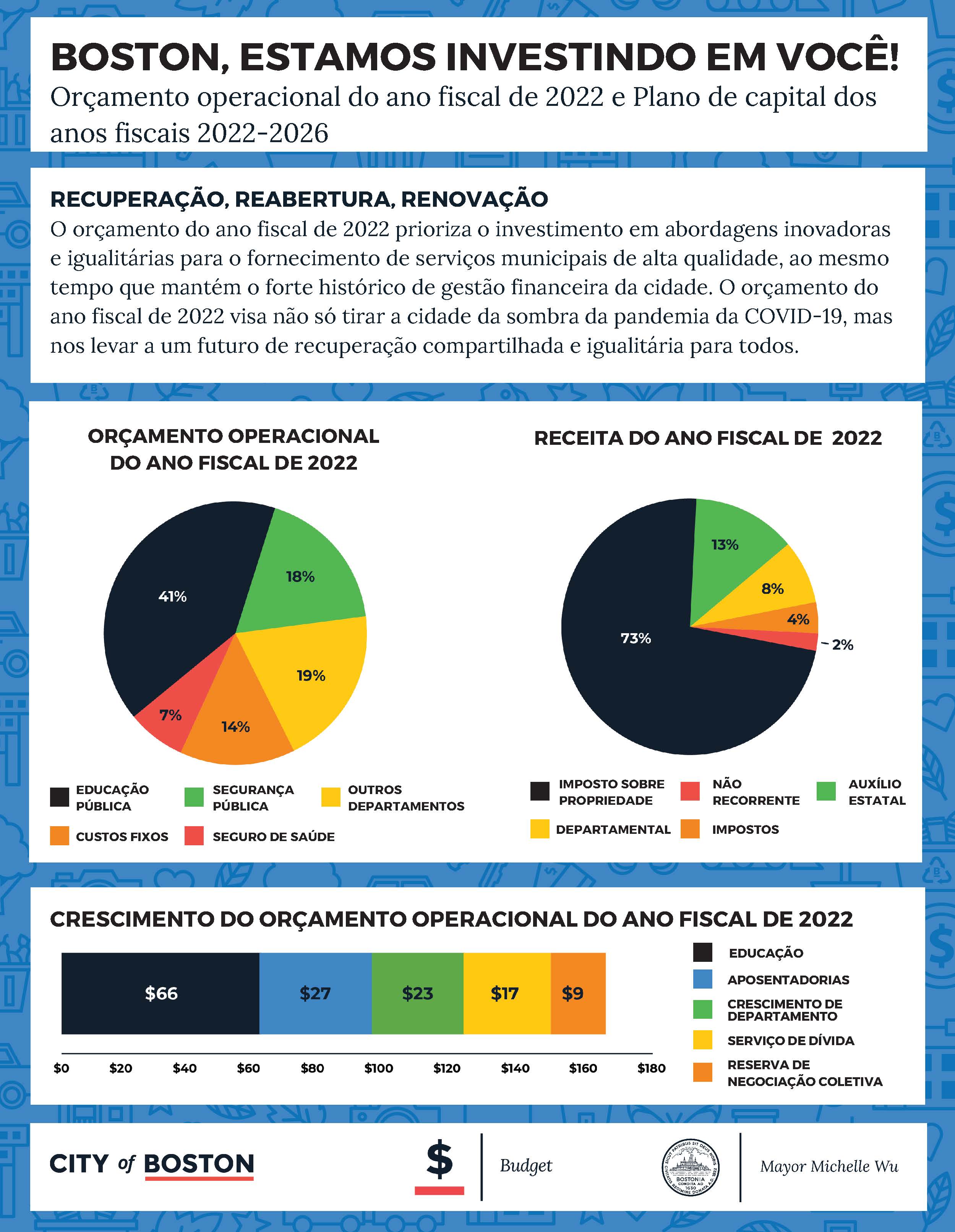

Anthony D'Isidoro
Brighton protests tree chopping (Mary Ellen Gambon, The Bulletin: February 17, 2022)
More than 150 protesters came out Saturday morning at the former Our Lady of the Presentation Church’s parking lot in Brighton to voice their anger about the cutting down of a 175-year-old heritage tree without their prior knowledge by a developer who owns the property.
The tree, located at 720 Washington St., was one of more than 40 removed earlier this past week, according to several sources who attended the protest.
“This is a huge loss for us,” said District 9 City Councilor Liz Breadon, who represents Allston and Brighton. “That tree is irreplaceable. This is happening at a time when we have been working on preserving and expanding the urban tree canopy.”
Breadon confirmed that her office received no notice beforehand and has no knowledge of what type of housing is planned there.
“The first we heard about it was during the arrival of the crew at 7 a.m. on Monday morning last,” she said, noting that she spoke at the protest along with state Rep. Kevin Honan, who also represents Allston and Brighton.
“I would think that if you were to cut down a heritage tree like that, you would have to notify the city arborist,” she said. “All that is left now is the stump, which is about six feet in diameter. The tree was in good shape before, and it was not diseased.”
Protesters said that at least 40 other trees that lined the parking lot, some of them comparable in age, were removed. They are concerned that other trees on the property will be leveled by the veteran developer, Peter Davos of Davos Construction, as he pursues building housing.
The site, near the Newton line, was purchased by Davos last August. It includes the former church and rectory as well as its parking lot. The two parcels are separated by a few homes.
Breadon said the manner in which this was done was nearly as upsetting as losing the landmark as well as the other trees. “With some discretion, it could have been handled better,” she said. “The developer showed he had no intention of preserving the trees. I think what’s most upsetting is that there was no consideration for the community process.”
Davos, who grew up in Brighton and currently lives in West Roxbury, told The Bulletin Monday that the situation “turned out regrettably.” He noted that the parking lot parcel contains 1.677 acres, or 73,075 square feet. The parcel with the church and rectory is 1.766 acres equaling 76,970 square feet. He said he has developed several properties primarily in Brighton and West Roxbury.
“I deeply regret that anger and harsh words have been exchanged in the last few days in the neighborhood, almost exclusively regarding the beech tree,” he said in a statement. “My team researched the status of trees on our property. We explored alternatives in every way to retain the beech tree and still build housing on the property. We were unable to find a way. Previous plans for development would not allow that either, despite everyone’s best intentions to do so.”
He also said that the lots “are long vacant and not a credit to the neighborhood in their current distressed conditions.” Plans for housing will be presented before the community soon.
A spokesperson on Davos’s behalf said that “part of the fencing had been pulled away, but there was no permanent damage.”
“It’s not about one tree,” said Kevin Carragee, who attended the 90-minute protest. “It’s a fait accompli now, but there are other mature trees on the property he owns that we don’t want to see removed.
“People were upset and angry about the developer’s unilateral action with no notification to our elected officials,” he added. “That was a decision on his part. Usually a community meeting is a routine part of the process, even as a courtesy.”
He added that the community is not against housing on the site, but the lot with the church and the rectory will be “difficult to develop.”
“I find it difficult to believe that the exterior of the church will be preserved,” Carragee said. “My prediction is that any meeting about the development will be contentious. The fact that 150 people came out on a Saturday with less than 48 hours’ notice speaks for itself.”
Steve Ashcraft, who helped organize the protest, said he had been taking care of the tree for 49 years.
“In the summers, I would drag the hoses out to make sure it was watered, and I would set up an irrigation system,” said Ashcraft, a landscaper who notified the elected officials and others of the situation. A client of his who abuts the property contacted him about the beech tree’s fate. “
At 7 a.m. sharp, she said they were starting to cut down the crown of the beech tree before anyone could say, ‘Boo,’” he said.
Other trees removed were a pin oak on the edge of the property as well as a sugar maple on the opposite side of the parking lot, Ashcroft said.
He added that there is a 200- year-old American elm tree that “survived the Dutch elm blight in the 1950s” still there.
“I’m not a violent person,” he added. “But I was really angry. I couldn’t sleep for days. There have to be some standards, ethics and rules about something like this.”
He added that he “witnessed a verbal assault against the developer at the protest.”
“Certainly if he wants to do anything else like this, this protest will put him on notice that the community cares,” Ashcraft said.
“It was a beautiful tree,” noted Honan, who said people walking their dogs or driving by would admire its stature. “It is sad for the community. We need to be more diligent in protecting these trees and not letting developers remove them forever for no reason.”
He added that the tree is also of sentimental value to alumni of the school affiliated with the former church.
“Every class photo would be taken in front of that tree,” Honan said.
Anthony D'Isidoro
Hello Everyone,

The Breakfast Club


 End Scene
Thomas Leonard
--
To post to this group, send email to AllstonBr...@googlegroups.com
For more options, visit this group at http://groups.google.com/group/AllstonBrighton2006?hl=en
---
You received this message because you are subscribed to the Google Groups "AllstonBrighton2006" group.
To unsubscribe from this group and stop receiving emails from it, send an email to allstonbrighton...@googlegroups.com.
To view this discussion on the web visit https://groups.google.com/d/msgid/allstonbrighton2006/BL0PR01MB461178A90DF0A9410A1B1FE2AF379%40BL0PR01MB4611.prod.exchangelabs.com.
Anthony D'Isidoro


Paula Alexander
Sent: Sunday, February 20, 2022 4:02 PM

To post to this group, send email to AllstonBr...@googlegroups.com
For more options, visit this group at http://groups.google.com/group/AllstonBrighton2006?hl=en
---
You received this message because you are subscribed to the Google Groups "AllstonBrighton2006" group.
To unsubscribe from this group and stop receiving emails from it, send an email to allstonbrighton...@googlegroups.com.
Anthony D'Isidoro
Are you ready for the Mayor's Budget Listening Tour?
District 9 (Allston Brighton): Join us tonight at 6 p.m.
Learn more & register: https://www.boston.gov/news/mayor-wu-announces-budget-listening-tour

Anthony D'Isidoro
Kiwanis Club of Allston Brighton Meeting
Thursday, February 24, 2022 @ 12:00 noon
Devlin’s Restaurant
332 Washington St, Brighton
Kiwanis International is a global community of clubs, members and partners dedicated to improving the lives of children one community at a time.
Please join us.
Join Anthony Sammarco as he explores Brighton and Allston Through Time. Anthony Sammarco is a noted historian and author of over seventy books on the history and development of Boston, and he lectures widely on the history and development of his native city. He commenced writing in 1995, and his books Lost Boston, The History of Howard Johnson’s: How A Massachusetts Soda Fountain Became a Roadside Icon, Jordan Marsh: New England’s Largest Store and The Baker Chocolate Company: A Sweet History have made the bestsellers list. He teaches the popular course Boston History at the Boston University Metropolitan College. And has also taught at The Urban College of Boston since 1997, where his courses led to him being named Educator of the Year.

Anthony D'Isidoro

Anthony D'Isidoro
New challenges with I-90 Allston project (Bruce Mohl, CommonWealth: February 24, 2022)
State, Boston, Harvard officials discuss funding options

View from the top of the Doubletree Hotel down to the area slated to become Harvard's new Allston neighborhood.
The
Harvard Business School and Harvard Stadium are in the background. (File photo)
LAST FALL, the Baker administration achieved a major breakthrough on the $1.7 billion I-90 Allston project, embracing the idea of rebuilding the Turnpike, Soldiers Field Road, and commuter rail tracks all at ground level as they run through a narrow strip of land called the throat, which is sandwiched between Boston University and the Charles River.
The big squeeze, as some have called it, was accomplished by shaving 4 feet from the various transportation elements — two feet from the four lanes of Soldiers Field Road (making the roadway width 10.5 feet rather than 11 feet) and two feet from the four commuter rail tracks.
But since the throat decision was made, the project has gone into silent mode. State officials said they expected to file a notice of project change with environmental regulators by the end of 2021, laying out the new design elements. Several times, however, the timeline has been extended.
It turns out the parties have moved on to new challenges. The throat is only a small portion of a much larger project, which would straighten the Turnpike as it moves through Allston, opening up a huge tract of land for a new neighborhood of Boston being developed by Harvard University. The new neighborhood is expected to be accompanied by a new MBTA bus and commuter rail station.
State transportation officials have started meeting with representatives of the city of Boston and Harvard to discuss financing options. Participants describe the talks as productive, with officials from Boston and Harvard acknowledging they have to contribute significant dollars to the project. One participant said the talks are in the early stages, with both sides trying to find common ground on the parameters of the overall project and where their responsibilities begin and end.
The approach used with the Green Line extension into Somerville and Medford is also being followed in Allston. With the $2.3 billion Green Line project, Somerville and Cambridge pledged a total of $75 million to make the financial numbers work. Both communities are getting their money back now that the project is coming in under budget. In Allston, the financial contributions being sought from Boston and Harvard are likely to be much higher because their benefit from the project is expected to be greater.
“It is a stated guiding principle of MassDOT that stakeholders will need to contribute funding for the multi-modal project,” a state official said. “We are encouraged by the parties’ willingness to take part in meaningful financing and funding discussions. MassDOT recognizes that the realignment of I-90 creates a multi-generational development opportunity for Harvard and the city of Boston and looks forward to understanding more about the plans for the re-development.”
City officials say the talks are in the early stages. Harvard officials declined comment. State officials say the federal environmental permitting process is expected to be completed by this fall.
State transportation officials are planning to seek federal funding for the Allston I-90 project, attempting to tap into the billions of dollars in discretionary money expected to be available under the Bipartisan Infrastructure Law. The law includes a pot of money that seems particularly well suited for the Allston project; funds have been set aside for projects that knit together communities severed by highways built long ago.
Anthony D'Isidoro
St. E's details community benefits (Jeff Sullivan, The Bulletin: February 24, 2022)
The St. Elizabeth Task Force met on Feb. 17 and representatives of the hospital’s owner, Steward, detailed the numerous community benefits of a 610-parking space garage proposed for Washington Street in Brighton.
Fort Point Associates’ Katie Moniz detailed the list which included – after community advocacy – a new space for Boston Emergency Medical Service (EMS) personnel and vehicles.
The EMS facility will be located between the existing St. Margaret’s Center building and the new 610-space garage. The proposed 2,300-square-foot space would include two bays for ambulances and space for an office, lounge, locker and changing rooms and showers.
Fort Point’s John Harding said the garage will blend into the campus and also respect the architecture of the neighborhood with a sort of suburban feel to it.
“We’re still going to continue to work through the design details with Boston EMS, but we wanted to fit within the scheme of the garage building,” he said. “From a Washington Street perspective, it’s not a very large building and it’s not going to be imposing on the street and I think you’re going to get much more of a view of the terracing and streetscape improvements than you’ll really ever see of the garage itself.”
Moniz said in terms of public realm improvements, the hospital is proposing a new bocce court for the community and St. E’s patient use, the construction of a gathering space along Washington Street, landscape improvements, new sidewalk connections in keeping with the requirements of the Americans with Disabilities Act (ADA), improvements to pedestrian features like consolidated bus stops and support the ongoing design of Washington Street.
For transportation, the hospital will be paying $8,000 annually in dues to the Allston Brighton Transportation Management Association, providing 51 snow emergency spaces in the Elks Lot for public use and a contribution of $25,000 to the Allston Brighton Mobility Study for Washington Street. They will also be providing materials for community events, provide free meeting space for community meetings and provide more than $100,000 in annual contributions to community organizations.
Resident Michael Panichas asked about the loss of about 180 parking spaces from a previous plan. Moniz said they would love to have as many parking spaces as they can.
“The goals of the city are focused on multi-modal transit, climate and smart planning and so we want to be part of that as well,” she said. “That’s why you see the strong commitment to bicycle parking, you see the strong commitment to pedestrian accommodations and that’s because I think we’re trying to do the right thing for both our staff and visitors.”
Panichas added that he hopes local residents will be hired for the construction phase of the project, and Moniz pointed out that Boston has a residency requirement for construction jobs and they will be using local talent by going out in job fairs and recruitment centers.
“I just want everybody to know that St. E’s has always hired responsible contractors,” said resident Dan Daly. “I’m a union electrician and I’ve been in the neighborhood a long time. St. Elizabeth’s is always doing the right thing in that they use contractors who hire not only Boston residents, but Allston Brighton residents and women and minorities as well. They’re people who are making a living wage who wouldn’t be able to live here otherwise, so I applaud St. E’s for always doing the right thing.”
For more information on the project and to comment on the project (comment period ends on Feb. 28), go to https://bit.ly/3h1PKVW.
Anthony D'Isidoro
Editorial: Who can afford to raise a family in Boston? (Boston Herald editorial staff: February 24, 2022)
Mayor Michelle Wu just made it easier for Boston parents to tap into the city’s child care programs and initiatives.
As the State House News Service reported, the mayor announced Wednesday a new Boston Office of Early Childhood.
She noted that families face needs and high costs when it comes to early education and care, and that there is “tremendous opportunity” for the city to act.
“We know this is an urgent issue,” she said. “For anyone who has had to go through the pandemic with kids, for anyone who has had to try to find a seat in Boston and navigate the many complicated systems and registrations and applications, this is a time for city leadership to step up and help convene and provide a one-stop shop.”
An excellent move.
But this is Boston, and there’s an elephant in the room.
Wu said her “ultimate dream” is for Boston families and those looking to start a family “to know that this is a city where it will be convenient, easy and not a question whether you can find the supports to raise a child here.”
And there you have it — can families afford to live in Boston, even with Wu’s child care initiative easing that part of the cost equation?
Boston ranked as the third most expensive rental market in the nation last month, according to the housing rental website Zumper. The prices of one and two bedrooms settle at medians of $2,700 and $3,090, respectively.
Who can afford that?
Besides the good people working in the public sector, of course.
Online rental calculators figure rent as 30% of one’s income. To afford a $3,090 two bedroom in Boston, you’d need to pull in $10,000 a month. After taxes.
For the six-figure folks, that’ll work. For those not in that stratosphere? Good luck.
Wu’s already taken steps to fill the gaping need for affordable housing. Last month she announced a $40 million infusion to create 718 new housing units.
Nearly all of them will be newly created across 14 projects. One smaller grant is for preserving some senior housing, the Herald reported.
The money comes from a combination of funding — some raised by the Community Preservation Act (a levy on Bostonians that’s earmarked for open space, preservation and housing), the rest from local and federal funds that come through the mayor’s Office of Housing.
More is needed. More is always needed. Affordable neighborhoods have lost units to gentrification and the gleaming downtown condo towers come with price tags equally as dazzling. According to a 2020 report from the National Community Reinvestment Coalition, Boston’s the third most “intensely gentrified city” in the nation.
If we want families to settle down and graduating students to stay, then we’ve got to light a fire under funding and projects. We’ve got connections on Capitol Hill — Rep. Ayanna Pressley and Sen. Ed Markey just helped bring home the bacon for the trio of free bus routes on the MBTA.
Last year, there was national buzz around turning urban office buildings, empty as employees worked from home, into housing. A lot of that turned out to be just talk.
In Boston, many offices have been repurposed into lab space.
That’s a shame, because, even on a small scale, it held promise.
Under Mayor Wu, it looks like the kids will be all right. Now if only their parents could afford to live here.
Anthony D'Isidoro
The Time is Ripe for a Real Estate Transfer Tax (Susan Gittelman, Special to Banker & Tradesman: February 14, 2022)
Robust Market Will Raise Key Cash to House State’s Workforce
The need to create affordable and workforce housing in the Boston area continues to build. In today’s market, even middleclass households and particularly young professionals and young families are having difficulty securing housing they can afford.
The solution is to create new housing supply, and the optimal time to raise necessary resources is when the market is strong and robust. However, attempts to link the two – the need to produce this housing and the financial wherewithal – have met with limited success in the past.
Now in Boston and on Beacon Hill, there is a revival of the idea of a tax relating to the transfer of real estate to help create affordable housing.
Boston Mayor Michelle Wu recently filed what’s called a home rule petition with the Boston City Council that, if approved by councilors and state legislators, would allow Boston to impose a new seller-paid fee on market real estate transactions. The proceeds would support affordable and workforce housing.
In the past, the transaction fee concept has been supported by advocates of affordable housing, while it has long been opposed by the real estate community on the basis that it would raise already high housing costs even further and stifle the supply.
Boston’s Proposal Differs from Past Pitches
Wu’s proposal is for a “transfer fee” of up to 2 percent on both commercial and residential real estate sales of $2 million or more, which the announcement said would generate “tens of millions” of dollars annually.
“As the cost of housing has become more and more out of reach for families, we must take urgent action to keep families in their homes and build a city for everyone,” Wu said.
An earlier Boston proposal passed in the City Council but languished in the legislature, which must approve home rule petitions. Some other communities, including Somerville, Concord and Nantucket, have sought authorization for transfer fees, set at various levels, but not one has been approved.
Things may be different this time around.
Boston’s newest proposal is more targeted, and it has strong support from members of the legislature including Boston City Councilor Lydia Edwards, who is also now a state senator. In 2019, Councilor Edwards introduced a more aggressive proposal to the City Council, to put a tax of up to 6 percent on all real estate transactions over $2 million.
The new version proposed by Wu is different and would apply only to the amount of a sale over $2 million, so it would raise less money for affordable housing. It would exempt in-family purchases and protect senior homeowners. Public or affordable transactions would be exempt.
In addition, there is emerging interest among private-sector employers to find ways to address the affordability issue. It is a recognition that something must be done to address our housing market, which has become a significant obstacle to recruiting and retaining quality employees.
Major Employer Backs Concept
Even prior to the pandemic and the Great Resignation, moderate and middle-income professionals were being squeezed out in large numbers. The situation has worsened. The housing crunch has become such a hardship for many workers that it is creating huge incentives for major employers to become active on the issue. And these employers have influence among state legislators.
As the Boston Globe reported a few days before Wu’s announcement, Mass General Brigham, the state’s largest private employer with about 80,000 employees, announced its support for a plan that would apply statewide, saying that the lack of housing not only creates health disparities but also contributes to hospital staffing shortages, because employees can’t afford area prices.
In a joint statement, the chief executives of two Mass General-affiliated hospitals, The Nantucket Cottage and Marth’s Vineyard hospitals, noted that Massachusetts will “not be able to maintain its status as a leader in health care if people cannot afford decent, quality housing.”
The legislation on Beacon Hill would allow cities and towns to collect 0.5 to 2 percent on large-dollar transactions. A sponsor told the Globe the fees would help communities “capture just a tiny fraction of some of the incredible wealth that is being created by the red hot housing market, along with the historic commercial real estate development boom.” The hope is that many would follow Boston’s lead and pursue the opportunity to fund the creation of additional housing units.
Enabling municipalities to raise dedicated funds through a real estate transfer tax for affordable and workforce housing investment is not a new idea. But given today’s circumstances, including a Greater Boston economy with no signs of slowing down, it is time for the legislature to get this done.
Susan Gittelman is the executive director of B’nai B’rith Housing, a nonprofit affordable housing developer currently working in Boston, Sudbury and Swampscott.
Anthony D'Isidoro
Senior Property Tax Work-Off
Qualified senior homeowners can work off up to $1,500 on their property tax bill by volunteering for a City agency.
https://www.boston.gov/departments/age-strong-commission/senior-property-tax-work
Anthony D'Isidoro
FYI: Older adults can easily apply for SNAP (Supplemental Nutrition Assistance Program) at the same time as the Medicare Savings Program or MassHealth by checking the SNAP application box on the paper applications.
‘Everything’s going up’: Seniors struggle with the prices of food, fuel, and medicine (Robert Weisman, Boston Globe: February 14, 2022)
A key inflation measure grew at the fastest pace in 40 years
The last time prices rose this fast, today’s seniors were in their prime and drawing paychecks. Now they’re older, retired, and feeling the crunch in a world where everything suddenly costs more.
Higher rents and heating bills and steeper gas and prescription drug prices are pinching almost everyone. But older folks on fixed incomes are being squeezed hardest. Lately, seniors make up nearly half — more than in the past — of those stopping by a food pantry on Mission Hill run by Action for Boston Community Development, an antipoverty group, on the three days each week it distributes chicken, fruit, cereal, and other provisions.
“Everything’s going up: the pork, the beef, all the spices,” said Beatriz Negron, 74, a Panamanian-born retired day care worker who lives in a subsidized senior apartment and banters with the center’s staffers in rapid-fire Spanish. “You know how the Spanish people are. We cook with so many things. And all the prices are getting higher.”
On Thursday, a widely watched measure known as the consumer price index showed that US prices climbed at an annual rate of 7.5 percent in January, the fastest pace since 1982. Inflation grew at a slightly slower clip of 6.3 percent in the Boston area, where costs are already far above the national average. Both jumps were higher than forecast, a sign that production isn’t keeping up with demand for goods and services.
Economists place the blame on COVID-linked labor shortages and supply chain disruptions, and puzzle over how long these obstacles will continue and how high prices might soar. But it’s already clear that the sticker shocks rattling shoppers at the supermarket for the past six months are likely to persist through much of the year.
That means more financially strapped seniors are arriving at the neighborhood service center in Mission Hill from nearby Roxbury and Jamaica Plain, where some food pantries closed during the pandemic, said Jenny Sugilio, the center’s director.
“We’re starting to see an increase in seniors because prices are so high,” she said.
Outside the center, where residents wait in line in the mornings, fresh loaves of bread are stacked on a cart next to cans of refried beans and sparking water. Low-income residents can come to the pantry once a month and pick up food donated by the Boston Food Bank and area stores. The rest of the time, many rely on food stamps and their Social Security payments to afford groceries at the market.
The cost-of-living adjustment for Social Security, the primary income source for many lower-income seniors, was 5.9 percent for 2022, the biggest annual bump in years. But that was more than offset by increases in what people often pay for bread-and-butter needs.
“Social Security goes up a couple of dollars,” said Negron, who goes by the nickname of Betty in the neighborhood. “But the rent goes up, too. And the blade steak is $10 for three little pieces. It used to be $4.”
Twelve miles south, at a Braintree supermarket, Janice Wallace, also 74, was picking up a couple of necessities, a dozen eggs, and a gallon of milk. That’s all she can manage till mid-month, when her food stamp allocation is replenished. But she was peeking at prices in a kind of scouting mission in advance of her next visit.
Wallace, who came to the store from a doctor’s appointment at Dana-Farber in Weymouth, where she’s being treated for lung cancer, wasn’t encouraged by what she saw.
“Whole wheat bread was $2.20 last year,” she said. “Now it’s $4. I don’t always want to buy the cheaper bread. But with the way the prices are now, I might be forced to.”
The cage-free eggs Wallace put in her cart were $4.99, compared with under $2 last year, she said. In the deli section, she lamented that the turkey slices she likes were up to $4.79 a package, a dollar more than she remembered.
“Forget red meat,” she said. “Even fish has gotten very expensive.”
Paper towel prices, she noted, have more than doubled.
Wallace had to give up her job as a saleswoman at the Nordstrom in South Shore Plaza last year because her chemotherapy was leaving her exhausted. Now she depends on her Social Security disability payments as well as the food stamps.
“I’m a very small woman, and I don’t eat a lot,” she said. “But I have to have the basics in the house.”
Food isn’t the only arena where beleaguered seniors grapple with surging prices. Social service agencies have been flooded with calls seeking help covering soaring rents and heating bills.
Rising health costs pushed the monthly premium for Medicare Part B, which covers doctor visits and tests, up $21.60 this year to $170.10 for most beneficiaries, the largest increase in five years. A big driver is medicine administered by physicians. A bill aimed at controlling drug prices — by among other things, allowing a state agency to review price hikes — is working its way through the Massachusetts Legislature.
“We’re very aware of people struggling,” said John Drew, president of Boston Action for Community Development, who said older folks represent nearly a quarter of the 20,000 area households receiving heating assistance from his group. “The elderly we see by the thousands are living on a basic income. That puts them more at financial risk.”
Jewish Family & Children’s Service in Waltham, which serves more than 3,500 seniors, has seen a spike in requests for rental assistance.
“Rents are going way up,” said Kathy Burnes, its director of services for older adults. “People who’ve been paying rent on the open market can’t afford to stay where they are. They’re looking for subsidized housing.”
Some older folks say they’re being forced to make painful choices, cutting back on, or giving up, things they had purchased in the past, from clothing and entertainment to even some grocery items.
Milton resident Judy Jablon, 85, who worked for years at a jewelry store in Downtown Crossing, said she’s become more careful with her spending. Her late husband’s nursing home care sapped much of the couple’s savings, so she gets by mostly on Social Security.
Jablon, a Holocaust survivor who came to the United States from Poland after World War II, has stopped going to the butcher, where she used to buy kosher meat. Instead, she said, her son brings her frozen chickens to store in her freezer when he visits from Connecticut.
“A bottle of juice is $6, so I don’t buy the juice,” she said in a resigned tone. “I can do without the juice. I can drink water.”
Anthony D'Isidoro
Registered Democrats in Boston Ward 21 will hold a caucus and meeting on Saturday, March 5, 2022, 10:00 am – 1:00 pm to elect delegates and alternates to the 2022 Massachusetts Democratic State Convention.
The caucus will take place virtually on Zoom.
This year’s state convention will be held on June 3-4, 2022. Delegates will gather at the DCU Center in Worcester, where Democrats from across the state will come together to adopt a Democratic Party platform, discuss Party business and celebrate our successes as we prepare for upcoming elections. The event will take place in-line with all federal, state and local health guidelines and will include a virtual option for participation.
The caucus is open to all registered and pre-registered Democrats in Boston Ward 21 (Fenway, Allston and Brighton). Pre-registered Democrats who will be 16 years old by February 4, 2022 will be allowed to participate and run as a delegate or alternate.
Youth, minorities, people with disabilities, and LGBTQ+ individuals who are not elected as a delegate or alternate may apply to be an add-on delegate at the caucus or at www.massdems.org/convention by April 9, 2022.
Those interested in getting involved with the Boston Ward 21 Democratic Committee and/or wish to participate virtually may register by contacting Dwan Packnett (dwanpa...@gmail.com).
Anthony D'Isidoro
Registered Democrats in Boston Ward 22 will hold a caucus and meeting on Saturday, March 5, 2022 @ 2:00 pm to elect delegates and alternates to the 2022 Massachusetts Democratic State Convention.
The caucus will take place virtually on Zoom (register: https://us02web.zoom.us/meeting/register/tZcuc-CorTsvH9383I2daq26QL1QtpLDxRPg) and in person at the Veronica B. Smith Senior Center, 20 Chestnut Hill Ave in Brighton, where all public health guidelines will be followed.
This year’s state convention will be held on June 3-4, 2022. Delegates will gather at the DCU Center in Worcester, where Democrats from across the state will come together to adopt a Democratic Party platform, discuss Party business and celebrate our successes as we prepare for upcoming elections. The event will take place in-line with all federal, state and local health guidelines and will include a virtual option for participation.
The caucus is open to all registered and pre-registered Democrats in Boston Ward 22 (Allston and Brighton). Pre-registered Democrats who will be 16 years old by February 4, 2022 will be allowed to participate and run as a delegate or alternate. Boston Ward 22 can elect 22 delegates and five alternates to the convention.
Youth, minorities, people with disabilities, and LGBTQ+ individuals who are not elected as a delegate or alternate may apply to be an add-on delegate at the caucus or at www.massdems.org/convention by April 9, 2022.
Those interested in getting involved with the Boston Ward 22 Democratic Committee should contact Millie Hollum-McLaughlin (milliemc...@hotmail.com).
Anthony D'Isidoro
Lower taxes in Massachusetts? Yes, please. (The Editorial Board, Boston Globe: January 28, 2022)
Families, low-income workers, and seniors deserve a break, and the estate tax merits an overhaul.
Lower
taxes in Massachusetts? Yes, please. - The Boston Globe
In his final year in office, Governor Charlie Baker has decided
to go big on the issue of tax cuts before he goes home.
And in proposing nearly $700 million in cuts as part of the coming year’s state budget, Baker has set two worthy goals: making life a little easier for the state’s neediest amid a bout of inflation, and improving Massachusetts’ competitive advantage at a time when the remote office has made workers more footloose than ever.
Democratic lawmakers will surely have their own ideas and their own priorities, but Baker’s menu of tax cut options has provided a number of possibilities that can and should prove too attractive, too obvious, and much too needed to ignore.
“The cost of just about everything is going up, and these tax breaks would help offset some of those costs for families,” Baker said at a news conference this week to outline major elements of his $48.5 billion spending plan. “The last two years have been pretty tough on a lot of the populations we’re looking to help here, and I’d love to see the Legislature take them seriously.”
The state has indeed had an embarrassment of riches in the past year or so — not including the money pouring in from the federal government. The rainy day fund is expected to be comfortably full, at $5.9 billion, before the next budgetary year begins, and Baker’s budget generously funds aid to cities and towns and education while proposing a major boost to housing programs. So if ever there is a year to restructure some taxes, this is the one.
Baker has attempted a delicate political balancing act here as well, targeting tax benefits to low-income workers, renters, and low-income seniors while making some long-overdue changes to the state’s estate tax, which has the dubious distinction of being about the most onerous in the nation.
Tax breaks aimed at, as Baker put it in his State of the Commonwealth address, “those struggling to make ends meet,” include:
▪ Doubling the current allowable tax credits for dependent and child care, which would put some $167 million into the pockets of more than 700,000 families.
▪ Doubling the “circuit breaker” property tax credit for income-eligible seniors, a $60 million item.
▪ Increasing the current cap on rent deductions from $3,000 to $5,000, a $77 million item.
▪ Raising the income level at which people are required to file an income tax return from $8,000 for a single filer to $12,400; from $14,400 for those filing as a head of household to $18,650; and for joint filers from $16,400 to $24,800. That, according to the Baker administration, would put $41 million back into the pockets of 234,000 low-income taxpayers.
It’s hard to argue with Baker’s pitch that it’s time to give back to hard-pressed Massachusetts families “some of the tax revenue they created through their hard work.”
And it’s just as hard to argue against those long overdue changes to the estate tax, which makes Massachusetts “an outlier among the states,” as the Massachusetts Taxpayers Association said in its analysis of the governor’s proposals.
First, Massachusetts is one of only 12 states that levies an estate tax. There’s a good reason (other than the sunshine) retirees head to places like Florida or opt for that ski chalet in New Hampshire. And, along with Oregon, Massachusetts has the lowest threshold for taxation — $1 million, which applies to the entire value of an estate. That includes stocks, bonds, 401(k)s, and proceeds from life insurance policies. And real estate — with the median price of a single-family home in Greater Boston now around $750,000, it’s pretty easy to hit that benchmark.
But wait, as they say in those infomercials, there’s more. Go over that $1 million and the estate tax applies to the entire value of the estate — something even Oregon, which only taxes the amount above that $1 million mark, doesn’t do.
Baker proposes to raise the exemption to $2 million and apply the tax only on the amount over that threshold.
The cost in foregone state revenue in its first year is estimated by the administration at $231 million. But let there be no mistake — even in the midst of an upcoming debate over the so-called millionaires income surtax — this is no giveaway to high earners. High earners are expert at planned tax avoidance long before they leave this earth. Some will simply establish residence in a no-tax state or set up elaborate trusts — or both. It’s the middle class that has borne the burden of this tax and will continue to do so until it is fixed.
Massachusetts lawmakers have always been adept at finding more and better ways to spend taxpayer dollars — some of those projects wise, but some of them in the you-can’t-have-enough-town-gazebos category. It’s been a tough two years for many in this state. Several well-targeted tax breaks would help ease that burden — and help the state shed its long-outdated Taxachusetts image in the process.
Anthony D'Isidoro
Harvard tries to address neighbors’ concerns as it seeks to develop Allston land. But will it be enough? (Jon Chesto, Boston Globe: February 27, 2022)
University outlines concessions to address affordability, while state rep Mike Moran continues to push for more.

Harvard is hoping to get the Allston neighborhood on board so it can move ahead with plans to redevelop some 140 acres
in Allston, including the Beacon Park Yard seen in the center of this photo.DAVID L. RYAN/GLOBE STAFF
The debate over Harvard’s vast land holdings in Allston is shaping up to be one of Boston’s most consequential development sagas. And it’s now Mayor Michelle Wu’s turn to referee it all.
From Harvard’s perspective, the university just took a big step forward by extending an olive branch to its wary neighbors. Executive vice president Katie Lapp spelled out a long list of commitments in a letter, sent to Wu and others last week, to address concerns about gentrification, green space, and traffic as Harvard tries to start turning over pieces of nearly 140 acres it controls in Allston for commercial development.
But will it be enough to get the green light to begin? Maybe not. State Representative Mike Moran, a Brighton Democrat who has led the scrutiny of Harvard’s plans, said he views what was outlined as just a starting point for neighborhood negotiations. In other words, it won’t be easy getting the university’s Enterprise Research Campus, a multi-block project submitted to the Boston Planning & Development Agency a year ago, on the agenda for approval anytime soon.
Lapp’s letter follows some high-level talks involving her, Wu, Moran, and City Councilor Liz Breadon. They’ve met in person twice since Wu, a Harvard alum, was elected in November. Moran said Wu made it clear in the last meeting, held earlier this month, that there needs to be more involvement from the neighborhood before her administration advances Harvard’s plans. A spokesperson for the mayor said Friday that she’s committed to incorporating community input into current and future proposals for Allston, to help build a successful urban neighborhood with a focus on mass transit, affordable housing, and open space.
Also in the mix: a promise in December from Harvard president Larry Bacow to a neighborhood task force that would make Harvard’s planning chief available to meet with task force members, to improve community feedback.
Lapp’s letter, sent to Wu and the politicians who represent Allston as well as the neighborhood task force, provides more fodder for these discussions. She wrote that Harvard’s ultimate goal for this land — the 36-acre Enterprise Research Campus, across Western Avenue from the business school, and the roughly 100-acre Beacon Park Yard to the south of the ERC — is to turn obsolete industrial sites into vibrant and welcoming districts.
Several commitments she listed have already been made before, such as a promise to give away an acre on Seattle Street for affordable condos. But others are new, led by a pledge that 20 percent of housing units in future ERC projects would be income-restricted. Ditto for Beacon Park Yard, a commitment that’s subject to a realignment of the Mass. Turnpike and appropriate zoning relief from the city. Harvard also would set aside up to $10 million over five years for housing, and $1 million over three years for workforce training. And it would ensure that one-fifth of the ERC, once fully built, would consist of publicly accessible open space.
Moran, it’s safe to say, was unimpressed. Neighbors have long wanted 20-percent affordability for housing there, at a minimum. Yes, the 20-percent is a step up from Boston’s mandate of 13 percent. But Moran is quick to point out that just over the Charles River, Harvard’s home city of Cambridge already sets 20 percent as the floor. He took issue with Harvard’s disclaimer that none of the open space would be subject to public easements. And he said the transportation improvements, such as allowing residents to ride Harvard shuttles and a four-year-old pledge of $58 million toward a commuter rail station, seemed unsurprising or uninspiring.
Longtime Allston residents may need more convincing, too. They have not forgotten when Harvard assembled some of its land quietly in the neighborhood, through a developer, more than two decades ago. (Most of the property in question, however, was acquired through a public auction.) They saw the reports of Harvard’s endowment swelling beyond $50 billion last year. And they worry that the issues that followed the Seaport’s redevelopment — high housing costs, traffic jams, inadequate diversity — could afflict their part of the city.
Just ask Tony D’Isidoro, president of the Allston Civic Association: He appreciates the concessions but considers Lapp’s letter to be a “timid response” given the degree of Harvard’s resources.
Harvard’s immediate concern is the first phase of its Enterprise Research Campus. New York developer Tishman Speyer has spelled out plans for a 1.9-million-square-foot, mixed-use development, with apartments, labs, offices, restaurants, shops, and a hotel, on 14 acres. (Tishman Speyer has pledged just under 20 percent affordability, on average, for its housing there.) Plans for the first half — 900,000 square feet in total — remain on hold at the BPDA after Allston’s political leaders raised concerns.
Maybe the most important thing residents want from Harvard is a clearer vision of what it wants to do with the rest of the land, much of it a former rail yard. Harvard still has no real details to share, at least not publicly, other than to say its intentions for most of this acreage is for commercial (read: taxable) uses. Harvard doesn’t need the massive turnpike realignment to get going on the first 14 acres. However, while many neighbors say more planning can and should be done in advance, most of the actual construction for the rest of this land hinges on straightening out the highway.
Toward that end, state transportation officials met with representatives for the city and Harvard earlier this month to advance the $1.7 billion infrastructure project — a figure that includes the West Station intermodal hub as well as surface roads — and to figure out who will pay for what. The Massachusetts Department of Transportation will apply for federal funding, but also expects Harvard and Boston to contribute. Harvard, for example, might end up fronting a bigger subsidy for West Station, and the city could help with a new local road network, maybe using new property taxes on development there.
Few real estate investors can better afford to play the long game than a nearly 400-year-old institution like Harvard. But that patience might be put to the test if the university can’t win over the mayor, the local elected officials, or the neighbors. This could be the largest stretch of land in Boston up for development under Wu’s administration, and she will want to get it right.
Anthony D'Isidoro
Hello Everyone,
The Community Preservation Fund was created following voters’ passage and adoption of the Community Preservation Act in November 2016. It is funded by a 1 percent property tax-based surcharge on residential and business property tax bills, which took effect in July 2017, and an annual state funding from the Massachusetts Community Preservation Trust Fund. The Mayor and Community Preservation Committee recommend funding use and the City Council must vote to approve.
To date, Allston Brighton has been awarded $2,617,850 for affordable housing; $700,000 for historic preservation; and $1,234,000 for recreational use and open space out of a total of over $119,000,000 awarded since residents voted to adopt the Community Preservation Act in 2016.
That amounts to about a 3.78% allocation for Allston Brighton.
It would be interesting if Councilor Breadon’s office or the Community Preservation Act Committee could provide us with Allston Brighton’s annual contribution to the fund since 2016. I suspect our contribution to the fund is a lot more than 3.78%.
In order for Allston Brighton to receive its fair share, will require public awareness of the program, project generation related to affordable housing, historic preservation and open space and a robust assistance program to help guide the applicants through the approval process..
Efforts are underway between the city and the councilor’s office to make that happen.
Feel free to share your ideas for projects in Allston Brighton.
To be considered for the 2023 funding round you must complete an eligibility form by Monday, August 1, 2022 at 5 p.m.
Tony
Allston Brighton Projects to Date:
St. Luke’s and St. Margaret’s Church
Applicant:
Address: 5 Saint Lukes Rd, Boston, MA 02134
Neighborhood: Allston-Brighton
Category: Historic Preservation
Funding Round: 2022
Awarded:
$500,000
Masonry and roofing repairs to the 1914 building complex, the first phase of a reimagining of the landmark.
Charles River Speedway
Applicant: Architectural Heritage Foundation
Address: 1420-1440 Soldiers Field Rd, Boston, MA 02135
Neighborhood: Allston-Brighton
Category: Historic Preservation
Funding Round: 2019
Awarded: $200,000
Courtyard design and site work for major restoration project to turn blighted site into a gathering space with restaurant, artisan shops, and historic features.
UHomes at 90 Antwerp Street
Applicant: Urbanica
Address: 90 Antwerp St, Boston, MA 02135
Neighborhood: Allston-Brighton
Category: Affordable Housing
Funding Round: 2019
Awarded: $1,000,000
12 affordable home ownership units at 80% AMI or lower in a 20-unit development
6 Quint Avenue Supportive Housing
Applicant: DND
Address: 6 Quint Ave, Boston, MA 02134
Neighborhood: Allston-Brighton
Category: Affordable Housing
Funding Round: 2021
Awarded: $617,850
Partially fund the acquisition of 6 Quint Avenue for the creation of supportive affordable housing. A 15 unit moderate rehab that will create updated single
room occupancy (SRO) units for individuals.
Ringer Park
Applicant: West End House Boys & Girls Club
Address: 105 Allston St, Allston, MA 02134
Neighborhood: Allston-Brighton
Category: Open Space
Funding Round: 2019
Awarded: $25,000
Complete renovation behind West End House with irrigation, sod, and drinking fountain.
Chandler Pond
Applicant: Friends of Chandler Pond
Address: Lake Shore Rd & Kenrick St, Boston, MA 02135
Neighborhood: Allston-Brighton
Category: Open Space
Funding Round: 2021
Awarded: $300,000
Design and preservation of the Chandler Pond shoreline.
Evergreen Cemetery
Applicant: BPRD
Address: 2060 Commonwealth Avenue, Brighton, MA 02135
Neighborhood: Allston-Brighton
Category: Open Space
Funding Round: 2018
Awarded: $370,000
Repave paths to older gravesites; replace broken portions of perimeter iron fence and iron gate.
JJ Carroll Apartments
Applicant: 2Life Communities
Address: 130 Chestnut Hill Ave, Boston, MA 02135
Neighborhood: Allston-Brighton
Category: Affordable Housing
Funding Round: 2020
Awarded: $1,000,000
The construction of 79 new rental units for seniors, including 15 homeless units as part of a larger renovation of this BHA development.
Winship School Playground
Applicant: BPS
Address: 54 Dighton St, Brighton, MA 02135
Neighborhood: Allston-Brighton
Category: Open Space
Funding Round: 2020
Awarded: $539,000
Renovation of the schoolyard and installation of new play structures and safety components to serve both the school and the surrounding residential neighborhood.
Anthony D'Isidoro


Anthony D'Isidoro


Anthony D'Isidoro
Hello Everyone,
A tutorial below on how you keep people out.
Resolving the housing crisis in the Commonwealth of Massachusetts will require contributions from all 351 cities and towns.
Many communities including Newton are slowing considering the harms that exclusionary zoning (strict single-family zoning) has on its residents and prospective residents and relaxing some of their strictest zoning regulations.
Tony
_______________________________________________________________________________________________
From Redlining To Single-Family Zoning: The Legacy of Exclusionary
Housing In Newton (Julia Kiersznowski, The Heights: March 2, 2022)
The average price of a single-family home in the United States as of January 2022 is about $357,000, according to the Federal Reserve Bank of St. Louis.
But for those interested in purchasing a single-family home in the City of Newton, they should be prepared to dish out at least another $243,000.
A $600,000 two-bedroom, one-bath, 825-square-foot home on California Street in Nonantum is the cheapest home for sale in the city right now. Nonantum, along with Lower Falls, is one of the two formerly redlined areas of Newton.
The average single-family house in Newton costs $1.5 million, according to a report from the city’s Assessor’s Office released in November. And in Chestnut Hill, a neighborhood labeled “a choice location” in the 1930s, a nine-bedroom, 11-bathroom, 12,437-square-foot home will cost $8.5 million.
Such discrepancies in price are shaped by the city’s history of redlining and single-family zoning. Over a century after the Supreme Court declared racially biased zoning unconstitutional, the fight for fair housing in Newton continues to this day.
Beginnings in Newton
Redlining, which began in the United States in the 1930s, was a practice in which banks used resident demographics and income to decide how they allocated loans. This system was built, however, on discriminatory assumptions that intensified the racial segregation already prominent in American cities and suburbs.
Following the housing market crash of the Great Depression, the administration of President Franklin D. Roosevelt launched the Home Owners’ Loan Corporation (HOLC) in 1933 to address the crisis.
The HOLC created lending guidelines for banks based on maps that categorized districts of land in cities by “mortgage security risk,” or how dependable HOLC believed the loan recipient to be. The corporation disproportionately marked African American and immigrant districts red, which made it more difficult for residents to obtain loans.
“The lowest designation was hazardous—any African American neighborhood would be designated hazardous,” said Robert Van Meter, an adjunct economics professor at Boston College and consultant on housing and community development. “And those areas were outlined in red, so that’s the origin of the term redlining.”
Mapping Inequality: Redlining in New Deal America is a project led by a research team at the University of Richmond that, among other things, illustrates in detail how cities were redlined and describes how redlining quickly became a tool for racial segregation.
Based on data collected by the HOLC, bank lenders would refuse to make loans, or make very conservative loans, to potential or existing residents of more “hazardous” areas.
“Among that information was the neighborhood’s quality of housing, the recent history of sale and rent values, and, crucially, the racial and ethnic identity and class of residents that served as the basis of the neighborhood’s grade,” the Mapping Inequality website reads.
The HOLC maps broke residential land into four categories, labeling Grade A “best,” Grade B “still desirable,” Grade C “definitely declining,” and Grade D “hazardous.”
Newton adopted these HOLC practices as early as 1935, according to Mapping Inequality.
The HOLC redlined, or designated “hazardous,” approximately three percent of Newton. Of the remaining residential land, they labeled 22 percent Grade A, 44 percent Grade B, and 32 percent Grade C.
The HOLC reported the Nonantum and Lower Fall’s inhabitants to be 60 and 50 percent “foreign-born,” respectively, both with an annual income of $600 to $1,200 in the 1930s. One of the reports lists “foreign concentration” in the regions’ section of “Detrimental Influences.”
“It’s the areas where there were immigrants that were considered not up-and-coming areas, so they were redlined,” said Doris Ann Sweet, a member of the leadership team at Engine 6, a Newton association that advocates for affordable housing.
Redlining often went hand in hand with zoning laws, Sweet said, since early zoning and redlining maps showed a lot of overlap.
Zoning laws in the U.S. were originally created to designate residential versus commercial land use, Van Meter said, though the policies quickly became used for racial segregation.
“Initially the movement for zoning came from progressives and urban reformers to some degree, who were concerned about factories, which at that point were quite polluting,” he said. “But it also became a favored tool of segregationists.
”After the Supreme Court declared racially biased zoning unconstitutional in 1917, segregationists shifted their strategy to single-family zoning, a policy that requires single-family homes only be built on certain plots of land. This practice rapidly expanded in the 1920s, Van Meter said.
Edwin Childs, the mayor of Newton from 1914 to 1929, initially vetoed the first single-family zoning proposals in Newton, according to Sweet.
“His reasoning was that not all good people live in single-family homes,” she said.
But after Childs lost the next mayoral election, the city approved stricter zoning practices, which quickly became a tool for solidifying segregation.
“Redlining was layered onto and reinforced the segregation that zoning, in some cases, created or cemented in place,” Van Meter said.
Since its popularization in the 1920s, single-family zoning in the U.S. has dominated the majority of modern-day zoning laws. As of 2019, it was illegal to build anything but a single-family home on 75 percent of residential land in American cities, according to The New York Times.
Boston is no exception. Seventy percent of municipalities, or towns, in the city only allow single-family homes on 80 percent of their land, according to The Fair Housing Center of Greater Boston.
In 1940, Newton City Council established a new zoning plan, which specified areas of the city where only single-family homes could be built, according to a September 2020 update from Newton Mayor Ruthanne Fuller. The plan also introduced minimum lot sizes, which required that single-family homes only be built on lots of certain sizes, the report said.
The Newton City Council once again updated its zoning laws in 1953, this time increasing the minimum lot size requirements to build a home in Newton, the update reads.
Aside from minor updates in 1987 and a reorganization effort by the city council in 2015, Newton essentially has the same zoning laws it had in 1953, the update said.
“While pretty arcane, these zoning rules directly influenced how Newton’s built environment developed over the last century and, in turn, influenced greatly who can afford to live here today,” Fuller wrote.

From
Left to Right: Newton’s Redlined Districts in the 1930s, Areas that Allowed Multi-Family Housing in 1953, Areas that Allow Multi-Family Housing Today
The Zoning Debate Today
Though single-family zoning still dominates modern-day Newton, many local residents, politicians, and organizations are pushing for change.
In her 2020 zoning update, Fuller said Newton’s Zoning and Planning Committee is aiming to address a number of key questions regarding single-family zoning. One of these questions explores whether the city should allow developers to convert existing single-family homes to two or more unit residences.
“Zoning decisions have been inextricably linked to the level of income inequality and racial segregation we face in Newton and in Greater Boston,” Fuller’s update reads. “The City Council is rightly exploring a range of options for our updated zoning to remedy our ‘opportunity’ gap.”
As of September 2020, less than six percent of Newton’s housing was deemed affordable for low and moderate income households, the update said. Newton’s population is four percent African American and five percent Hispanic or Latino, according to the update, compared to a respective nine and 12 percent statewide.
“Housing affordability and residential racial patterns are complicated and the link to zoning is complex,” the update reads. “Given today’s hyper housing market prices, solutions require a certain amount of change to zoning ordinances if we want housing affordable to more people in our almost fully built out City.
”As of September 2021, Newton reported that the median cost of a single-family house is $1.5 million.
“That puts it out of the reach of people who are not wealthy, unless you’re inheriting a house,” Sweet said.
One important aspect of Newton’s zoning laws is the difference between by-right zoning and special permit zoning, according to Deb Crossley, a Newton city councilor and the chair of the Zoning and Planning Committee.
Building a house “by-right” means following the zoning rules—how many stories can be built, how big the building can be, and other regulations—as well as observing the state building codes, Crossley said. Building by special permit, however, means having to follow stricter conditions and undergo review by the Land Use Committe of Newton’s City Council.
Currently, Newton does not allow multi-family housing anywhere by-right, Crossley said.
“That’s a huge deterrent to building multi-family housing, especially where you want it, which is close to where goods and services and public transportation exists,” she said. “So clearly that’s a disincentive for the kind of development most of us think we need in village centers.”
Because of this, the approval process for multi-family housing projects is often drawn out, Crossley said.
“The Austin Street project, which is three and four stories, and the Trio project, which is four and five stories … involved long, protracted battles with citizens who opposed the projects,” Crossley said.
At the beginning of 2020, Crossley said, the committee reviewed all of the city’s zoning documents, a 2012 zoning reform group report, and different housing and zoning studies. It then came up with a set of goals to enact zoning reform in the city.
“We want to adopt housing that facilitates a greater diversity of housing types and of income earners,” she said. “It’s been a problem since the 1960s because of our very restrictive zoning in Newton. And it’s been at a critical stage since years ago, but housing prices have soared because we’re not building enough housing. And we’re only building one kind of housing, for the most part—the giant single-family home or the giant two-unit condo. So there’s not ways for people of even modest means … to come here.”
The Newton Planning and Development Department delivered a draft of an updated zoning ordinance to the committee, which said the ordinance is still under review, according to Fuller’s update. City council was planning to vote on this updated zoning ordinance in the fall or winter of 2021.
Crossley said the committee postponed the review of the draft because it is currently focused on rezoning Newton’s 13 village center districts.
“It’s tabled,” she said. “Meaning we’re not going to take it up until we finish our village center work. … The comprehensive plan that the council adopted in 2007 has all of the goals and objectives that some of us are trying to work toward in reforming our zoning. You can’t adopt a plan and then not reform the zoning to facilitate the plan, but that’s what has happened.
”Sweet said this process for village center rezoning has been “fairly intense.”
“This process has been going on for quite a long time, and it’s going to be going on for a while longer,” Sweet said.
In addition to focusing on village center zoning, the Zoning and Planning Committee has begun looking into how the Commonwealth’s new “MBTA Communities” regulations apply to Newton and how they can be incorporated into Newton’s zoning laws, Crossley said.
As part of an economic development bill enacted last January, Massachusetts recently released new multi-family zoning regulations for all MBTA Communities, or cities and towns surrounding or nearby T-stops. These new guidelines require all of the communities to have at least one zoning district “of reasonable size” that allows multi-family housing if the cities want to remain eligible for certain state funding.
“And there were people right out of the gate on the city council who suggested we not comply with the new law because, in their words, the funding that we would then be ineligible for is not significant to a city that has half a billion dollar budget,” she said. “But that’s not how the majority of the city council feels. I don’t think Newton should lead by breaking the law.
”Sweet said while she thinks most city councilors are passionate about the new regulations, some are still resistant to change.
“I think the majority of councilors are actually seeing it as an opportunity to do something about housing in Newton,” Sweet said. “But there are still some of the few people who are really opposed to any change, who keep talking about ‘Newton is the Garden City, and if we do this, we won’t be the Garden City anymore.’”
There have been some large-scale, multi-family housing projects in Newton in recent years, according to Newton’s website, including the Riverside Project, the West Newton Armory, and the Northland Project. These projects will create another 102, 43, and 140 units of affordable housing, respectively, or 285 new units in total.
But Sweet said one of the biggest advantages of the MBTA Community regulations is that they create the opportunity for smaller-scale affordable housing projects.
“It allows [developers] to make the opportunity available for small-scale development for multi-family houses of three units or more by-right,” she said. “And if it’s by-right, that makes it much more economical for the developer, because if they have to go for a permit, it might be six months of hearings they have to go through. And that costs money.”
Van Meter emphasized that these new regulations lay the groundwork for the creation of more multi-family housing.
“For a community as large as Newton, with the level of MBTA service that Newton has, it will be a fairly significant amount of housing that could be created,” he said. “Because of the Green Line, as well as the Commuter Rail, they have a fairly significant MBTA community obligation if they’re to remain eligible for some very important state grant programs.”.
One of the biggest advantages of the new MBTA Community regulations is that they allow people who already work in the city to live here, too, Sweet said.
“We have people who work for the city—teachers, all kinds of city employees, employees of workplaces in Newton—who drive miles and miles and miles to get here. … It’s just not right,” Dorris said. “There needs to be more housing that’s not so out of reach for so man
Eliza Hernandez contributed to reporting.
Graphics by Annie Corrigan / Heights Editor
Anthony D'Isidoro

Anthony D'Isidoro
Think tank calls for state takeover of Boston schools (Michael Jonas, CommonWealth: March 8, 2022)
Pioneer Institute report calls receivership ‘best hope for recovery’
A NEW REPORT from the Pioneer Institute says problems with the Boston Public Schools run so deep that a state takeover of the system represents the best option for improving the district, which has suffered from leadership turnover and years of low performance at many schools.
The report comes as Boston prepares to mount a search for its sixth superintendent in 10 years and it follows a scathing state review issued two years ago by the Department of Elementary and Secondary Education that portrayed a district with problems in almost every area.
“This is the largest school district in the state, and most of the kids are not being given the opportunity to succeed,” said Cara Candal, the report author and managing director for policy at Excel in Ed, a national education organization.
The report from the free-market-oriented Boston think tank says the widespread problems identified in the March 2020 state review can only be addressed with the kind of comprehensive reforms that could come with receivership. “The district has had generations to turn around chronically low performing schools. Despite some small pockets of progress, the district has been unable to sustain even small improvements,” the report says.
City leaders reacted sharply to the receivership idea, with Superintendent Brenda Cassellius and a spokesperson for Mayor Michelle Wu both rejecting the idea of state takeover of the district.
The 2020 state report on Boston’s schools, issued just as school closures and pandemic lockdowns were announced, said roughly a third of the district’s students – more than 16,000 students – attend a school ranked in the bottom 10 percent of all schools statewide. “The district does not have a clear, coherent, districtwide strategy for supporting low performing schools and has limited capacity to support all schools designated by [the state] as requiring assistance or intervention,” the report said. The report said special education services in the district were “in disarray” and it pointed to particularly serious problems with the instruction being provided to English language learners.
“Opportunity and achievement gaps abound in the district,” said the report, which pointed out that districtwide averages “obscure substantial differences in outcomes among different student populations and schools.”
It highlighted that the district graduation rate of 75.1 percent reflected a rate of more than 97 percent at Boston’s three examination high schools and a rate of just 53 percent among students attending open enrollment high schools.
As for student achievement, while 35 percent of students overall in grades 3 through 8 met or exceeded expectations on the 2019 state MCAS assessment in English, only 25 percent of black students and 26 percent of economically disadvantaged students hit that benchmark, while 63 percent of Asian students and 62 percent of white students met or exceeded expectations, according to the state report.
The report was issued along with a memorandum of understanding between state Education Commissioner Jeff Riley and Cassellius that outlined goals for improvement over the coming three years, including raising student MCAS scores, gains in English proficiency for English language learners, and increased graduation rates and decreases in the dropout rate.
Riley said in a letter to Cassellius at the time that state receivership or a “zone model” that puts the lowest-performing schools under oversight separate from the district “could be applied here given these vast and persistent challenges,” but he was instead proposing an approach involving a collaboration of state and local officials.
Among the factors Riley said argued against a state takeover were the fact that the district had a new superintendent – Cassellius had been on the job for only eight months at that point. But Cassellius is now set to depart in June, her tenure cut short by a “mutual decision” reached last month with Wu, who took office in November.
Meanwhile, the pandemic has made it impossible to hold the district to many of the improvement goals outlined in the agreement with Riley. No MCAS exam was given in the spring of 2020 because of the pandemic disruption to schooling. On the 2021 test, Boston – like all Massachusetts districts – saw sharp decreases in scores.
The Pioneer report said grade-appropriate curriculum and instruction are being delivered unevenly in Boston. “They’re haphazardly implemented,” said Candal. “No one is coming and sitting with literacy coaches and math coaches, especially in the lower-performing schools.” She also said too many schools operate with “unchecked” autonomy, enjoying flexibility in how they operate but with little accountability for outcomes.
The Pioneer report lays out two less sweeping options for the district – staying the course with state oversight, as spelled out in the March 2020 memorandum of agreement, or creating a state-run zone within the district that includes Boston’s lower-performing schools, similar to a model now in place with a handful of schools in Springfield. But it concludes that a full state takeover is the best hope for addressing “systemic issues” across the whole district.
Under receivership, Riley would appoint an organization or individual to run the district, and they would have largely unfettered power over curriculum, staffing, and the school day schedule.
The report acknowledged that Wu “has not indicated support for receivership,” but expressed hope that she might “with the encouragement of a popular outgoing Governor.”
That does not appear to be in the cards.
“Receivership would be destabilizing for Boston Public Schools staff, students, and families,” said a spokesperson for Wu. “The administration’s focus is on a strong finish to the school year, and in finding a new superintendent who can empower our school communities with the tools to succeed.”
Cassellius also rejected the idea of a state takeover. “Long-lasting reform in our district is happening. We are urgently investing in the strategies that will enhance our academic offerings and provide students with the support they need to be successful,” she said in a statement.
Cassellius has successfully ushered in one key change that the state has called for – approval by the School Committee of a new policy that will require all students to complete the state-sanctioned course sequence known as MassCore, which is regarded as the baseline curriculum needed for college and career success.
Cassellius said the district looks forward “to continued partnership with leaders at [the state education department], but receivership is not the remedy for the issues we face.”
For his part, Riley has given no indication that he is preparing to shift course from the 2020 agreement he reached with the district – even if he will soon be working with a new superintendent to implement it. In January, Riley told members of the state board of education that he will update them in the spring on the memorandum of agreement with Boston.
The Pioneer report acknowledges that receivership is “not a magic bullet” and that the literature on successful state takeovers of districts is “scant.” But it says one example where such a move yielded clear improvements in student outcomes is Lawrence, where Riley served as the state-appointed receiver before being named education commissioner.
Though he had broad authority over the Lawrence schools, Riley kept nearly all teachers, but replaced about half of district’s principals. He also extended the school day and deployed a system of intensive tutoring, and launched “acceleration academies” that provided added instruction during vacation weeks. Lawrence saw significant increases in math scores and modest gains in reading.
While focusing mainly on student instruction and district leadership, the Pioneer report also delves into Boston’s school finances. The report says Boston has the second-highest per pupil spending among the country’s 100 largest districts, at more than $25,000 per student, behind only New York City.
The report says the district needs to reckon with a steep enrollment decline that has seen its school population drop by 10,000 students over the last decade. The district is “seemingly unwilling to come to terms with the long-term financial impacts of declining enrollment,” says the report. It cites research by the nonprofit Boston Schools Fund showing that the district is sending $33 million this school year in extra funding to schools operating below capacity so that they can maintain basic services to students. These so-called “soft landing funds” went to more than three-quarters of the district’s schools and represent almost all of the entire district budget increase from last year.
“No one wants to close schools,” said Candal. “It’s a horrible thing for communities. But the district is putting that off by blowing tons of money on soft landing funding.”
Anthony D'Isidoro

Demolition Delay Application: 90 Braintree Street, Allston
The Boston Landmarks Commission (BLC) has received an application to demolish the commercial building at 90 Braintree Street in Allston.
90 Braintree Street, Allston, 02134, parcel #2201777000, demo application date is March 8, 2022.
If the building is determined to be historically significant, the Boston Landmarks Commission will schedule a public hearing. You can view notices about upcoming Boston Landmarks Commission public hearings online.
If you have any questions about a project, please contact your local representatives.
Anthony D'Isidoro
Hello Everyone,
What about bringing back online as a public school, the David L Barrett School building located in Lower Allston (25 Travis St) that was purchased by Harvard University from the city of Boston a number of years ago. Given its proximity to the community and the Harvard University campus, it would make an excellent university affiliated public school.
Tony

__________________________________________________________________________________
As Harvard looks to build in Allston, how about a university-affiliated public school? (The Editorial Board, Boston Globe: March 10, 2022)
The university could help the city tackle one of its most vexing challenges.
Harvard University is planning a massive new neighborhood
on the nearly 140 acres it has assembled in Allston — apartments, laboratories, restaurants, and much that is still to be revealed.
And a couple of weeks ago, the school sent a letter to Boston Mayor Michelle Wu, state Representative Mike Moran, and other local leaders sketching out the community benefits it is prepared to offer in conjunction with the project. Among them: affordable housing set-asides, a publicly accessible system of parks, plazas, and greenways, and a multimillion-dollar financial commitment to a planned transportation hub known as West Station.
Moran, in an interview with the Globe’s Jon Chesto, made it clear he isn’t impressed. The offer of a 20 percent set-aside for affordable housing could go higher, he suggested. And a recycled, four-year-old pledge of $58 million for West Station didn’t move him. The university would have to do better.
Moran, the mayor, and community activists are right to keep the pressure on; it’s not often that the city has leverage over an institution as wealthy and powerful as Harvard.
But all the players here could stand to be more creative. Affordable housing and transportation and open space are all important and should be part of the package. But development as sweeping as what Harvard has in mind demands more.
One possibility: a university-affiliated public school.
Improving public education is among the most urgent tasks facing the city. Superintendents and students are leaving the Boston Public Schools at alarming rates. Achievement gaps remain wide, and there is persistent talk of a state takeover.
A single Harvard-affiliated school would not solve all of those problems, of course. But it could prove an attractive option for low-income families who are ill-served by the current system, and for middle-class families who might otherwise flee the city — creating the sort of racially and socioeconomically integrated classrooms that are key to a thriving public education system and a healthy democracy. And it could be an inspiration for more university-district partnerships in Boston.
The truth, though, is that there are plenty of examples of successful partnerships already.
In Philadelphia, the University of Pennsylvania joined with the Philadelphia public schools and the city’s teachers union to found a K-8, known as Penn Alexander, that ranks among the finest public schools in the nation. The university doesn’t run the school; administrators are not so presumptuous as to think they could guide the development of 8- and 9-year-olds. But Penn does provide help with the math curriculum, a per-pupil subsidy, and an embedded employee who helps with fund-raising and professional development.
In Houston, the mostly Black, Latino, and Asian students at the Baylor College of Medicine-affiliated Michael E. DeBakey High School for Health Professions do rotations at nearby hospitals and head off to an impressive array of colleges.
And here in Boston, a consortium of arts-focused institutions, including Berklee College of Music, Massachusetts College of Art and Design, and Emerson College helped found Boston Arts Academy, a high school for the visual and performing arts. And the consortium remains heavily involved — taking part in the audition process for young people seeking admission, for instance, and opening up their college classes to the academy’s students.
Of course, there’s no guarantee of success with a university-affiliated public school; some have had mediocre results.
But Boston has demonstrated that it can produce highly effective specialty schools; its charter schools are top-flight. And Harvard is an especially promising partner — once it commits to a project, it follows through.
What’s required, then, is political leadership — someone to rally the community around the idea and pressure Harvard to commit.
That leadership would have to come from Mayor Wu, the only person with the bully pulpit and power to do the job. The mayor’s office isn’t commenting on specific ideas for Allston at this point; it offered the Globe editorial board a generic statement of support for some of the concepts already on the table, like open space and affordable housing.
But if the discussion around community benefits is to expand to include more creative proposals, Wu will have to step up soon. If she succeeds in developing a university-affiliated school, she could employ the same model in other parts of the city — taking a promising school-improvement strategy to scale and helping move the needle on one of Boston’s most important and intractable problems.
Harvard, after all, isn’t the only big institution looking to build in this town.
Editorials represent the views of the Boston Globe Editorial Board. Follow us on Twitter at @GlobeOpinion.
Anthony D'Isidoro

BPDA Project Description: The proposed project contemplates the redevelopment of a 12,826 SF lot located at 46-48 Leo M. Birmingham Parkway in Allston (the “Project”). The Project consists of a six-story, 42,615-GSF, residential building that will contain 47 units, approximately 2,315 SF of lobby and amenity space, 13 accessory off-street parking spaces located in the building’s street level garage, and 60 bike storage spaces. The Project will utilize alternative transit options including a shared electric vehicle available to tenants and street level bike storage to reduce vehicular traffic.
46-48 Leo M Birmingham Pkwy (SPRA Comment Due by March 29, 2022)
http://www.bostonplans.org/projects/development-projects/46-leo-birmingham-parkwayAnthony D'Isidoro
JPNC seeks Article 80 guidance from Allston/Brighton (Richard Heath, The Bulletin: March 10, 2022)
A rite of civic life from Oak Square to Cleary Square is the Boston Planning and Development Agency (BPDA) Article 80 process during which developers explain their plans at an advertised public meeting moderated by the assigned BPDA project manager.
In the wake of dozens of residential and some commercial developments in Jamaica Plain over the past decade, Article 80 has taken on a life of its own, even becoming a noun.
At its virtual monthly meeting on Feb. 22 the Jamaica Plain Neighborhood Council (JPNC) invited Jason Desrosier from Allston-Brighton Community Development Corporation (ABCDC) to help it understand the community benefits of Article 80.
Outgoing chair Samantha Montano, who has resigned to run for the vacant, redrawn, 15th Suffolk representative seat, explained to The Bulletin how this happened.
“Paige Sparks of the Stonybrook Neighborhood Association asked if we could host a presentation discussing community benefits [of Article 80],” Montano said.
Sparks attended a town hall last year where Desrosier explained how community benefits could work.
“Paige mentioned Jason, who I knew from my affordable housing work, and we asked him to speak,” Montano said.
“The reasoning was there are a lot of projects happening and what the developer is proposing is not so much a benefit as to what they should be doing.”
Article 80 of the Boston zoning code was created in 1996 as a public review process for development projects of 50,000 square feet (large) and 20,000 square feet (small).
Tacked on to this in 2000 was the Inclusionary Development Policy (IDP) which requires developers of ten or more units to reserve 13 percent at below market rent or sale, unusually 70 percent area median income (AMI).
A developer files a public notification form, the BPDA assigns a project manager who schedules a public hearing at which the public hears and comments on the developers plans; the project manager, after reviewing the result of this meeting – or meetings – with BPDA senior staff, schedules a date for a vote with the BPDA board who largely considers architectural design, urban con[1]text, job creation and IDP in its decision.
Introducing Desrosier, Montano said the meeting’s goal was ‘to build mobilization power for community benefits on the Washington Street corridor.”
Montano said that Sparks had submitted questions in advance for Desrosier to answer.
Desrosier said he was manager of community action and civic engagement at ABCDC where he has worked eight years. He said the ABCDC was “the catalyst to see what Article 80 has done and how to make it work better.”
In the wake of many large developments planned or built in Allston Brighton - 3,000 units in 2018 alone - one of the largest is the 40 acres Harvard University owns for its proposed Allston Enterprise Research Campus.
Desrosier explained that part of Article 80 is the creation of an impact advisory group (IAG), residents appointed by elected officials and coordinated by the BPDA project manager.
“These are the same five or 10 usually white homeowners,” he said. “I want to train the IAG at a sort of boot camp to increase diversity of IAG members.”
“The offshoot of Article 80 is community benefits,” Desrosier said. “I try to do a road show to the community, to show resources and knowledge; a community benefit is different from mitigation.”
“A lot of it really means tradeoffs,” he said. “In Allston Brighton people want higher levels of affordability, lower AMI’s but also shorter buildings.
“Anything is a feasible ask,” Desrosier said. “Lower AMI; increase the IDP to 20 percent, we always ask for this. Seventy percent AMI is not a benefit. Our neighbors earn 50 percent to 60 percent AMI. No housing in Allston Brighton is built for 50 or 60 percent area median income.”
Desrosier said what he tries to do is get the IAG to be the negotiator, not the BPDA. “Five topics. Five asks. The IAG is the negotiator for community benefits. This is more successful than working with the BPDA project manager,” he said.
“Developers are becoming savvy,” he added, “They’re offering community benefits as mitigation.”
“Trac 75. Braintree Street was one of the first to come up [Allston. An 80-unit market rate residence opened in 2017]. The developers [Grossman–Waypoint Companies] offered $30,000 for Penniman Park, a small greenspace; just turf and grass. Lance Campbell was the project manager.
“We’re learning as we go along,” Desrosier said.
“I have a robust development track,” he said. “I note the development team; name, address, BPDA project manager, number of units, parking spaces. There is a separate tab for community benefits.
“We’re the watchdogs so to speak to see that the community benefits are delivered; even if the developer sells we make sure the benefits are kept.” [Grossman-Waypoint sold Trac 75 for $14.2 million in 2018].
Neighborhood council member Micah Sachs said that in Jamaica Plain there are CDCs and the neighborhood council.
Desrosier agreed that Allston Brighton has no neighborhood council but it does have the Allston Civic Association and the Brighton Improvement Association.
“So there’s infighting between the groups, turf disagreements,” he added.
Sachs said that “everyone here is a volunteer.”
“A lot depends on institutional knowledge,” he said. “Could there be a partnership with the council and the JPNDC to do the type of work as Allston Brighton?”
Desrosier admitted he was “essentially a workforce of one.”
“I have a Masters in public policy. It’s a unique situation. I get paid to do it. It’s part of my job.”
The Council turned to the zoning committee recommendation to approve the re[1]vised three condominium units at 12 Everett St.
Perhaps one of the more contentious neighborhood debates, 12 Everett was first proposed as a seven-unit residence in May 2020, with Michael Ross as attorney.
Opposed by the neighbors, it was denied without prejudice by the zoning board of appeals on Oct. 27, 2020. The owner, Nicholas Earls, returned to the JP zoning committee on Feb. 16. 2022 with, in the words of the leading opponent David Cornachan, “a different attitude and a fresh start.”
The building had been significantly reduced to three condominiums.
Council member Peg Preble seemed impressed.
“This is pretty unusual, a developer listened to the neighbors,” she said.
Sachs was not as impressed, agreeing with a caller who said “these homes are for people with over a million dollars.” Sachs added, “These are big ex[1]pensive homes for people who live in big expensive homes,” he said. “This is right next to a train station. You’ve got this down to a smaller development reduced by four. This is not a community benefit.”
Anthony D'Isidoro
A reshaping of the city’s live-music scene is happening right before our eyes (and ears) (James Sullivan, Boston Globe: March 9, 2022)

JJ Gonson, shown outside the Rockwell theater in Somerville's Davis Square. Though her ONCE Lounge
and Ballroom didn't survive the pandemic, she has forged on as an itinerant promoter, staging shows online,
outdoors at Somerville’s Boynton Yards, and at the Rockwell.JONATHAN
WIGGS/GLOBE STAFF
For six years, JJ Gonson operated her performance space, ONCE Lounge and Ballroom, in a century-old Somerville building originally occupied by the Knights of Columbus. With its thrift-shop vibe, its string lights, and its parquet dance floor, the club was a quirky, congenial community center, and a critical link in Greater Boston’s local music scene.
But the long freeze enforced by the pandemic made it impossible to keep the electricity on. In November 2020, Gonson announced the permanent closure of ONCE. Resolute, she forged on as an itinerant promoter, staging ONCE events online, outdoors at Somerville’s Boynton Yards, and at the Rockwell in Davis Square.
Meanwhile, she’s trying to find an affordable new home for her venue. “I’m looking all the time,” she says. “I’m really stubborn and determined. I really believe in this music scene, I really do.”
She’s certainly not alone in that belief. While a dismaying number of smaller venues have been compelled to close since COVID arrived (among them Great Scott, Thunder Road, Bull McCabe’s, and the Milky Way Lounge), the city is poised to welcome several larger rooms onto the concert landscape.
First up is Roadrunner, the 3,500-capacity general-admission hall located in the burgeoning Boston Landing complex in the Allston-Brighton neighborhood. Operated by The Bowery Presents, which also owns the Sinclair and books the Royale, Roadrunner opens Tuesday with the bluegrass revitalizer Billy Strings.
Other local venues in the works include the MGM Music Hall, a 5,000-seat performing arts center adjacent to Fenway Park, and a proposed 1,800-seat theater across from the Encore Boston Harbor Casino in Everett. In October, the Somerville Theatre unveiled the Crystal Ballroom, a second-floor hall that can accommodate 500. Big Night Live, capacity 2,000, opened alongside the newly renovated TD Garden in late 2019.
In a city full of young professionals and a perennially renewable student population, Roadrunner’s general admission model sets it apart from seated venues such as the Boch Center’s Wang Theatre, says Josh Bhatti, the head of Bowery Boston, or the forthcoming projects at Fenway Park and, possibly, Encore.
“It’s the experience,” says Bhatti. “It’s about socializing and being out. We bring shows into the Wang. [The Bowery Presents is the promoter for the Kraftwerk concert in June, for instance.] They’re two entirely different venues.”
There’s room for all these venues and more, he maintains. For years, agents for national tours clamored for more good-size rooms in Boston. The House of Blues (capacity 2,400) had that market all but cornered, Bhatti says; the city was “completely underserved at that size.”
Roadrunner’s capacity is what he calls “the sweet spot” — a peak performance space for “career-level” artists, potentially their last stop before the rare-air superstardom of arenas and ballparks. The venue’s grand-opening schedule is packed with acts with a proven ability to sell tickets, including two nights apiece with Khruangbin and Mitski, an upcoming appearance by Olivia Rodrigo, and April dates that include shows by Big Thief and LCD Soundsystem, the latter booked for four nights.
Still in his 20s, Billy Strings has graduated to headliner status just a few years after he played Great Scott, the late, lamented Allston basement barroom that closed during the pandemic. Following an outpouring of fund-raising support, Great Scott’s former booking agent, Carl Lavin, hopes to resurrect the club in a location yet to be determined. Donors and patrons of the old club have been eagerly awaiting an update.

Krill
perform at Great Scott in 2015. The Allston club closed in 2020.BEN STAS FOR THE BOSTON GLOBE
The Bowery Presents, which oversees multiple venues in New York, Philadelphia, and elsewhere, hopes to nurture more musicians as they progress from opening slots at smaller venues to headliner status.
“We want to work with artists long-term and help them develop their career in the market,” Bhatti says. He cites Lake Street Dive and Cousin Stizz, two local acts that worked their way up through the ranks. Both have upcoming dates at Roadrunner.
But Gonson worries that the emphasis on larger concerts comes at the expense of cultivating the local scene. Jamaica Plain’s Midway Cafe persists, and the venerable Cantab Lounge in Cambridge’s Central Square, which closed in 2020, has reopened under new ownership. Still, the heyday of Boston’s independent music scene — all those unpolished neighborhood joints like Cantones, Jonathan Swift’s, Chet’s Last Call and, of course, the Rat — is as outdated as a 50-cent subway token.
“I just got back from Portland [Ore.], where the local artists are revered,” Gonson says. “We’re in a place where, it’s no secret, the developers have bought all the big buildings. They’re scooping it all up. It’s hard to make art when there’s not a place to do it.”
Last year ONCE was awarded a $400,000 federal grant for venues forced to close due to the pandemic. She used some of the money to stage more than two dozen music festivals in Boynton Yards, a mixed-use development near Kendall Square, and she’s planning eight more for this summer.
The Shuttered Venue Operators Grant program “will go down in history the way the Works Progress Administration did” during the Great Depression, she says. “The fact that the government gave money to the arts — holy cow.”
But in this development-crazed town, she’s still having trouble finding a suitable permanent location.
“I could book shows every day,” she says. “There are so many good bands.”
Anthony D'Isidoro
Excerpted from 119 Braintree St Draft Project Impact Report (DPIR)/Draft Environmental Impact Report (DEIR) dated March 4, 2022:
1.4 Changes since the Project Notification Form (PNF) and Environmental Notification Form (ENF)
Since its filing of the PNF and ENF, in response to feedback it has received from community stakeholders, the Impact Advisory Group (IAG), the Boston Planning and Development Agency (BPDA), City and State agencies, and elected officials, the Proponent has made a number of critical changes to design of and programming for the Project, including as outlined below.
Unit Types and Affordability
The Proponent has made significant increases to the percentage of affordable units in the Residential Building. The PNF stated that the Project would set aside 20% of the overall residential units as affordable units, which itself would have exceeded current IDP requirements. The new affordability program described in this Draft EIR/PIR increases the set aside significantly, with 85% of all residential units to be subject to affordability restrictions. Fifty percent (50%) of the residential units are now expected to be reserved for individuals and families whose income does not exceed 80% Area Median Income. Additionally, approximately 35% of the overall residential units within the Residential Building are expected to income-restricted for households earning no more than 120% Area Median Income.
To provide greater opportunities for families, the Proponent has also changed the unit mix within the Residential Building so that ten 3-bedroom units will be provided. The Residential Building is also now expected to include new amenities, such as an indoor and outdoor fitness space and a roof lounge with views facing east toward Downtown Boston.
Public Realm
The design of the Project now includes a publicly accessible elevator that provides direct pedestrian access from Braintree Street to the elevated Everett Street bridge. The owner of the Commercial Building will own and operate the elevator. Additionally, the Project is now expected to add new programmed publicly-accessible open space under the Everett Street bridge, including a dog run and a seating area. The Proponent has also adjusted the streetscape design for the Project to improve the pedestrian experience along Braintree Street and is pursuing the addition of a crosswalk on the Everett Street bridge between the west and east sidewalks.
The Proponent has adjusted the design of the Residential Building to (i) reorient the townhomes toward Everett Street, (ii) add balconies, (iii) adjust the façade to distinguish it from the Commercial Building’s façade, and (iv) increase public open space along Braintree Street.
The Commercial Building design has also evolved since the filing of the PNF and ENF. Cantilevers that were to front Braintree Street have been eliminated, which provides added open space, light and sightlines between the buildings.
Tenant Engagement
Since it initially began leasing to tenants in 1987, the Proponent has focused on offering space at 119 Braintree Street to start-up companies, technology companies, painters, architects, food purveyors, metal workers, photographers, and other businesses. Leases have typically been for small spaces, and on a short-term basis. As such, the mix of tenants in the building has been continuously changing throughout the years, although a handful of tenants have stayed for multiple years. 119 Braintree Street is an owner-occupied building, and the Proponent has maintained an open-door policy with all of its tenants to assist with any of their needs.
Prior to submitting the PNF and ENF, the Proponent notified existing tenants at the Project Site of its intent to redevelop the Project Site. Since then, the Proponent has been actively engaged with those existing tenants to keep them apprised on timing for the redevelopment. Additionally, the Proponent has connected interested existing tenants with the Proponent’s commercial broker to assist in relocation efforts. The Proponent’s commercial broker introduced alternative locations for tenants and has conducted tours to these locations for flexible space at similar rental rates.
____________________________________________________________________________________
119 Braintree St (DPIR Comment Due by April 7, 2022)
http://www.bostonplans.org/projects/development-projects/119-braintree-street
Anthony D'Isidoro

BPDA approved 42-unit condominium development with 51 parking spaces in one of Boston's hottest submarkets. The project is located on an approximately 19, 544 square foot parcel. 11 Faneuil is in a prominent urban infill location in the heart of one of Boston's most exciting submarkets with $2B+ in ongoing development, anchored by seminal developments Arsenal Yards, Allston Yards, Harvard University's expansion, and Boston Landing; a 15-acre campus which is home to a new commuter rail station that is only 1/2 mile from the site. Brighton Center and the Charles River are within 1/2 mile as well; and it is approximately 1 mile to the heart of Harvard University's Allston campus expansion. With the focus on lab and office space bringing more and more job growth to the area, and the continued transformation of the Allston-Brighton neighborhood, the condominium market has seen tremendous growth with sales prices of many units eclipsing $1, 200-1, 300/PSF. A phenomenal development opportunity.
Anthony D'Isidoro

Monday, March 14, 2022 @ 7:00 pm
The proposal is to legally confirm occupancy as a three-family dwelling. Replace unit 3 doors with fire-rated doors. This is an opportunity for abutters to find out more about the proposal and log public comments with the Mayor’s Office. Those interested in attending can do so here.
|

|
Sign up for neighborhood news here. |
|
|
Zoning SubDistrict: 2F-5000
Legal Occupancy: Two Family
Assessed Occupancy: Three Family
645 Washington St LLC
45 Lafayette Rd, Newton MA 02462
Anthony D'Isidoro
Hello Everyone,
I wanted to share with you a sample of the Allston Brighton condominium market for new construction.
30 Penniman Rd
#401: 2 bed 2 bath 1,089 sqft: $1,095,000
#204: 1 bed 1 bath 847 sqft: $659,000
#305: 2 bed 1 bath 952 sqft: $849,000
#208: 1 bed 1 bath 912 sqft: $779,000
2 Sinclair Rd
#202: 1 bed 1 bath 760 sqft: $665,000
#301: 1 bed 1 bath 821 sqft: $775,000
#101: 1 bed 1 bath 833 sqft: $770,000
70 Leo M. Birmingham Pkwy
#314: Studio 1 bath 600 sqft: $599,000
#313: 2 bed 2 bath 955 sqft: $999,000
#204: 1 bed 1 bath 637 sqft: $699,000
#106: 1 bed 1 bath 780 sqft: $780,000
#502: 2 bed 2 bath 930 sqft: $888,000
#203: 2 bed 2 bath 943 sqft: $825,000
#607: 2 bed 2 bath 1,164 sqft: $1,399,000
50 Leo M. Birmingham Pkwy
#303: 1 bed 1 bath 715 sqft: $739,000
#403: 1 bed 1 bath 715 sqft: $765,000
#607: Studio 1 bath 540 sqft: $688,000
#203: 1 bed 1 bath 710 sqft: $699,000
50 Hichborn St
#101: 2 bed 2 bath 1,088 sqft: $988,000
#411: 2 bed 2 bath 1,010 sqft: $924,900
90 Antwerp St
#18: 3 bed 2 bath 1,762 sqft: $915,000
191 Washington St
#318: 2 bed 2 bath 1,125 sqft: $1,069,900
#501: 2 bed 2 bath 1,023 sqft: $1,099,900
#617: Studio 1 bath 498 sqft: $539,900
#721: 1 bed 1 bath 722 sqft: $799,900
#405: 1 bed 1 bath 619 sqft: $584,900
#620: 1 bed 1 bath 724 sqft: $699,900
#308: 1 bed 1 bath 837 sqft: $749,900
#325: 2 bed 2 bath 1,040 sqft: $1,059,900
Tony

Thomas McCusker
--
To post to this group, send email to AllstonBr...@googlegroups.com
For more options, visit this group at http://groups.google.com/group/AllstonBrighton2006?hl=en
---
You received this message because you are subscribed to the Google Groups "AllstonBrighton2006" group.
To unsubscribe from this group and stop receiving emails from it, send an email to allstonbrighton...@googlegroups.com.
To view this discussion on the web visit https://groups.google.com/d/msgid/allstonbrighton2006/BL0PR01MB4611D3362B052F685680D7D6AF0F9%40BL0PR01MB4611.prod.exchangelabs.com.

Paul Creighton
Anthony D'Isidoro

Anthony D'Isidoro
‘Brutal.’ ‘Awful.’ ‘Purgatory.’ It’s a tough time to look for an apartment in Massachusetts. (Catherine Carlock, Boston Globe: March 15, 2022)
Surging rents and scarce inventory are driving apartment-hunters to their wits’ end.

Ben Anthony and Brenna Miller in their North End apartment. The couple are seeking a new place to live after their
landlord
told them he would hike their rent by $400 a month.CRAIG F. WALKER/GLOBE STAFF
One cold day last month, Brenna Miller and her partner, Ben Anthony, hopped on the Green Line with a mission: find a new apartment. Their landlord had just announced the rent was going up $400 a month on their tiny ground-floor apartment in the North End and required six months notice if they chose to leave. So Miller and Anthony began the hunt.
It felt a bit like throwing darts at a board, but Miller and Anthony found a spot in Allston that fit their budget. They toured, told the broker they were interested, and headed home.
“We were sitting on the Green Line and the broker sent us a text message saying, ‘Sorry guys, somebody’s already filled out an application and paid a deposit. That apartment’s gone,’ ” Miller said. “It’s brutal.”
Scores of renters in Greater Boston are battling to find a place, any place, to live these days. Rents have surged to record highs, after the COVID-19 pandemic sent rents to lows the area hadn’t seen in years, and a slew of factors are making Boston’s always-challenging apartment market even more frenetic.
Concessions some landlords offered at the height of COVID, such as free months’ rent or signing bonuses, have evaporated. Higher-than-usual vacancy amid the pandemic prompted some landlords to renovate units, adding a dishwasher here or new flooring there, and then raise the rent. And a vanishingly low inventory of homes for sale in the suburbs has forced some would-be homebuyers to stick to leasing, adding even more pressure to the rental market.
Rent per unit for the fourth quarter of 2021
Asking rent levels across the region have rebounded from the lows of the pandemic to an all-time high, rising 11 percent in the last quarter of 2021 from a year prior. That's the largest gain in 20 years, a report from Colliers International shows.
Asking rent / unit
Boston Back Bay/South End: $3,940
Boston Downtown: $3,639
Boston Fenway/Mission Hill: $3,189
Cambridge: $3,181
Boston: $3,176
Boston South Boston/Seaport: $3,056
Route 128 Mass Pike: $2,814
Inner Suburbs: $2,573
Route 128 Northwest: $2,500
Boston Allston/Brighton: $2,491
Route 128 South: $2,273
Route 495 West: $2,216
Route 128 North: $2,191
Route 495 South: $2,068
Route 495 North: $2,025
Worcester: $1,670
Route 195 South: $1,545
Outer Worcester: $1,395
Source: Colliers International • Data is asking rent per unit for the fourth quarter of 2021, per colliers. no distinction on number of beds etc
In a different time, Cabell Eames and her husband would probably be homeowners. They’d sold a home in Haverhill in the late 2000s, with plans to move out of state, before family circumstances kept them in Massachusetts. They leased a three-bedroom home in Belmont and kept an eye on places to buy, but homes kept getting more expensive.
Eames has monitored nearby rents, wanting to see if there was something in town with room for her family of four to spread out. In the past few years, rents in Belmont for places that would work for their family typically ran around $2,500 to $2,800, These days, it’s more like $4,000.
“It brings me so much stress that I can’t even think about it, because I don’t have options,” Eames said. “There are no choices. When there’s two apartments available that would mean your entire paycheck would go to rent — that’s not a choice.”
She’s loath to move to a new town. Disrupting her children’s social networks and schools, especially after the isolation of the last two years, is a nonstarter.
“You don’t know what’s around the corner, but you know you can’t move,” Eames said “There’s no choice. There are no choices. It’s purgatory on all sides.”
By the end of 2021, asking rents in Greater Boston had climbed 11 percent compared with a year prior, according to a recent report by real estate firm Colliers International, with the average 1,000-square-foot apartment renting for about $2,700 a month. That’s the largest jump in at least two decades.
The growth is, in part, a rebound from the worst of the pandemic, when rents in many parts of the region actually fell for the first time in years, said Jeff Myers, research director at Colliers’ Boston office. But it’s also powered by strong demand, growing paychecks, and vacancy rates that are very, very low, partly driven by a return to cities by both students and workers alike.
Indeed, BostonPads, which tracks real-time data from some of the city’s largest rental brokerage firms, shows apartment vacancy in Greater Boston at less than 1 percent.
“That’s like, mind-alteringly low,” said chief executive Demetrios Salpoglou.
It’s tight enough that even a Cambridge city councilor is struggling to find a place to live. Burhan Azeem moved recently and thought he was set with a sublet room, but the room was accidentally double-booked, leaving him with just days to find a new place to live.
Six of seven apartments he applied to were leased within half an hour of his applying. One room didn’t have heat or windows. Azeem now plans to stay in a friend’s guest bedroom that’s normally rented out on Airbnb, before moving into one bedroom in a four-bed, one-bath apartment in East Cambridge.
“It’s really awful conditions, but even with a lot of that, you’d be lucky if you’d get one of those places,” Azeem said. “There’s so many people applying for such limited spots.”
That’s partly because it’s so hard for people to buy a house, and so they keep renting.
Robin Swanson, a single mother who has lived in the South End’s Troy Boston apartments since 2015, got a deal on rent when the building opened. Back then she was paying around $2,600 for a one-bedroom. She now pays $4,200 for a two-bedroom unit for herself and her young daughter.
She’d like to own a home, but rents are so high that it’s tough to save for a down payment. Moving would mean giving up the day-care spot down the street, and shelling out five figures in first and last month’s rent, a broker’s fee, and a security deposit.
“To me, I’d rather save that money towards buying a home,” Swanson said.
Swanson was laid off in the pandemic, and did qualify for some rental assistance then. But with the income from her new job at a pharmaceutical company, she doesn’t qualify for any assistance.
“$4,200 is a lot for a single parent, but also for any other person,” Swanson said. “Usually in my building, people have roommates. I’m 47 years old; we’re not having roommates.”
The cost of housing was among the top issues in last fall’s mayoral election in Boston, and last week Mayor Michelle Wu named a 23-person working group to study the prospect of “rent stabilization,” and how rent control programs work in other cities. The committee will advise Wu, who has supported statewide rent control efforts, on “shaping a proposal for the next state legislative session,” the city said.
“Cities across the country use rent stabilization as one tool among many to protect tenants and keep families in their homes,” Wu said in a statement. “The majority of Boston residents and families are renters. If we aren’t willing to take on the rent increases that are driving families out of Boston, then we aren’t meeting the needs of our neighborhoods.”
Real estate industry groups including the Greater Boston Real Estate Board (GBREB) and NAIOP Massachusetts — neither of which will serve on the advisory committee — have opposed rent control, arguing that it would slow new construction of badly needed housing.
“Massachusetts and Boston shouldn’t recycle failed policies like rent control and stabilization to solve the housing crisis,” said Gregory Vasil, GBREB’s chief executive, in a January statement. “Rent control and stabilization prevent the much-needed solutions, which are planning, permitting, and building housing at all price points to meet the needs of this growing and diversifying state.”
As that debate rolls on, so does Miller and Anthony’s hunt for a new place to live. The North End couple have gotten a verbal yes from a broker for a unit in Allston, but no paperwork yet.
But Miller recently learned of a pay cut at work that will affect their budget in a big way.
“It’s pretty rough,” she said. “We’ll figure it out somehow.”
Anthony D'Isidoro
Harvard’s big plans in Allston face growing pushback from the neighbors (Jon Chesto, Boston Globe: March 15, 2022)
Broad coalition of Allston-Brighton groups call on university to pledge more affordable housing and open space at its long-planned research campus
Harvard’s big plans in Allston
face growing pushback from the neighbors - The Boston Globe

Harvard University aims to build a large mixed-use development on land it controls in Allston, shown here in a 2019
photo, but is running into growing resistance from
neighbors.DAVID L. RYAN/GLOBE STAFF
Critics of Harvard University’s big development plans in Allston are teaming up and calling in the reinforcements.
A newly established coalition of community groups sent a nearly 20-page letter to Mayor Michelle Wu over the weekend, listing a long line of commitments they want to see from Harvard as the institution embarks on about 140 acres of development in Allston. The letter — from the Coalition for a Just Allston-Brighton — has been in the works for several months and was sent amid a city review of a crucial first stage of Harvard’s plans.
The coalition echoes long-held concerns voiced by members of a neighborhood task force around affordable housing, open space, and transportation, but represents a broader collection of roughly 35 advocacy groups. It’s a show of strength that underscores the importance of Harvard’s development vision, said organizer Kevin Carragee, particularly at this pivotal time for the institution and the neighborhood.
“The development of Harvard’s land is going to determine the future of this neighborhood,” Carragee said. “That’s not hyperbole. It’s just the truth.”
For its part, Harvard says it has heard the neighbors’ concerns, and outlined plans to address them in a letter executive vice president Katie Lapp sent last month to Wu and other officials. Lapp’s commitments included a pledge that 20 percent of housing in its future Allston projects would be set aside as income-restricted units, and 25 percent of retail space reserved for local businesses or those owned by women or people of color. Her letter reflected many of the issues raised in two meetings with Wu and other elected officials about Harvard’s plans.
But neighborhood groups are pressing for far more as negotiations come to a head around the first phase of what Harvard calls its Enterprise Research Campus: 900,000 square feet to be developed by New York firm Tishman Speyer on Harvard-owned land off Western Avenue.
The project is under review by the Boston Planning & Development Agency. Terms there could set a template for the rest of the research campus development, and possibly other Harvard projects, including ones that would eventually go up on the 100-acre Beacon Park Yard, a former rail yard to be opened up for construction once a realignment of the Mass. Turnpike is complete.
The coalition’s push also comes as activists gear up to prod city officials to rework Boston’s approach to payments-in-lieu-of-taxes for universities and other large nonprofits. Also looming on the horizon: the city reviews next year of master plans for Harvard, Boston College, and Boston University. All three schools are major landholders in Allston or Brighton, and this group could become a factor in those reviews.
“The coalition will hopefully have much more legs to it even beyond Harvard,” said Tony D’Isidoro, president of the Allston Civic Association. “All three universities [are] all coming up for [institutional master plan] renewals next year.”
But first, Harvard.
So what do the advocates want? Their list includes pledges to: devote one third of all housing built on Harvard-owned land to income-restricted units; minimize car traffic by people commuting to offices and labs there; balance lab and residential development; designate one-third of retail space for small-scale, locally owned businesses; and give the city easements for open space on Harvard land.
Carragee said the group wants a more comprehensive planning approach to tie all these things together, and avoid the challenges seen in the Seaport during the past decade.
“We don’t want another Seaport out here,” Carragee said. “This is a crucial moment.”
Wu’s office issued a statement saying the mayor is committed to incorporating community input into current and future projects in Allston, and ensuring Harvard’s projects help build a successful neighborhood. The administration aims to prioritize public transportation, green space, and affordable housing. These issues are bound to come up on Friday, when Wu is scheduled to meet with members of the Harvard-Allston Task Force. D’Isidoro, a task force member, said the meeting was set up independently of the coalition letter.
In response to the coalition’s letter, Harvard spokeswoman Brigid O’Rourke said in an e-mail that Harvard’s long-term goal for this area “is to transform obsolete and mostly impermeable industrial properties into new, vibrant, equitable and welcoming districts that will complement and enrich the Allston-Brighton community and create opportunity for inclusive development and innovation.”
O’Rourke added that Harvard officials are grateful for the collaboration with Allston-Brighton community members and elected officials, and that Harvard is proud of its expanded commitments to the neighborhood, as detailed in Lapp’s letter, for everything from planning to affordable housing, to workforce development.
A few members of the Harvard-Allston Task Force did not sign this letter. Among them is Troy Brogan, who moved to Allston about six years ago and lives behind the Enterprise Research Campus site. Brogan said he understands the need to negotiate the best possible community benefits package from Harvard. But he also said he couldn’t think of a property owner more well suited to develop the open land in Allston.
“Harvard’s a great neighbor,” said Brogan, citing Harvard’s willingness to allow the public to exercise in its stadium as an example. “There tends to be a generational disconnect with Harvard. People who have been here a long time have some sort of generational bias against the university or just don’t trust the university as much as perhaps I do.”
Count D’Isidoro among the skeptics on the task force. He said he appreciates the solidarity shown by other like-minded community groups as they press Harvard for more commitments.
“At least in the Harvard situation, you’ve got David against Goliath,” D’Isidoro said. “This is an attempt to kind of level the playing field a bit.”
Anthony D'Isidoro
The show will go on: Boston’s newest music venue is opening into a changed world for concerts (Diti Kohli, Boston Globe: March 13, 2022)
Team behind “Roadrunner” in Brighton hopes the hunger to get out again after the pandemic means good timing for the big concert hall.

The view of the 60-foot-wide stage at Roadrunner, the newest live-music venue by The Bowery Presents Boston.
JONATHAN
WIGGS/GLOBE STAFF
Just as the appetite for indoor concerts returns, a new venue — made to fit a standing crowd of 3,500 people — will open in Allston-Brighton Tuesday.
Nestled below The Track at New Balance sports complex on Guest Street is Roadrunner, a 50,000 square-foot concert venue billed as the largest of its kind in New England.
With a 60-foot-wide stage, over 30 speakers, and half a dozen bars sprinkled on all sides, the place is built for crowds. Indeed, the floor fits 2,000 concertgoers, with room for another 1,500 in the seven tiered rows on the balcony. Tucked behind the tallest seats is a lounge-style sitting area, positioned away from the music but not enough to drown out the sound. Its back wall dons an expansive “Roadrunner” sign fashioned from white and yellow reflective road markers.

Tucked behind the tallest seats is a lounge-style sitting area with an expansive “Roadrunner” sign, fashioned from
reflective
road markers.JONATHAN WIGGS/GLOBE STAFF
Five years in the making, the venue cost $20 million to build, said Josh Bhatti, Boston vice president of The Bowery Presents, which operates the concert hall. The Bowery came to the area to open the Sinclair, in Harvard Square, in 2012, and had been looking for a second music venue ever since. They also manage bookings at the Royale, a concert hall and nightclub downtown.
In 2018, pieces began to fall into place when The Bowery forged a deal with New Balance Development Group at the massive campus that the shoemaker is building in Brighton. They broke ground in April 2019. Then came the pandemic. Live music went on a widespread hiatus. Roadrunner’s planned launch in summer of 2021 was put off to this spring, which — depending on how you look at it — could count as serendipitous timing.
Today, Bhatti said, people are craving live music. And in Boston, the indoor mask mandate and proof-of-vaccination requirement has been recently lifted, paving the way for a “normal” concert experience. (Artists at Roadrunner can still request that the vaccination requirement remain in place for their shows.)
“Streaming is a good supplement for entertainment,” he said. “But you can’t replace — even if you use virtual reality goggles with a friend from Florida — the live experience. You can’t replace being there.”

The floor at Roadrunner fits 2,000 concertgoers with room for another 1,500 in the seven tiered rows on the balcony.
JONATHAN
WIGGS/GLOBE STAFF
Business for The Bowery — which runs venues across the Northeast and in a few Southern cities —has not yet reached pre-pandemic levels, but revenue is climbing. Bhatti said customers sometimes buy tickets months in advance and then choose not to attend when case counts worsen. But the company has not canceled a block of concerts since the first wave, though individual artists have scrapped dates after testing positive for COVID.
Still, Bhatti has come to expect change.
“In our world, one thing we’ve learned is patience,” he said. “None of us are public health experts. We book concerts, and we produce shows. So we’re always waiting to see what’s around the corner and doing what’s best for our audience.”
Long term, though, The Bowery’s team hopes they’ve designed Roadrunner in a way that gives artists “a reason to choose this as the venue they want to play at — and audiences a reason to come here,” he said.
A mid-sized venue, it’s a bridge between smaller local music clubs — Great Scott, Sinclair, Royale — and arenas, like Agganis Arena and TD Garden, where the biggest names in music play their Boston shows. That makes Roadrunner the “perfect middle ground” for burgeoning performers, or established mid-sized acts, Bhatti said.
“This is big enough for artists to make a real living from their music,” he said. “They can take one year to tour and then another off to write. They can have a sustainable career.”
Design helps too. The site — with the vast track above — was planned for athletics, free of obstructive columns that would block concertgoers’ sightline. Designer Stephen Martyak drew inspiration for Roadrunner from a 1970s fieldhouse and added exposed steel beams, reclaimed oak finishes, and glass block windows. A mural by Felipe Ortiz near the entrance pulls together traditional Boston symbols: the Allston Railyard, the Prudential building, and a three-decker. A red Plymouth Roadrunner — a nod to the venue’s name — speeds away on the right side of the piece.

A Felipe Ortiz mural near the entrance of the venue includes a red '70s Plymouth Roadrunner in the bottom right corner.
JONATHAN
WIGGS/GLOBE STAFF
And of course, the name itself is a nod to the city’s rock history, The Modern Lovers’ 1972 hit “Roadrunner.”
Backstage, The Bowery placed the loading dock and artists’ bus parking, just feet from a stage. There’s also a production office, bar room for performers’ guests, a mailbox to send postcards from the road, and kitchen. It’s scattered with art: a construction-paper creation of a running boy and four frames decorated with circular cutouts of aluminum cans. (If you look closely enough, you’ll see the “Roadrunner” song’s intro “One, two, three, four” count-off in the bottom left corner of the frames.) The four dressing rooms are adorned with custom skateboards, plastered with album covers from Boston-native bands from Donna Summer to The Cars.
Later this week, the shows begin. Grammy Award-winning guitarist and singer Billy Strings will be the first musician to play at Roadrunner on March 15. The Bowery has announced dates for Bleachers, JoJo, Lake Street Dive, Lane 8, Mitski, and more, too.
He’s already starting to talk with artists about shows for this time next year. Roadrunner, he said, has a long road ahead.
“Now,” Bhatti said, “we’re just excited to see people in here.”

Four
frames in the kitchen are decorated with circular cutouts of aluminum cans. JONATHAN
WIGGS/GLOBE STAFF

The backstage kitchen area at Roadrunner, complete with a postcard mailbox (top left) for cast and crew to send messages back
home.JONATHAN
WIGGS/GLOBE STAFF

One
of four dressing rooms for performers, with custom skateboards on the wall. JONATHAN
WIGGS/GLOBE STAFF
Anthony D'Isidoro
BPD Community Advisory: The Boston Police Department Reminds Residents of Safety Measures They Can Take Following Recent Breaking and Entering and Other Suspicious Activity in Brighton
March 15, 2022
BPD
Community Advisory: Detectives assigned to District D-14 (Brighton) are actively investigating a breaking and entering that occurred
at about 3:54 AM on Tuesday March 15, 2022, in the area of 5 Bellvista Road in Brighton. When officers arrived on scene, they were met by an adult female victim who stated she awoke to find an unknown male standing in her bedroom. The victim described the
suspect as a white male, with a slim build, standing about 5'6”, wearing dark fleece sweater and dark colored jeans. The victim stated that when she verbally confronted the suspect he immediately fled on foot. Responding officers searched the area for a possible
suspect to no avail. The victim later stated that she had observed a suspicious male standing on her fire escape attempting to peer through her window at the same address about a month ago.
Investigators are aware of two incidents that occurred prior to this incident where an unknown male suspect was observed lurking on the fire escapes of buildings at about 11:55 PM on March 14, 2022, in the area of 1412 Commonwealth Avenue and at about 12:25 AM on March 15, 2022, in the area of 6 Camelot Court in Brighton.
Anyone with information is urged to contact D-14 Detectives at 617-343-4256.
Community members wishing to assist this investigation anonymously can do so by calling the CrimeStoppers Tip Line at 1 (800) 494-TIPS or by texting the word ‘TIP’ to CRIME (27463). The Boston Police Department will stringently guard and protect the identities of all those who wish to assist this investigation in an anonymous manner.
The Boston Police offer the following tips to help maintain your safety and avoid becoming a victim:
- To prevent Peeping Toms and thieves from “window-shopping,” rotate window blinds up and toward the top of the window. This allows outward visual access while preventing outsiders from invading your privacy. Blinds that are turned down, toward the interior allows people to see in and prevents you from seeing out!
- Use sturdy doors.
- Solid wooden doors or doors reinforced with steel offer much more protection than hollow core wooden doors.
- Use safe locks. Adding quality deadbolt locks is a great idea because they can’t be ‘popped’ the way spring-latch locks can.
- Don‘t buzz people into the building without knowing who they are.
- Thieves use many disguises and some- pose as someone that they are not.
- Strangers should be questioned as to their business in a building.
- This can be done in a polite way and is essential.
- Lock your windows.
- When you are not at home, always lock your first-floor windows.
- In a single-family home or a multi-dwelling building, the outer hallway door should be locked. If a thief has access to the inner hallway, he now has a cover from the public’s eye and extra time to break through the front door without being noticed.
- Introduce yourself to your neighbor. Consider having a neighbor or friend watch your home when you’re on vacation.
- Always be aware of your surroundings, especially at night.
- When parking, walking or returning to your car, travel in well-lit and populated areas.
- Wear sneakers or shoes that allow for added mobility.
- Be watchful and aware. Keep your head up. Make quick eye contact with those around you and be observant of passing vehicles. Don’t become distracted by talking on a cell phone or listening to an iPod/similar device.
- Avoid walking alone late at night. Walk with friends and people you know.
- Keep a whistle within reach. If threatened, use the whistle to signal residents for help. Yelling “Fire!” “Help!” or “Rape!” are ways of drawing attention and alerting people of your situation.
- Hold your car keys in your hand to use as a weapon against an attacker.
- Carry a cell phone and call ahead to your destination to alert them that you’re on the way. Make sure you’re expected at a certain time, so in the event you fail to show up, those expecting you will know enough to begin looking for you.
- Walk with confidence. Don’t let anyone violate your space. Trust your instincts. Anyone at anytime can be a victim of crime so never assume, “IT WILL NEVER HAPPEN TO ME.”
- If an unarmed attacker confronts you, believe in your ability to defend, distract, or even incapacitate the attacker enough to escape.
- If you think that someone is following you, switch direction or cross the street. Walk towards an open store, restaurant or residence.
Anthony D'Isidoro
MIAA State Final Four – Boys Basketball
Div. 4
Wednesday, March 16, 2022
No. 1 Randolph (21-1) vs. No. 4 Wahconah (17-6), 6 (Worcester State)
No. 23 Snowden (14-6) vs. No. 6 Saint Joseph Prep (21-1), 6:30 (Watertown High)

Anthony D'Isidoro
MIAA DIVISION 4 BOYS' BASKETBALL SEMIFINALS
Top-seeded Randolph boys basketball, No. 6 Saint Joseph Prep win semis to set up D4 state final (Nate Weitzer, Boston Globe: March 16, 2022)

Saint Joseph Prep's Darius Peterson (center) looks to finish through contact as the Phoenix scraped through a D4
state
semifinal.JOSH REYNOLDS FOR THE BOSTON GLOBE
While his team dominated most facets of Wednesday’s Division 4 state semifinal matchup against Wahconah, Randolph coach Kalon Jenkins still feels there is room for improvement.
The top-seeded Blue Devils rolled to an 80-51 victory over No. 4 Wahconah at Worcester State, setting up a date with No. 6 Saint Joseph Prep at Tsongas Arena in the D4 state final.
“We still haven’t played our best,” said Jenkins, who is in his 13th year at Randolph. “Every team that’s worth anything – and we hope we are too – is always in search of perfect. You may not ever get there, but you still want it. The more you win, the more you want to be better, and that’s what’s so special about these guys.”
Randolph (22-1) led from wire-to-wire with five players scoring at least 9 points, led by junior Lenny Tangishaka and senior captain Stevens Joacine, who netted 20 points apiece.
Senior captain Evans Appiah anchored the defense and added 9 points, 12 rebounds, and 5 blocks, while senior captain Malik White orchestrated the offense with 5 assists. The Blue Devils racked up 19 assists in an impressive team performance.
“You can only develop what someone has inside,” said Jenkins. “You always want your team to share the ball, but we didn’t really have to ask these guys to do that much. They really enjoy the success of their teammates and it shows. It’s just fun to coach.”
Junior guard Brody Calvert paced Wahconah (17-7) with 20 points. The Blue Devils were able to limit Calvert to 2 points in the third quarter, as they stretched a 46-30 halftime lead out to 20 points.
Many of Randolph’s key players brought the school its first Super Bowl title last fall as a No. 8 seed, with several long road trips in the early rounds. The Blue Devils have hosted all of their basketball tournament games at Holbrook High due to capacity requirements.
So Jenkins and his group won’t mind taking another long ride up to Lowell for a chance to bring the school just its second state title in any sport.
“We weren’t able to play at home this entire postseason, and because [this fall] they had to do nothing but get on buses to the western part of the state, they didn’t care,” said Jenkins. “For these guys, just the opportunity to get out and play, after the pandemic and everything, they’re excited to be out here.
“You get this close, and you can smell the opportunity.”

The Saint Joseph bench goes airborne as the Phoenix notched the biggest win in program history.JOSH REYNOLDS
FOR
THE BOSTON GLOBE
Saint Joseph Prep 68, Snowden 65 — Before this season, Saint Joseph Prep boys’ basketball had never won an MIAA tournament game. After rolling through the first three rounds this season, the No. 6 Phoenix wound up in the semifinal against No. 23 Snowden. It was a battle for all 32 minutes, and the game was tied, 65-65, with under 30 seconds to go.
The Phoenix weren’t about to let the magic end.
Sophomore Jake Witalisz drilled a corner three with 10 seconds remaining to give Saint Joseph Prep (22-1) the win over Snowden (14-7), sending the Phoenix (22-1) to the final.
“As soon as I released, I knew it was going in,” Witalisz said. “This was the craziest game we’ve played. We knew something like this was going to happen. I was just ready.”
After junior Kendric-Davila Diaz got hurt and senior Darius Peterson and junior Antonio Agard both fouled out, Saint Joseph Prep coach Kyle Callanan went to his bench. But the Phoenix still got immense contributions from their two remaining starters — sophomore Ethan Robertson scored 14 points and grabbed 11 rebounds, and sophomore Nate Robertson led all scorers with 20 points along with 9 rebounds and 6 assists.
“We knew we had to come in here and scratch and claw to get the win, and that’s exactly what we did,” Callanan said.
The Cougars held a one-point lead at the half, then ripped off a run to open the third, with senior Omari Brooks scoring seven straight points to push the lead to eight. After a quick timeout, the Phoenix hit back with a 16-4 run to end the frame, forcing turnovers and using their speed in transition to punish Snowden’s mistakes.
“I said at halftime that the third quarter was ours, and [Snowden] came out and punched us in the face,” Callanan said. “I called a timeout and I said, ‘This is our quarter.’ And they just responded.”
The Phoenix held a six-point lead with 52 seconds to play, but Brooks banked in a three to make it a one-possession game, then dove on a loose ball after the inbound to give the ball back to the Cougars. Snowden then turned the ball over to Nate Robertson, who beat everyone down the floor for a layup to push the lead back to five.

Antonio
Agard (left) Marquis Miller scrap for a loose ball.JOSH REYNOLDS FOR THE BOSTON GLOBE
But in the final moments, after Snowden’s Jaquan Hines hit a three, then hit both free throws as he was fouled after the shot, it came down to one final possession. Nate Robertson found Witalisz in the corner, and Witalisz delivered.
“That’s a big-time play,” Callanan said. “Big-time players make big-time plays.”
Brooks finished with 15 points for the Cougars to lead five scorers in double figures. Senior Marquis Miller (14 points, 13 rebounds, 5 steals), junior Ruben Garcia-Diaz (13 points, eight rebounds), junior Damoni Pena (11 points), and Hines (10 points) all made an impact for the Cougars.
Saint Joseph Prep will face No. 1 Randolph in the final. The run started with the program’s first playoff win, and after his heroics Wednesday night, Witalisz gave the Phoenix a chance for a state championship.
“It feels amazing,” Witalisz said. “We’re making history at this school, and that’s just great to see.”

Saint Joseph Prep's Kendrick Davila-Diaz (right) skies for the rebound in a win over Snowden.JOSH REYNOLDS FOR
THE
BOSTON GLOBE
Mike Puzzanghera reported from Watertown
Anthony D'Isidoro


Anthony D'Isidoro

Anthony D'Isidoro
MIAA D4 BOYS' BASKETBALL FINAL | RANDOLPH 71, SAINT JOSEPH PREP 56
Randolph boys’ basketball bowls over Saint Joseph Prep for first Division 4 state title (Matt Doherty, Boston Globe: March 19, 2022)
LOWELL — Malik White and Evans Appiah talked right before the basketball season tipped off.
The Randolph seniors had just helped the school’s football team capture the Division 8 Super Bowl crown and they chatted about carrying that momentum over to the hardwood and leading a talented hoop team also hungry for a state title.
White’s and Appiah’s conversation came full circle Saturday as Randolph won the first boys’ basketball title in school history with a 71-56 win over Saint Joseph Prep in the Division 4 state final at Tsongas Center.
No. 1 seed Randolph (23-1) started the season with a 42-40 loss at Middleborough. The Blue Devils won 23 straight games to end the year, all of them coming by at least 15 points.

Randolph captains Evans Appiah (24) and Stevens Joacine (5) lead the celebration after defeating
Saint
Joseph Prep.WINSLOW TOWNSON FOR THE BOSTON GLOBE
“We were so ready to go,” Appiah said. “It set expectations for what we wanted during the basketball season. It’s an amazing feeling and it’s the best way to go out.”

Holding the trophy with his medal in his mouth, Randolph’s Camden Rainford leaps over the bench
to
go celebrate with the team's fans.WINSLOW TOWNSON FOR THE BOSTON GLOBE
White and Appiah joined teammates Greg Izedonmwen, Kairis Codio, and Isaiah Michel as players to win a state title in both sports this season.
“It was an exciting journey and we just rolled the energy over from football,” said White, a captain for both teams. “It was great to win two in my senior season.”
Randolph cruised through the basketball season with a menacing defense and pristine ball movement. Both of those traits showed up Saturday.
The Blue Devils held a high-powered Saint Joseph Prep offense to six made field goals in the first half as they built a 34-20 halftime lead. On offense, the ball whipped around the court, leading to open layups and uncontested jump shots. The Blue Devils were led by a balanced scoring effort as usual with six players registering eight or more points.
Marquis White, Malik’s sophomore brother, led the way with 19 points, Lenny Tangishaka had 16, Stevens Joacine added 10, and Appiah set the tone on defense with 8 points, 9 rebounds, and 2 blocks.
“Saint Joseph was the best team we’ve played all year,” Randolph coach Kalon Jenkins said. “For some of the guys on our team they’re two-time champs. For us to have the opportunity to do that it’s unbelievable.”
Saint Joseph Prep finished the best season in program history at 22-2, winning an MIAA state tournament game for the first time since the school’s establishment in 2012.
Sophomore Nate Robertson led the way with 29 points and 8 rebounds. The Phoenix played much of the game without one of their best players, Kendric Davila-Diaz, after the junior dislocated his shoulder in Wednesday’s state semifinal.
Davila-Diaz changed out of street clothes at halftime and played sparingly in the second half, but it wasn’t enough for a comeback.


“They were tough and well coached and at the end of the day they were just tougher than us,” Saint Joseph Prep first-year coach Kyle Callanan said. “It was a special group.”
Randolph stretched the lead to 21 points midway through the third quarter and cruised from there. As time wound down, the Blue Devils fans erupted behind the bench.
“Our character was just off the charts,” Jenkins said. “These guys are incredible people and really good players.”
Randolph 71, Saint Joseph Prep 56
Saint Joseph Prep (22-2) 8 12 17 19 — 56
Randolph (23-1) 12 22 22 15 — 71
SAINT JOSEPH PREP — Nate Robertson 9 9 29, Ethan Robertson 4 4 12, Darius Peterson 3 1 7, Antonio Agard 1 0 2, Colm Gilroy 1 0 2, Rich Gulbankian 1 0 2, Finn McVeigh 1 0 2. Totals 20 14 56.
RANDOLPH — Marquis White 5 6 19, Lenny Tangishaka 6 3 16, Stevens Joacine 5 0 10, Evans Appiah 2 5 9, Malik White 3 1 8, Dylan Swinton 1 5 7, Josiah Osuji 1 0 2. Totals 23 20 71.
3-pt. goals: Nate Robertson 2; Marquis White 3, Lenny Tangishaka, Malik White.
tahir h
--
To post to this group, send email to AllstonBr...@googlegroups.com
For more options, visit this group at http://groups.google.com/group/AllstonBrighton2006?hl=en
---
You received this message because you are subscribed to the Google Groups "AllstonBrighton2006" group.
To unsubscribe from this group and stop receiving emails from it, send an email to allstonbrighton...@googlegroups.com.
To view this discussion on the web visit https://groups.google.com/d/msgid/allstonbrighton2006/BL0PR01MB461181735D810E41B1C52B53AF159%40BL0PR01MB4611.prod.exchangelabs.com.
Anthony D'Isidoro

Demolition Delay Application: 22 Breck Avenue, Brighton
The Boston Landmarks Commission (BLC) has received an application to demolish the residential building at 22 Breck Avenue in Brighton.
22 Breck Avenue, Brighton, 02135, parcel #2204764000, demo application date is March 15, 2022.
Anthony D'Isidoro
Allston’s iconic Silhouette Lounge to reopen (Brittany Bowker, Boston Globe: March 17, 2022)
Allston’s
iconic Silhouette Lounge to reopen - The Boston Globe

The
Silhouette Lounge reopens March 18.COURTESY THE SILHOUETTE LOUNGE
One of Allston’s most beloved dive bars is making a comeback.
The Silhouette Lounge, or “The Sil” as it’s known to regulars, is reopening at its location at 200 Brighton Ave. on Friday, March 18.
The iconic watering hole — known for its vintage neon signs, budget-friendly beers, and of course, the popcorn — will reopen under new management but with its original staff. It underwent “some minor cosmetic repairs,” according to a statement, but the spirit of The Sil “remains just the same.”
The Allston bar first opened in 1965, and it’s been frequented by locals and students alike ever since. Former owner Joseph Eliseo started working as a bartender at the lounge the year it was established, and decided to buy it in 1979. Eliseo retired last year following his 80th birthday, but “his vision and legacy will stay intact as The Silhouette enters its next chapter,” according to a statement.
The Sil will maintain its rotating list of beer favorites offered by draught and in bottles: Wormtown, Sam Adams Seasonal, Narragansett, and Dogfish Head among them. The bar will be open Monday through Friday from 4 p.m. to 1 a.m., and on Saturdays and Sundays from noon to 1 a.m.
Could new public school be part of Harvard’s Allston assignment? (Boston Globe Letters: March 17, 2022)
Could new public school be part of Harvard’s Allston assignment? - The Boston Globe

An aerial view of sites under development in Allston, where Harvard University is planning a massive new
neighborhood.DAVID
L. RYAN/GLOBE STAFF
Harvard can learn from Penn’s experience in Philadelphia
As former vice president for government, community, and public affairs at the University of Pennsylvania, I read with interest your March 10 editorial advocating for a Harvard-assisted public school in Allston, which mentioned the Penn Alexander university-assisted public school in Philadelphia (“As Harvard looks to build in Allston, how about a university-affiliated public school?”).
Penn Alexander, a K-8 school, has been an important asset to the university and the community and represents one of Penn’s five West Philadelphia Initiatives. These initiatives were community-based, in that the people of West Philadelphia helped identify them as key components of improving their community. Importantly, and I would argue essentially, they also were fully aligned with the university’s interests.
In the case of the university-assisted school, it was key that Penn’s Graduate School of Education was committed to the effort and that the school district, the teachers union, and the city and commonwealth governments were supportive of the school.
The initiatives recognized ways the university could align its functions and business practices with community interests. They included cleanliness and safety, which saw the establishment of a University City District and a program to install street-level lights throughout the neighborhood. Another initiative worked to increase the number of local residents involved in construction, particularly women and people of color in building trades. Other initiatives increased local retail options, especially a grocery store, and addressed the availability of affordable and improved housing.
The underlying principles of these efforts recognized that challenges to communities required coordinated interventions, identified by the community itself, with serious consultation and research by those studying urban issues (another benefit to the university). Penn benefited from the leadership of its then-president, Judith Rodin, and had the full support of its trustees, who understood that a great university relied significantly on its relationships with its neighbors and the civic and political leadership of the community.
Carol Scheman
Boston
Promise of community benefits should have real substance
Thank you for the editorial “As Harvard looks to build in Allston, how about a university-affiliated public school?” It steers the conversation on community benefits in the right direction.
Time and time again, developers have used the “carrot” of community benefits to deflect community opposition. At times, the promise of community benefits comes dangerously close to being a tactic of co-optation of community organizations and leadership. Allston-Brighton has not been immune to such practices.
Your suggestion of a Harvard-affiliated public school illustrates how community benefits should be approached: The benefits should be public, i.e., they should benefit the entire community. This is not to be confused with other, more privatized so-called benefits, such as individual scholarships, subsidies to private schools, and small grants to select local civic groups.
Maria G. Rodrigues
Brighton
Anthony D'Isidoro


36 Colborne Road Abutters Meeting
Tuesday, March 22, 2022 @ 7:00 pm
The proposal is to demolish existing structure and construct a new multi-family building. Building would include 11 residential units with common roof deck
and ground level garage parking for 9 cars. This is an opportunity for abutters to find out more about the proposal and log public comments with the Mayor’s Office. Those interested in attending can do so here.
--
|
|
Parcel ID: 2102715000
36 Colborne Rd
Zoning SubDistrict: 2F-5000
Lot Size: 5,572 sf
Lot Frontage: 104.90’
Parcel ID: 2102716000
Euston Rd
Zoning SubDistrict: 2F-5000
Lot Size; 1,248 sf
Lot Frontage: 0’
Sale Date: 11/19/2020
Sale Price: $1,420,000
Grantor: ND Waltham LLC (264 Salem St, Medford)
Grantee: Dwight House, LLC (City Realty) (320 Washington St, Ste 3FF, Brookline)
Anthony D'Isidoro

Anthony D'Isidoro

59
Dunboy Street Abutters Meeting
Wednesday,
March 23, 2022 @ 7:00 pm
The proposal is to extend the living space into the attic with a new roof and dormers. New electrical
work and new plumbing as well. This will be the second abutters meeting. This is an opportunity for abutters to find out more about the proposal and log public comments with the Mayor’s Office. Those interested in attending can do so here.
-
|
|
Parcel ID: 2203262000
59 Dunboy St
Zoning SubDistrict: 1F-5000
Lot Size: 10,373 sf
Living Area: 3,374 sf
Lot Frontage: 50.60’
Sale Date: 3/5/2021
Sale Price: $965,000
Grantor: Kathleen Hegarty & Thomas Sullivan (Trustee)
Grantee: Ikechukwu & Ogechi Christine Anyaoku
Anthony D'Isidoro

Anthony D'Isidoro
‘Willing to Run a Marathon’: Allston-Brighton Residents Push Back on Harvard’s Expansion (Michal Goldstein, The Harvard Crimson: March 24, 2022)

Harvard's proposed Enterprise Research Campus would
be located in Allston. By
Santiago A. Saldivar
The Coalition for a Just Allston and Brighton, a group of Allston-Brighton residents and non-profit organizations, led a protest condemning Harvard’s expansion plans in the Allston-Brighton neighborhood earlier this month.
Boston City Councilor Elizabeth A. “Liz” Breadon and Massachusetts State Representatives Michael J. Moran and Kevin G. Honan attended the demonstration, which came amid heightened tensions between Allston-Brighton residents and Harvard regarding the University’s encroachment across the river.
Shortly before, Harvard and CJAB each penned a letter to recently-elected Boston Mayor Michelle Wu ’07 painting starkly different pictures of the University’s expansion.
The current state of Harvard’s relationship with Allston is the culmination of a long and complex history. In the late 1980s, Harvard began expanding its Allston campus, acquiring 52.6 acres of land in eight years through anonymous purchases made by the Beal Companies. In a letter to then-Harvard President Neil Rudestine, Boston's mayor at the time, Thomas M. Menino, called Harvard’s acquisition strategy “the highest level of arrogance seen in our city in many years.'”
As of this year, Harvard and its subsidiaries own roughly one third of the land in Allston. The wave of development includes the recently-completed $1 billion Science and Engineering Complex, more than two dozen properties on or around Western Avenue, and the proposed Enterprise Research Campus, which has been the subject of growing criticisms by Allston residents.
Developed by Tishman Speyer, the ERC, if approved, would be home to a hotel and conference center, a restaurant, housing units, public open space, retail use, and research-focused office and lab space.
On Feb. 23, University Vice President Katherine N. Lapp sent a six-page letter to Wu, Breadon, Moran, Honan, and the Harvard-Allston Task Force, detailing Harvard and Tishman Speyer’s commitment to the Allston-Brighton neighborhood through the ERC.
“Harvard’s long-term goal for the ERC and the Beacon Park Yard is to transform these obsolete and largely impermeable industrial properties into new, vibrant, equitable and welcoming districts that will complement and enrich the Allston-Brighton community,” Lapp wrote.
She went on to enumerate a set of University commitments to engage Allston residents and provide open space, affordable housing, workforce development, and transportation through the ERC development
CJAB’s own letter to Wu — a 19-page manifesto outlining a set of demands for Harvard’s developments in Allston — calls on the University to better fulfill such promises.
“[CJAB] fears the replication of the Seaport in Allston-Brighton, with all its attendant issues — unaffordable, exclusionary housing; lack of opportunity for local business; horrendous traffic congestion; and lack of resilience in the face of our ongoing climate crisis,” the letter reads. “We fear that Harvard will perpetuate Boston’s existing economic and racial segregation in the construction of this new neighborhood.”
A major point of contention between the two letters is the University’s provision of affordable housing and greenspace in its developments.
In the letter, Lapp affirms Harvard’s commitment to ensure that 20 percent of ERC housing units be income-restricted. Meanwhile, the CJAB letter calls on Harvard to guarantee that 33 percent of the housing units in its Allston-Brighton residential developments be income-restricted.
Harvard’s letter also maintains that the ERC will include “parks, plazas, greenways and streetscapes” and commits 20 percent of the total developable land area to publicly accessible open space. The letter boasts the ERC’s proposed “Greenway,” a large area of open space leading through the ERC to the Charles River.
But the CJAB letter urges Harvard to grant the “permanent easement of rights” of the ERC’s Greenway to the City of Boston, which would ensure that the greenspace will not be built upon in the future. In a footnote in her letter, Lapp said the imposition of easements would be “unnecessary” and “extremely burdensome.”
In an emailed statement, a spokesperson for the Boston Mayor’s Office affirmed Wu’s commitment to engaging and protecting the interests of Allston residents.
“Mayor Wu is committed to listening to and incorporating the input of community members into current and future projects, to ensure development in the Allston area helps build a successful urban neighborhood for people who call the Allston community home,” the statement reads.
Roughly 150 people attended CJAB’s March 15 rally, including representatives from 34 organizations, according to Breadon, who said she was “very encouraged” by the movement.
“I really feel we're sending a message to Harvard that it's really important that they engage with the community and the co-creators of a resilient, inclusive and equitable neighborhood,” Breadon said.
Kevin M. Carragee, an organizer for CJAB, said Harvard’s expansion has implications for affordable housing in the neighborhood.
“The housing crisis in the city of Boston is influenced by a whole set of actors, very complex actors,” Carragee said. “But does Harvard play a contributing role to the housing crisis in the city and in this neighborhood? The answer is yes: by its expansive purchases of land, by its land banking, and by its failure to house more of its graduate students.”
“The coalition has no problem with the ERC being transformative for Harvard and Tishman,” he added. “We have a problem that their proposal right now is not transformative for the Allston-Brighton community.”
University spokesperson Brigid O’Rourke wrote in an emailed statement that the school is “grateful” for feedback from Allston-Brighton residents and elected officials, reiterating Harvard’s pledges to the neighborhood.
“As noted in the letter from February 23, we’re proud to have refined and extended our commitments in planning, zoning, and community needs, as well as significant contributions to affordable housing and homeownership; sustainability, resilience, and open space; mobility and transportation; and in workforce development focused on jobs for residents, particularly in emerging life science and technology fields,” she wrote.
But Carragee argued that Harvard’s development model contradicts its “social justice mission.”
“I've read President Bacow’s evocative speeches and statements and other Harvard administrators’ about the social justice mission of Harvard and how Harvard takes it so seriously. The coalition takes it seriously, too. Live up to the standard that you defined, not that we're assigning to you,” he said. “Words matter. Commitments matter.”
“The Harvard administration should know that we’re willing to run a marathon on this,” he added. “And we’re in shape to do it.”
Anthony D'Isidoro
Harvard, meet the residents of Allston-Brighton (Boston Globe Letters: March 24, 2022)
Harvard,
meet the residents of Allston-Brighton - The Boston Globe

A view of Harvard's Allston campus under construction in June 2017.SUZANNE
KREITER
University’s expansion plan looks like the move of a for-profit entity
Re “ ‘We don’t want another Seaport out here’: A coalition of community groups pushes for more public input on Harvard’s Allston development plans” by Jon Chesto (Business, March 16): As a longtime New Yorker who has seen similar large-scale expansions by Columbia University and New York University, over the objections of neighborhood residents, sure, expansion makes sense to Harvard, especially when it will produce significant profits. But you don’t have to be a Harvard Medical School grad with an ophthalmology specialty to realize that if you squint just so, anything can make sense.
To developer Tishman Speyer, Harvard’s partner with a $121 billion portfolio of assets, large-scale development makes sense.
To a hammer, everything looks like a nail.
Allston-Brighton residents don’t have to squint at all to see Harvard’s planned Enterprise Research Campus as a clear instance of the wealthiest university in the world (and a nonprofit committed to social justice) acting as a for-profit corporation with insufficient regard for its neighbors.
Mark Rosenblatt
Queens, N.Y.
Longtime Brighton resident fears her community is at a tipping point
I have respect for Harvard University, where my daughter received her undergraduate education. As a longtime Brighton resident, however, I have reservations about the university because Harvard behaves like a corporation rather than a nonprofit institution.
I have seen too many working people displaced, given our severe housing crisis. My adult children may never be able to purchase a home in Allston-Brighton. Harvard contributes to this crisis by its failure to adequately house its graduate students and by its land acquisitions, including its secret purchase of more than 50 acres in Allston in the 1990s.
The proposed Enterprise Research Campus represents a profit-generating bonanza for Harvard and its development partner, Tishman Speyer. I believe that rather than create an equitable community, the site will reproduce the inequalities of Boston’s Seaport District, including a lack of affordable housing.
I write with sadness, not anger. A community that I love, that has welcomed generations of new immigrants, and where working people could prosper, is now at a tipping point. Therefore, I stand in solidarity with other members of the Coalition for a Just Allston-Brighton.
Loretta Talios
Brighton
Community push-back is an opportunity, not a threat
As someone who studies how news media cover social movements, I appreciated Jon Chesto’s story. Chesto, a savvy student of Boston development, grasps the significance of the more than 30 organizations establishing the Coalition for a Just Allston-Brighton.
I’m impressed that this coalition in only eight months has collaborated successfully with state and city elected officials, urban planners, and grass-roots groups to forge a comprehensive development proposal for Allston-Brighton, an accomplishment that has eluded prior city administrations and Harvard for decades.
Currently, it appears that a sales team in Harvard’s real estate office is making this up as they go. Memo to Harvard: Consult relevant Kennedy School or Design School faculty; consult strategic thinkers at the Allston-based Business School. These experts might suggest that the emergence of a broad-based coalition represents an opportunity, not a threat.
Charlotte Ryan
Jamaica Plain
The writer is a professor emeritus of sociology at the University of Massachusetts Lowell and a 1971 graduate of Harvard.

Angela Tang
--
To post to this group, send email to AllstonBr...@googlegroups.com
For more options, visit this group at http://groups.google.com/group/AllstonBrighton2006?hl=en
---
You received this message because you are subscribed to the Google Groups "AllstonBrighton2006" group.
To unsubscribe from this group and stop receiving emails from it, send an email to allstonbrighton...@googlegroups.com.
To view this discussion on the web visit https://groups.google.com/d/msgid/allstonbrighton2006/BYAPR01MB4613F859C528037EC969C04AAF199%40BYAPR01MB4613.prod.exchangelabs.com.

brent whelan
To view this discussion on the web visit https://groups.google.com/d/msgid/allstonbrighton2006/CAMBVPVe4-q0UyUPJJO5zkd%3DtM8JGGBHXwzwU_Sn2aCXazTrd5w%40mail.gmail.com.
Angela Tang
To view this discussion on the web visit https://groups.google.com/d/msgid/allstonbrighton2006/CANzVTqMVK98fuU4_2jaPE400GHwvUzW12uTiS%3DBtvh6oYLvU%2Bg%40mail.gmail.com.

Cindy Marchando
Cindy Marchando
To view this discussion on the web visit https://groups.google.com/d/msgid/allstonbrighton2006/CANzVTqMVK98fuU4_2jaPE400GHwvUzW12uTiS%3DBtvh6oYLvU%2Bg%40mail.gmail.com.
Anthony D'Isidoro

According to artist Jill Rosati, the wall is in even worse condition than shown above in the "before" photo. COURTESY PHOTO
ACA considers Ringer Mural proposal, 108 Allston St. (Jeff Sullivan, The Bulletin: March 24, 2022)
The Allston Civic Association (ACA) met on March 16 and discussed a proposal from resident and artist Jill Rosati of Arts District Boston about a mural design for a wall at Ringer Park.
The wall sits directly south of the basketball and tennis courts, and would feature colorful and playful designs combining themes of sport and nature.
Rosati said she started the process last year and will be submitting her design when she has ticked off all the boxes the City of Boston requires. “The design was created by me and it features characters playing tennis and basketball,” she said. She added that the wall structure could use some work, as the paint on it now is deteriorating.
“I was there this weekend and it’s just not looking too hot,” she said. “The mural project is a collaboration with Allston Village Main Streets and they’ve agreed to fund half of it and protect it from vandalism if Arts District Boston is able to fund the other half.”
Residents interested in donating can go to https://indiegogo.com/projects/ringer-park-mural#/ to donate to the project.
“The renovation will create a positive environment for the local youth in the area,” she said. “Both a school and a community center use this park and it’s just not a welcoming environment. We’ve gotten support from the community center so far.”
Rosati said if they get enough funding, they will be able to start and finish the mural in one month.
In other news, Attorney Paul Rufo and Arx Urban Development partner Benjamin Moll came to discuss the 47- unit building proposed for 46 Leo Birmingham Pkwy.
Moll said they are very early in the process, and came to the ACA to get feedback from the community. The project consists of six stories and 42,615 square feet on 12,826 square feet of land. The building will have 13 off-street parking spots and will include a shared electric vehicle for tenants to use, along with street-level bike spaces to reduce vehicular traffic.
“It’s really a push from the City of Boston to reduce our parking ratio,” Moll said. “The site is currently the State Po[1]lice Barracks on Leo Birmingham Parkway. We’re just over half a mile from the Boston Landing site, and there are a couple of bus lines as well.”
ACA President Tony D’Isidoro asked about residents who are concerned about where construction workers and materials are parked or stored.
“All these projects along Birmingham Parkway and Soldiers Field Road have concerns about using up public parking, for example, at Herter Park or Artesani Park,” he said. “So if you could keep that in the back of your mind when the time comes, try to give as much consideration as you can.”
Moll said that for a previous project, he’s been renting and shuttling workers to and from a private parking lot.
“I envision we’ll have a similar plan when we get further along the process,” he said.
Resident Jo Ann Barbour asked about affordability. Moll said they are contemplating 15 percent of the units to be income restricted affordable (as per the city’s Inclusionary Development Policy) at around 70 percent of the area median income (AMI). That translates currently to a couple jointly making $67,650, according to the Boston Planning and Development Agency (BPDA). ACA member Bob Pessek said he felt the building was too large and too boxy, and that it did not include enough greenspace.
In other news, development attorney Jay Walsh and Choo & Company Architect Elida Alba presented a new plan for 108 Allston St. around the area of Ringer Park for a small townhouse-style building at three stories high and six homeownership units taking up about 4,000 square feet.
Alba said each unit would have one parking garage space and bike parking spaces as well.
Pessek said he felt they should save the current house on the property. “That house is about 120 years old,” he said.
Member Bruce Kline said he felt the townhouses were out of context with the neighborhood.
“It looks totally out of place; that flat roof just doesn’t seem to make it,” he said. “You look down the whole street and there are slanted roofs, and this is flat. Without even a consideration for solar, I can’t go along with it.”
The next ACA meeting is scheduled for 6 p.m. on April 20.
Anthony D'Isidoro
Residents voice concerns over Harvard’s development plan in Allston-Brighton (Yiling Qiu, The Daily Free Press: March 24, 2022)
Residents voice concerns over Harvard’s development plan in Allston-Brighton – The Daily Free Press

Harvard-owned land and construction site off Western Avenue in Allston, Mass. The Coalition for a Just Allston-
Brighton requested commitments to sustainability, affordability and inclusivity from Harvard University in its
construction plans, which have received pushback from local residents. LIBBY MCCLELLAND/DFP STAFF
Harvard University’s construction plans in Allston have received pushback from the community.
Harvard is the largest landholder in Allston-Brighton — owning a third of all of the land — and plans to renovate about 170 acres to create what it calls its new “Enterprise Research Campus” and to remodel the Beacon Park Yard, a now-defunct railyard.
The Coalition for a Just Allston-Brighton — a group aimed at uniting local residents — requested that Harvard make “significant commitments” to residents in terms of sustainability, affordability and inclusivity, as detailed in a 19-page letter sent to Mayor Michelle Wu on March 15.
“Harvard’s long-term goal for the ERC and Beacon Park Yard is to transform these obsolete and largely impermeable industrial sites into new, vibrant, equitable and welcoming districts that will complement and enrich the Allston-Brighton neighborhood,” Harvard wrote in a letter Feb. 23 to Wu and other City officials.
The Boston Redevelopment Authority approved Harvard’s expansion plan in 2013. The college will begin construction on the ERC in 2022 with the first development consisting of six acres of land that will be turned into a hotel, residential buildings, conference center, public green space and retail space.
Kevin Carragee, a member of CJAB and a journalism and media professor at Suffolk University, said the new development could harm the Allston economy.
“Harvard, the wealthiest university in the world, and Tishman Speyer, an international developer, for-profit, with assets of $121 billion, they are going to make a fortune on the Enterprise Research Campus,” Carragee said. “What is the community going to receive from the Enterprise Research Campus? Frankly, very little.”
CJAB wrote Harvard University’s expansion plans will “cause significant harm to their community” in a March 15 press release.
“[The renovation will replicate] the problems and inequities of Boston’s Seaport District: unaffordable, exclusionary housing; inadequate public transportation; traffic congestion; lack of resilience in the face of the climate crisis; and limited opportunity for local businesses,” CJAB wrote.
Harvard said it will dedicate 20% of housing in future Allston projects as income-restricted — meaning they will be reserved for households earning below a certain income — and 25% of retail space for local companies or those owned by women or people of color.
Anthony D’Isidoro, president of the Allston Civic Association and member of the Harvard Allston Task Force, said many people who grew up in Allston may not be able to afford staying there anymore because the area has become too expensive.
“We want to take this once-in-a-lifetime opportunity where we’ve got 36 acres of the Enterprise Research Campus to start with, and build a world-class, inclusive, diverse and equitable community where people can live and work and enjoy all the benefits,” D’Isidoro said.
Cindy Marchando, chair of Harvard Allston Task Force and a third-generation resident of Allston, said she is concerned that her granddaughter would be displaced from the community in her 20s, when the projects would be completed.
“What will the world look like for her at that time?” Marchando said. “Is it going to be segregated? Is it going to be a place for only a certain type of people [or] whether [you have] a certain type of job? Is it going to be inclusive or exclusive? And no one can speak to that because no one has a vision of what that looks like.”
D’Isidoro said in 1997, Boston’s mayor at the time, Tom Menino, as well as Allston residents, were “very upset” after they found out that Harvard anonymously purchased land over the course of eight years to expand the Harvard Business School’s existing campus in Allston.
D’Isidoro added he hopes Allston residents would have a chance to negotiate about what would best serve the community.
“We’re just simply looking for a place at the table that we feel we’re on equal footing with Harvard when it comes to planning out our community for the next few generations,” he said.
Carragee also emphasized the Task Force’s willingness to work with the college.
“We’re not opposed to the development of Harvard’s land. They own it, it’s good to be developed. The question is, will it be developed in a way that enhances Allston-Brighton or harms it?” he said.
Marchando said the community wants to have a “shared vision” with Harvard in order to allow Allston-Brighton to prosper.
“This is a once-in-a-lifetime chance for Harvard to be a model for the equitable, resilient, inclusive urban redevelopment,” Marchando said. “[They] do have a lot of resources that they can actually utilize to make this a community that everyone will be proud of.”
Anthony D'Isidoro
Concerts in the Common – Call for Performers

COVID-19 Vaccination Clinic – West End House

COVID-19 Vaccination Clinic – Charles River Community Health

Brighton Bazaar

Anthony D'Isidoro
The world of big-time development in Boston is overwhelmingly white. There’s a growing push to change that. (Jon Chesto, Boston Globe: March 25, 2022)
After the ‘Massport Model’ has spurred broader inclusion of investors and project teams on publicly owned land, some civic leaders urge the BPDA to include similar rules on all large development in Boston.

The
ceremonial groundbreaking 2018 of the Seaport's new Omni Hotel.LANE TURNER
From Roxbury through Chinatown and over in the Seaport, a push to diversify Boston’s development industry is starting to reach critical mass. A new wave of companies and investors is launching projects and winning lucrative contracts to design, build, and manage them. It’s a striking shift, in just a few years, for a sector in this city that has long been overwhelmingly white.
But there’s a big catch, a glaring omission.
For the most part, these projects all sit on publicly owned land, where Massport or some other state or city agency can set the criteria to choose who develops them, and prioritize diversity.
The vast majority of real estate projects, however, hinge on transactions between two private owners, and there’s no way for government to mandate who builds them. For the doors of the clubby development world to swing wide open, there needs to be another option.
Now, here comes an approach that might provide one.
A new iteration of what has become known as the “Massport Model” — this one is dubbed the “CommonWealth Development Model” — was submitted last month to the Boston Planning & Development Agency and it would make diversity and inclusion a factor in all large-project approvals, much like traffic and environmental impacts are now.

Peebles Corp. and Genesis Cos. — a pair of Black-owned development firms — won the rights to build on a state-owned
parcel
on Kneeland Street in Chinatown earlier this month.MASSDOT
Developers would have to submit a plan to the city for how they would address this issue. They could meet inclusion criteria by having people of color as equity investors, for example, or as professional services providers on their project team. Another alternative: show that a percentage of space would be set aside for community uses or local retailers. Or maybe the developers could establish internships and mentorships, or prove they would create a path of success for kids, from urban schools to lifelong careers. Some of these ideas are becoming increasingly common on large projects, but this proposal would codify them, and make clear they’re expected as part of the package for all significant construction projects.
The idea comes from a seemingly unlikely source: Steve Crosby, former chairman of the Mass. Gaming Commission.
It arose out of conversations at the Civic Action Project, a volunteer effort run by Crosby and two other older white dudes, George Bachrach (the previous head of the Environmental League of Massachusetts) and Ira Jackson (most recently an executive vice president at Brandeis University). These three, all essentially retired, launched the Civic Action Project in 2019 to help cultivate a new, more diverse generation of civic leaders in the city. Those efforts now include a boot camp of sorts for politicians and executives, to help demystify Boston’s power structure and explain all its levers and pulleys.
Lately, the troika started looking for a policy mission as well. They noticed how the so-called Massport Model initially drew nearly 40 people of color to invest in the $550 million Omni hotel that opened last year, in the Seaport District. The BPDA started scoring bidders for city-owned land on the diversity of their project teams in 2018, and has done so with seven parcels so far; neighborhood entrepreneurs are lining up for the redevelopment of a long empty site on Tremont Street across from the Orange Line, in part because the BPDA will count diversity toward 25 percent of the scoring when it picks a winning bid. And, for the first time, the Massachusetts Department of Transportation successfully used the Massport Model last week, by selecting a proposal from two Black-owned development firms instead of the highest offer, for a Kneeland Street property near Chinatown, left over from the Big Dig.
It didn’t take long for Crosby to see the Massport Model’s big shortcoming — that it does almost nothing to diversify private-sector deals. (One notable exception: Harvard University used this concept as it picked the development team for the first phase of its Enterprise Research Campus in Allston.) So Crosby approached the Boston Society for Architecture last fall to help craft a proposal for large-project reviews in Boston. There was some initial skepticism among the architects: Who is this guy, and why is he dabbling in development policy? But they quickly realized they have the same goal as Crosby. They drafted various options for achieving the objectives of the Massport Model, but on the private side, and they began sharing their ideas with the BPDA.
So what do city officials think?
It’s hard to know for sure. The BPDA is in a state of flux, with new mayor Michelle Wu on the hunt for a planning director. And while Wu has made diversity a top priority for her administration, it remains to be seen whether she will embrace this concept. For its part, the BPDA issued a statement saying it is committed to ensuring the development process brings opportunities to build wealth for people and communities that have historically been left out of Boston’s building boom, and that it will continue to review the CommonWealth proposal.
While this might not work in every city, Crosby doesn’t plan to stop with Boston. He has already had similar discussions with the mayors of Cambridge and Salem. He has also met with housing and economic development aides in the Baker administration about further improving the diversity of the state’s business deals.
Richard Taylor, a prominent Black developer who is advising Crosby and helped find investors for the Omni, expects some private-sector skepticism.

Harvard University's plan to build a large research campus on land it controls in Allston is one of the few big private-sector
development in Boston to prioritize including minority-owned contracting firms. DAVID L. RYAN/GLOBE STAFF/DAVID L RYAN,
GLOBE
STAFF
He remembers the doubters when the Massport Model was first suggested. Would there be enough minority investors and subcontractors owned by people of color to meet the demand? However, those early fears that this push could slow development appear to have been unfounded: The Omni property as well as two other Massport sites in the Seaport all drew competitive bids, as did that Kneeland Street site. Boston remains a hot enough market that developers will find a way to diversify, Taylor said, if they are nudged in that direction.
Should that nudge happen, don’t expect much resistance from NAIOP Massachusetts, the development industry’s main lobbying group.
Chief executive Tamara Small said the industry has been trying to improve its diversity and inclusion, even without mandates. While she hasn’t seen the CommonWealth model details yet, she doesn’t think it’s unreasonable to include diversity as a factor in Boston’s large-project reviews.
Here’s how you know the times are changing: The development industry seems ready to embrace what was once seen as a radical idea. And for the stragglers, the CommonWealth Development Model might just give the needed push to finally fling open those closed doors.
Anthony D'Isidoro
Thursday, March 31, 2022 @ 12:00 noon
Stockyard Restaurant
135 Market St, Brighton
Kiwanis International is a global community of clubs, members and partners dedicated to improving the lives of children one community at a time.
Please join us.
Guest Speaker:

Malcolm Alter
Traffic Reporter, 95.9WATD, The South Shore’s Radio Station
Malcolm, a native of Boston, was raised in Dorchester and Mattapan. He is a graduate of Boston English High School and Emerson College where he majored in Speech Education and minored in Broadcasting. His love of jazz is what attracted him to radio. His favorite disc jockeys were Norm Nathan, Jess Cain, and Bill Marlowe who had very high standards that he emulated. His hands on training came when he did an overnight jazz show on Emerson’s radio station WERS. When he finally was employed in radio, he discovered that there wasn’t much demand for jazz disc jockeys and found himself broadcasting news. After his first job, at Boston’s WRYT (now WROL) Malcolm spent several years as a newscaster in the Greater Boston area at WCCM in Lawrence, WJDA in Quincy, WESX in Salem, WDLW in Waltham, and WGTR in Natick. He then got a call from Metro Traffic Control in Boston to come to work as a traffic reporter. Having been a cab driver and dispatcher in Boston during his college years, he had a pretty good knowledge of the area and was right for the job. Malcolm spent 15 years with Metro flying in the helicopter broadcasting reports on WRKO, WBZ, WBOS, WMEX, WMJX, WROR, WZLX, and WBNW…. sort of an alphabet soup. After returning back to earth, Malcolm began his stint with WATD where he became fast friends with Cathy Dee, Rob Hakala, and Lisa Azizian. (He can also be heard on Bloomberg Radio, WBOQ, and WFNQ in Nashua, N.H.)
Malcolm also worked weekends at WLKW in Providence and was a feature reporter for Radio New England Magazine which went out to about 90 stations in New England.