| | | | Links to recent scientific papers, web posts, upcoming events, job opportunities, podcasts, and event recordings, etc. on Carbon Dioxide Removal TechnologyThis newsletter provides CDR coverage free of charge. We rely on donations from readers like you to keep our content accessible to everyone and pay our staff. If you value credible CDR coverage, please upgrade to a paid subscription.
Support This Newsletter Get 20% off a group subscription TABLE OF CONTENTSNote: Click on the headings listed in the table of contents above to easily navigate to the sections you’re interested in. THIS WEEK’S TOP CDR HIGHLIGHTSResearch Paper: Methane emissions cause a large but short-lived (30 yr) spike in temperature, whereas CO2 emissions deliver a small but essentially permanent effect. A new study shows that 87 tonnes of CO2 removals over 30 years are welfare equivalent to an emission of 1 tonne of methane. Using 30-year temporary, nature-based CO₂ removal contracts to offset methane offers several advantages over permanent removal approaches. Call for Abstract: The 4th Negative CO₂ Emissions Conference (10-12 June 2026, Italy) has opened its call for abstracts, inviting new scientific research for oral and poster sessions. Submissions are due 30 January 2026, with acceptance decisions expected in March. Largest DAC Innovation Center: Climeworks has inaugurated a new innovation center in Zurich, launching the world’s largest facility dedicated to next-gen DAC solutions. The facility will test technologies aimed at sharply reducing DAC’s high costs, a key barrier to scaling global deployment. Alkalinity Sensor: Everest Carbon validated its third-generation field alkalinity sensor (Everest Pulsar) for Enhanced Weathering Monitoring, Reporting, and Verification and plans to launch sales in early 2026, aiming to provide accurate, cost-effective measurement of carbon removal from rock dust applied to land. Call for Applications: The Carbontech Development Initiative has launched its fourth solicitation round, inviting applications from researchers and startups working on next-generation carbon removal and carbon-to-value pathways. Application deadline: 14 January 2026 Report: The CO₂RE Hub and ERM have released a 2025 update on greenhouse gas removal (GGR) costs, revisiting ERM’s 2021 assessment. The report finds that estimated GGR costs have risen significantly since the earlier analysis. Call for Proposals: Jointly developed by sus.lab | ETH, Max Planck Net Zero Lab, Strathmore University, Nuvoni Centre for Innovation Research and remove, ACRA has opened applications for its 2026 CDR startup cohort in Sub-Saharan Africa. Running April-September, the program will select 12 startups. Applications close 14 January 2026.
Read on to unpack more updates: COMMERCIAL NEWS Share RESEARCH PAPERSAuthors: Paulien Veen, Malte Winkler, Soyoung Oh and Axel MichaelowaSynopsis: This study revealed that digital monitoring, reporting, and verification could significantly accelerate investment in industrial CO2 capture and removal projects, researchers have found, with measurement estimated to account for up to 15% of BECCS and 13% DACCS project costs.
Authors: Deirdre E. Clark, Iwona M. Galeczka, Sigurður R. Gíslason, Sandra Ó. Snæbjörnsdóttir, Ingvi Gunnarsson, Eric H. OelkersSynopsis: Carbon storage via carbonation of subsurface basalts may mobilize trace and toxic metals. Analysis of CarbFix1 (35 °C) and CarbFix2 (>250 °C) injections shows most metals (Ba, Sr, Mo, Cu, Cr, Ni, Cd, Pb) remained low, often below drinking water standards, with Fe, Mn, Al, and As exceptions. Metal removal is aided by co-precipitation in carbonates and sulfides. Findings indicate limited water contamination risk from basaltic carbon storage across typical temperature ranges.
Authors: Kristen E Fogaren, Hilary Ilana Palevsky, Meg F Yoder, David Nicholson, Jose M Cuevas, Lucy WanzerSynopsis: Year-round observations at the Irminger Sea reveal drivers of biological carbon sequestration in a region of deep winter convection. Surface-exported carbon (6.4 ± 2.0 mol C m⁻² yr⁻¹) is largely re-entrained (65–100%) into the mixed layer, leaving only 0.8 ± 1.2 mol C m⁻² yr⁻¹ sequestered annually. Sinking large particles contribute an additional 0.6–1.5 mol C m⁻² yr⁻¹. Findings highlight the role of winter mixing, particle flux, and sustained multi-parameter data in understanding carbon cycling.
Authors: So-Hee Kim, Seung-Ki Min, Soon-Il An, Maeng-Ki Kim, et al.Synopsis: Arctic amplification reduces Northern Hemisphere winter temperature variability (Tstd) by weakening meridional gradients. Using UKESM1-0-LL, this study finds partial recovery of Tstd after CO₂ removal, with near-complete recovery at low CO₂ peaks but hysteresis at high peaks in eastern Canada and northwestern Eurasia. Regional differences are driven by meridional gradients in Canada and zonal land-sea contrasts in Eurasia, showing Tstd responses to CO₂ removal are region- and concentration-dependent.
Authors: Philip Jones, Jacqueline Hannam, Chris CollinsSynopsis: This study provides the first attempt to value ecosystem service (ESS) flows from soil carbon. In England and Wales, soil carbon delivers £50.8–£59.7 billion in ESS (0–30 cm and 0–100 cm), excluding food and feed. Data gaps and limited international coverage constrain policy design, and current valuations focus on total stock rather than carbon additions. Despite limitations, results highlight substantial societal and farming benefits of soil carbon sequestration, supporting policy measures to enhance ESS provision.
Authors: Dongha Kim, Shijie Liu, Tevin Devasagayam, et al.Synopsis: This study presents a novel direct air capture approach using ultraconcentrated KOH solutions (>9 M) to crystallize CO₂ as carbonate at the air interface. A passive carbonate crystallizer on a wicking substrate achieves >6× capture flux versus conventional systems, with regeneration via electrochemistry. A 100-crystallizer module sustained high flux over 25 days. This single-loop method could cut capital and levelized costs by ~42% and ~32%, offering a simpler, more scalable DAC solution.
Authors: Timothy F. Baars, Hemmo A. Abels, Anne-Catherine A.M. Dieudonné, Joachim B. Hanssler, Sebastian GeigerSynopsis: Hydrothermal carbonisation converts wet biomass into hydrochar, a carbon-rich solid suitable for durable CDR. This study evaluates manure-derived hydrochar in the Netherlands, identifying salt caverns and lightweight fill as priority storage pathways, with quarry lakes as a potential option. Hydrochar offers flexibility, compatibility with wet feedstocks, and decentralised deployment, but long-term degradation, leachate, and subsurface performance uncertainties remain. With robust containment and governance, hydrochar could significantly support climate mitigation.
Authors: Chatchai Mongkolpattana, Pimpa KengkanrueaSynopsis: This article examines CDR approaches—from AR to DACCS and BECCS—through energy justice and political ecology lenses, highlighting distributional, procedural, and recognitional injustices. It warns that without equity-centered governance, CDR may create new sacrifice zones and divert focus from urgent decarbonization, emphasizing the need for just, participatory policies.
Authors: Maryam Nasiri-ghiri, Hamid Reza Nasriani, Leila Khajenoori, Samira Khani Rasmussen, Karl WilliamsSynopsis: DAC using amine-functionalised MOFs like mmen-Mg₂(dobpdc) shows promise for net-negative CO₂ removal. This study presents the first multi-objective optimisation of a temperature–vacuum swing adsorption (TVSA) DAC process, balancing energy use, CO₂ recovery, productivity, and purity. Using dynamic modelling and ANN-assisted NSGA-II optimisation, results achieved 37 % higher recovery, triple productivity, and 14.9 % lower energy consumption, with high purity, highlighting the material’s efficiency, especially in cool climates.
Authors: Haridian del Pilar León, Sara Martinez, María del Mar Delgado, José L. Gabriel, Sergio AlvarezSynopsis: ERW offers combined carbon sequestration and agronomic benefits. In a 21-week greenhouse study, recycled concrete in wheat and basalt in maize were tested under ambient and elevated CO₂ (~1000 ppm) with varying particle sizes. Elevated CO₂ boosted biomass but not yield; wheat responded best to 2–6 mm concrete, while basalt effects were variable. Concrete raised soil pH and carbonates more than basalt. Results support ERW’s climate–agronomy potential, pending long-term field validation.
Authors: Nicolas Spilmont; Gerardo I. ZardiSynopsis: This study shows that mussels (Mytilus edulis) hosting cyanobacterial symbionts can uptake atmospheric CO₂ during emersion. Scaling lab data with field prevalence suggests mussel–symbiont interactions significantly influence coastal carbon fluxes. Incorporating these holobionts into blue carbon and CDR models is crucial to accurately capture coastal carbon dynamics.
Authors: Aniruddh Mohan, Vinay Konuru, Hongxi Luo and Jesse D JenkinsSynopsis: Large-scale DAC demands substantial heat and electricity, risking emissions if powered by carbon-intensive sources. This study models DAC coupled with high-temperature thermal energy storage (TES) in Texas. TES decouples thermal load from power generation, enabling use of intermittent renewables. While DAC + TES increases capital costs slightly (~3%), it lowers net carbon removal costs by up to 30% by reducing indirect emissions, highlighting the importance of integrating DAC with clean energy solutions.
Authors: Malin Dufour, Kenneth Möllersten, Liv Lundberg & Hanna KuuselaSynopsis: Science-based corporate net-zero frameworks require companies to offset residual emissions with durable CDR by 2050. Analysis shows global adoption would demand CDR far exceeding remaining emissions due to double counting. A case study of 303 EU companies indicates potential demand of 365 MtCO₂—comparable to total EU CDR needs. Findings highlight fairness and sustainability concerns, suggesting net-zero frameworks should be revised to address double counting in corporate GHG inventories.
Authors: Sian Kou-Giesbrecht, Carla R. Reis Ely, Steven S. Perakis, Cory C. Cleveland, Duncan N. L. Menge, et al.Synopsis: Terrestrial CO₂ fertilization is limited by nitrogen, with biological nitrogen fixation (BNF) a key natural source. Comparing Earth system models (ESMs) to observations shows ESMs underestimate agricultural BNF but overestimate natural BNF by >50%, especially in forests and grasslands. Mechanistic models capture carbon costs but exaggerate CO₂ responses, while phenomenological models miss these costs. Overestimated natural BNF inflates CO₂ fertilization effects by ~11%, highlighting gaps in current ESM BNF representations.
Authors: Andrew Muth, Jonte Boysen, Pascal MichelSynopsis: Accurate monitoring of alkalinity export is critical for MRV of Enhanced Weathering (EW) carbon removal. This study validates the Everest Pulsar, a field-deployable sensor that accumulates and digitally measures total alkalinity. In soil column experiments, it captured >97.7% of alkalinity, maintained low effluent losses, and closely matched chemical measurements. Results demonstrate a reliable, real-time, cost-effective method for quantifying alkalinity export in EW CDR.
Authors: Julian Rogger, Vera A. Korasidis, Gabriel J. Bowen, Christine A. Shields, Taras V. Gerya & Loïc PellissierSynopsis: The Paleocene–Eocene Thermal Maximum (PETM) saw 5–6°C warming over ~200 kyr, challenging vegetation adaptation. Using a trait-based eco-evolutionary model and fossil data, the study shows that migration and evolution could not prevent widespread productivity loss, reducing terrestrial carbon sequestration and silicate weathering. Results suggest PETM-scale warming can overwhelm vegetation systems, causing prolonged declines in nature-based climate regulation.
Authors: Qian-Nan Leng, Frank Sterck, Pieter A. Zuidema, Mathieu Decuyper, Xue-Wei Gong, Guang-You HaoSynopsis: Forest carbon sequestration uncertainty stems from complex source-sink dynamics. Studying monospecific Larix and Pinus stands, combining remote sensing and ground measurements, reveals seasonal decoupling: GPP lasts ~6 months, wood biomass production ~3 months. GPP is constrained by heat, WBP by temperature thresholds. Larch favors growth, pine stores carbon. Findings highlight climate-driven temporal decoupling and the key role of nonstructural carbohydrates in mediating carbon allocation.
Authors: Raju Pokharel, Greg Latta, Jagdish Poudel, Emily Silver, Shivan GcSynopsis: Retrofitting TES Filer City coal plant to biopower could use ~617,000 t of biomass annually. GIS and LURA analyses across eight scenarios show a mix of mill residues and forest biomass is most cost-effective, dominated by softwood pulplogs. Biomass costs range $27–$38/gt depending on residues and port expansion. Supply from Upper Peninsula ports increases security with modest cost impact. Overall, sufficient biomass exists to support a sustainable coal-to-biomass transition in Michigan.
Authors: Jindřich Šancer, Pavel Zapletal, Tomáš Široký and Vladimír KrenželSynopsis: As mineral extraction ends at several Czech sites, this study explores converting former mines into natural carbon storage reservoirs. This approach promotes sustainable land use, aids climate mitigation, and restores ecological landscape functions, offering a practical pathway for post-mining environmental management.
Global net-zero emissions would be achieved if scope 1 emissions were balanced by removals, assuming that the world is made up solely of companies. (Source)Share Carbon Removal Updates WEB POSTSCarbon Removal Updates is a reader-supported publication. To support my work, consider becoming a paid subscriber. Get 20% off a group subscription THESESAuthors: Scott-Buechler, Celina MayaSynopsis: Carbon dioxide removal and greenhouse gas removal are emerging climate solutions raising questions about equity and responsibility. This dissertation uses mixed-methods social science research to explore public and community perceptions, showing support is conditional on procedural justice, community benefits, historical experiences, and safeguards against reducing emissions efforts. Findings focus on Direct Air Capture, just transitions, and governance in U.S. communities.
REPORTSShare Carbon Removal Updates UPCOMING EVENTSDecember 20252026We have curated a “Carbon Removal Events Calendar.” Explore and stay informed about upcoming events, conferences, and webinars on Carbon Dioxide Removal technology. Sync specific events / all events to your default calendar to ensure you never miss out on important CDR updates. Carbon Removal Events Calendar Add our Carbon Removal Events Calendar to your default calendar in 2 ways: Head to this link: https://teamup.com/kshqbfhrqkw36sxymd Sync specific event: Click the event → menu (≡) → Share → choose your calendar → Save. Or sync all events: Menu (≡) → Preferences → iCalendar Feeds → Copy URL → Add to your calendar settings → Subscribe. JOB OPPORTUNITIES“The Carbon Business Council is a global coalition of innovators accelerating carbon management.”
“Removall supports companies and organizations in their climate ambitions by developing and structuring pooled or customized carbon funds, or by implementing rigorous and ambitious carbon offsetting programs.”
“Carbon Standards International AG is a standard setter and provider of registry services that offers a strong foundation for meaningful climate action.”
“Planetary Technologies’ vision is to protect and restore the ocean and climate for generations to come.”
“Capture6 is a climate technology company focused on scaling solutions that help decarbonize the global economy and support a more sustainable, water-secure future.”
“Equatic is a Series A climate-tech startup scaling pioneering seawater electrolysis to remove CO₂ from the atmosphere while generating clean hydrogen.”
“Patch combines technology and carbon markets expertise to help companies build and execute their carbon credit strategies from end to end — channeling capital into critical climate solutions.”
“CURA is a Canadian cleantech startup transforming the cement industry through electrochemical decarbonization.”
“Vaulted is a waste management company that removes carbon.” “CarbonCure Technologies is a fast-growing carbon utilization technology company on a mission to reduce embodied carbon in new concrete construction.”
Looking for your dream job in CDR? There are 588 jobs available *right now*: check them all out at: CDRjobs Board
PODCASTSThe Uncertain Future of the EU’s CDR Buyers’ Club - with Robert Höglund | The CDR Policy Scoop | The Uncertain Future of the EU’s CDR Buyers’ Club - with Robert Höglund The CDR Policy Scoop 27:26 |
“In this episode, we speak with Robert Höglund, co‑founder of CDR.fyi and manager of the Milkywire Climate Transformation Fund, who took part in the Brussels workshop. He shares what was discussed in the room, what the emerging model for the Buyers’ Club looks like, and where the biggest political, technical and market hurdles lie.”
CDR & Systems thinking with Noah McQueen | What goes up, must come down. | EP10 CDR & Systems thinking with Noah McQueen What goes up, must come down. 1:00:22 |
“In this episode, Simon Bager, Co-Founder and COO at Klimate, speaks with Noah McQueen, Director of Science and Innovation at Carbon180, about CDR in a systems thinking perspective, geopolitical uncertainties, and resilience systems.”
Public Perceptions Deep Dive - Part 2: Myths, Misconceptions and Communication Misfires | The Carbon Removal Show | S4 #6 | Public Perceptions Deep Dive - Part 2: Myths, Misconceptions and Communication Misfires The Carbon Removal Show 51:13 |
“In this second instalment of our miniseries on public perceptions of carbon removal, Tom and Emily dig into the roots of scepticism: where the hostility comes from, which fears are justified, and where misinformation takes hold. This episode explores why trust is hard-won - and so critical to get right.”
YOUTUBE VIDEOSSBTi Corporate Net Zero Standard V2: Unlocked with Abatable | Abatable “Abatable’s Co-founder, Maria Eugenia Filmanovic, and Climate Strategy Manager, Holly Nicholson, sit down on the Abatable couch with Senior Content Manager Marc Height to discuss the latest draft of the Science Based Target initiative’s updated Corporate Net Zero Standard (CNZS) V2 and what it means for businesses.”
Carbon Removal Is Behind—But It’s Still the Key to Winning the Climate Fight | Trellis Group “What role can permanent carbon removal play in climate strategy for companies with big targets and ever shrinking budgets? Hear more about a joint corporate commitment to purchase over $1B in tech-enabled carbon removal by 2030 and about how small-dollar commitments have an oversize impact for the climate.”
A Climate Advisor: Sir David King’s Journey | Climate Emergency Forum “This Climate Emergency Forum episode features an in-depth conversation with Sir David King, one of the world’s most influential climate scientists and diplomats, recorded during COP30 in Belém, Brazil. Herb Simmens, Dr. Peter Carter, and Paul Beckwith explore Sir David’s “four Rs” framework—Reduce emissions, Remove greenhouse gases, Repair the climate, and build Resilience—and why he now believes we have moved beyond the point where emissions cuts alone can secure a safe future. From accelerating polar ice loss to growing extremes in heat and weather, he explains the scale of the crisis and the urgent need for both rapid decarbonization and targeted climate repair.”
Mark Wells: Can Iron Really Cool the Planet? | Ocean Iron Fertilization | Liquid Trees “In this episode, Mark Wells joins Daniel Neetzel to discuss the science, history, and future of Ocean Iron Fertilization (OIF) — one of the most debated approaches to marine carbon dioxide removal (mCDR). From the first IronEx experiments to modern plans in the North Pacific, this conversation dives deep into how phytoplankton, iron, and the biological carbon pump shape Earth’s climate.”
Good COP, Bad COP: First reflections on COP30 | Centre for Climate Repair “Good COP, Bad COP brings you an expert panel to discuss the highs and the lows of the world’s biggest climate conference. After the 30th “Conference of the Parties” (COP), we’ll ask: what really happened? What was agreed, and what was left unspoken? And after all these years, what do we do next?”
Soil Security within the “4 per 1000” Soil Carbon Framework | 4p1000 Initiative “Join us for an insightful webinar on the role of Soil Security within the “4 per 1000” Soil Carbon Framework. Moderated by Dr Budiman Minasny from the University of Sydney and the Scientific and Technical Committee of the “4 per 1000” Initiative. Presentations by Dr Watini NG and Dr Sandra EVANGELISTA from the University of Sydney.”
Kelpie Wilson: The Biochar Industry Past, Present, and Future | Biochar Today “In this episode of the Biochar Show, host John Webster interviews Kelpie Wilson, a pioneer in the biochar industry. They discuss Kelpie’s journey from mechanical engineering to becoming a key figure in biochar initiatives. The conversation covers the discovery of terra preta, the challenges of scaling the biochar industry, practical applications of biochar, innovations in production methods, and the role of biochar in wildfire management.”
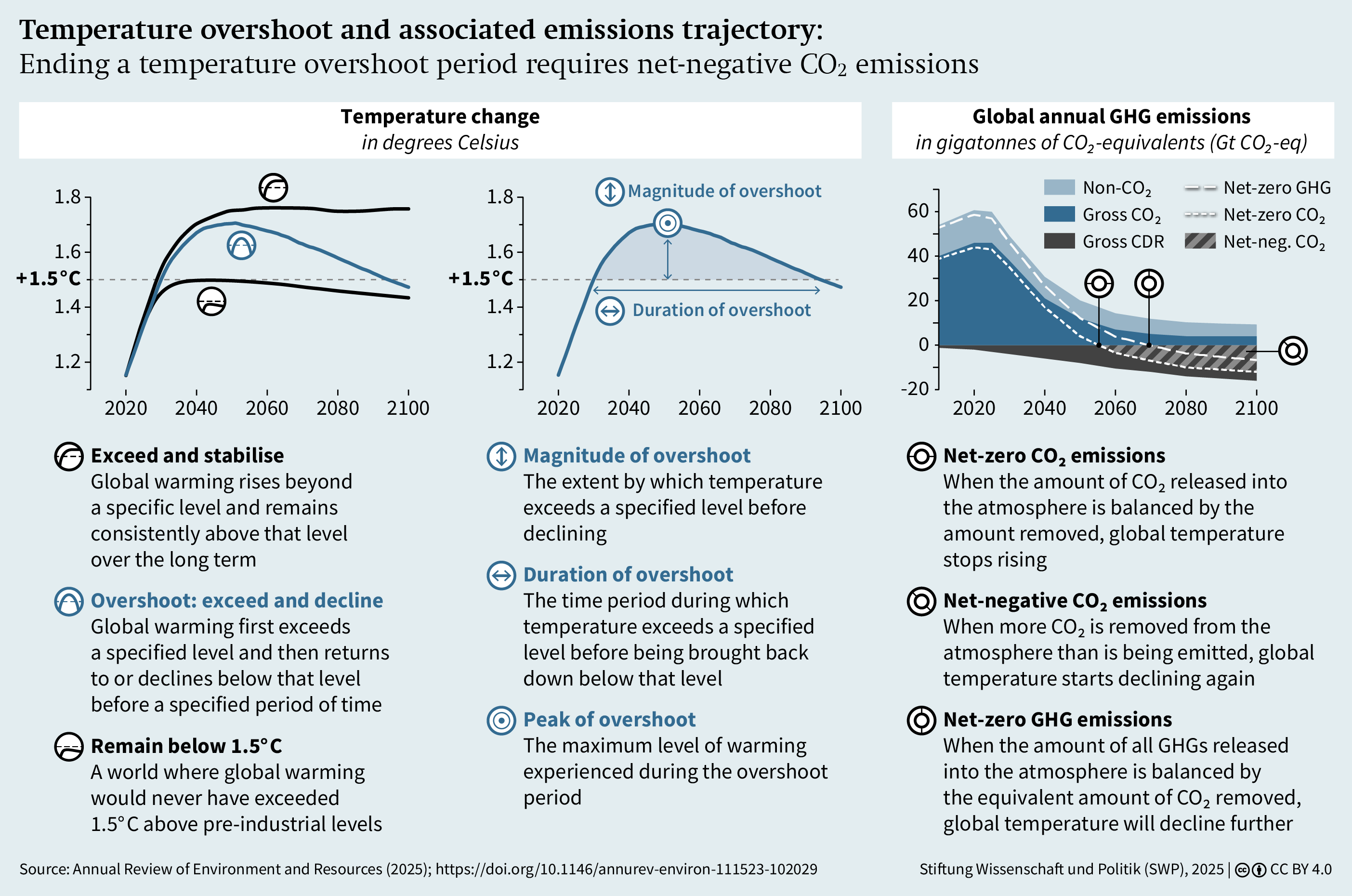
Earth Observations in the Era of Climate Overshoot with Ben Poulter | International Space Science Institute “Rising greenhouse-gas emissions from human activities are causing rapid changes to Earth’s climate. Despite efforts to mitigate emissions to limit warming below 1.5 degrees Celsius, changes in temperature appear to be heading for a temporary overshoot with unknown temperature peak and duration, and impacts to the Earth system. Climate overshoot, i.e., temporarily exceeding a temperature limit, is a relatively new concept, and the associated impacts, mitigation and adaptation needs are an active area of research. Current space-based observing systems to monitor the land, ocean, cryosphere and atmosphere were designed during a phase of relatively stationary climate conditions or with the assumption that climate policies will stabilize temperatures in a fairly linear way. The characteristics of climate overshoot require rethinking and reevaluating satellite mission requirements related to temporal revisit, spatial resolution, spectral range, signal to noise, and overpass time. For example, abrupt permafrost thaw in high-latitudes, greenhouse-gas emissions from warming tropical wetlands, rapid glacier melt, ocean heatwaves and impacts on biogeochemistry, have unique signatures that current observing constellations will need to track for impacts, reversibility and stability. Additionally, an increasing number of climate intervention efforts to avoid or minimize climate overshoot, linked to carbon dioxide removal, methane removal, and solar radiation management, have their own set of specific monitoring requirements. Advances in technology, new partnerships between public, private and commercial organizations, and an expansion of computing power and algorithms have potential to keep pace with expanding observing requirements.”
Unlocking Gigatonne-Scale Carbon Removal with Strategic Tipping Point Frameworks | COP30 | InPlanet - Measurable. Scalable. Certified Credits “Experts from InPlanet, Oxford Net Zero, Newcastle University, and the High-Level Climate Champions explore how socio-ecological-technological tipping point models can accelerate the adoption of Enhanced Rock Weathering (ERW) and other durable carbon removal pathways, using Brazil’s emerging carbon market as a real-world case study.”
Weekly Carbon Removal Updates from 01 December - 07 December 2025 | Carbon Removal Updates BulletinDEADLINESFollow us on:Twitter | Bluesky | LinkedIn | YouTube | Substack | Podcast 1 | Podcast 2
Support us here:Support This Newsletter Share Carbon Removal Updates © 2025 Carbon Removal Updates
548 Market Street PMB 72296, San Francisco, CA 94104
Unsubscribe  
| |
  |
|