*[Enwl-eng] The Scars We Leave Behind

6 views
Skip to first unread message

ecology

unread,
Jul 19, 2025, 4:26:27 PM7/19/25
to "ENWL-uni"
 

Damage from the California Gold Rush still lingers in the High Sierra.

Is this email difficult to read? View in your web browser. >

News of the world environment

 NEWSLETTER | JULY 18, 2025

Like the Journal

Follow us on Bluesky

Daily nature shots

The Scars We Leave Behind

I spent last weak soaking up the beauty of the California High Sierra. I waded into lakes, dove into rivers, hiked to waterfalls, and generally took advantage of my access to the great outdoors. I’ve been to the region many times over the years. And while most of my attention is typically pulled to the natural landscapes there, I can’t help but notice the less natural landmarks as well. This is Gold Country, after all.

Some of these landmarks are obvious. The old mine shafts, dilapidated miners’ cabins, and abandoned rusty equipment that can easily be spotted on hikes. Others blend in a bit more with their surroundings, at least to the unassuming eye: An old hydraulic mine carved out of the hills that is now dotted with trees. A popular swimming spot that is actually an old tailings pond.

These last two, which I hadn’t noticed until my latest trip, got me thinking about the lasting scars we humans leave on the landscape.

Gold Rush era mining peaked in the 1850s. Hydraulic mining was effectively banned in California in the 1880s. Though some mining operations continued for decades longer, much of the damage from the industry was done more than a century ago. Yet the impacts linger. Not only in the carved-out mountains and old infrastructure — physical reminders of the rush for gold — but also in the displacement of Indigenous peoples, the public safety threat posed by abandoned mines, and the toxins that were left behind in the soil and waters.

The scale of the damage caused by the California Gold Rush is nothing compared to that caused by global mineral mining and fossil fuel extraction today. I hold out hope that, 150 years from now, we will be treading more lightly. And that the scars from today’s extraction, whatever form they take, will serve as poignant reminders of another era ended — and an extractive mindset that we’ve left behind.

Zoe Loftus-Farren
Managing Editor, Earth Island Journal

Photo by Don Graham

Let’s grow the movement! Share this email with an environmentally conscious friend or colleague (or copy this easy signup link).

THE LATEST

Prickly Art

Thorns, bark, and brambles collected from the arid scrublands outside the Indian city of Bengaluru are the raw materials of Sandilya Theuerkauf’s unique sculptural-relief works, which celebrate “the moment of awareness and communion with nature.” 

READ MORE

Move Past the Apocalypse Trope

In place of uncovering the root causes of climate change and the MAGA movement head-on, news reports during the Trump 1.0 era opted for an end-of-the-world angle that obscured the threats of the here and now. The national press needs to do a better job this time round, writes media analyst Hanna E. Morris.

READ MORE

Cuts Add to Climate Chaos

The deadly Texas floods could signal a new norm in the US, as the Trump administration dismantles crucial federal agencies that help states prepare for and respond to extreme weather, experts warn.

READ MORE
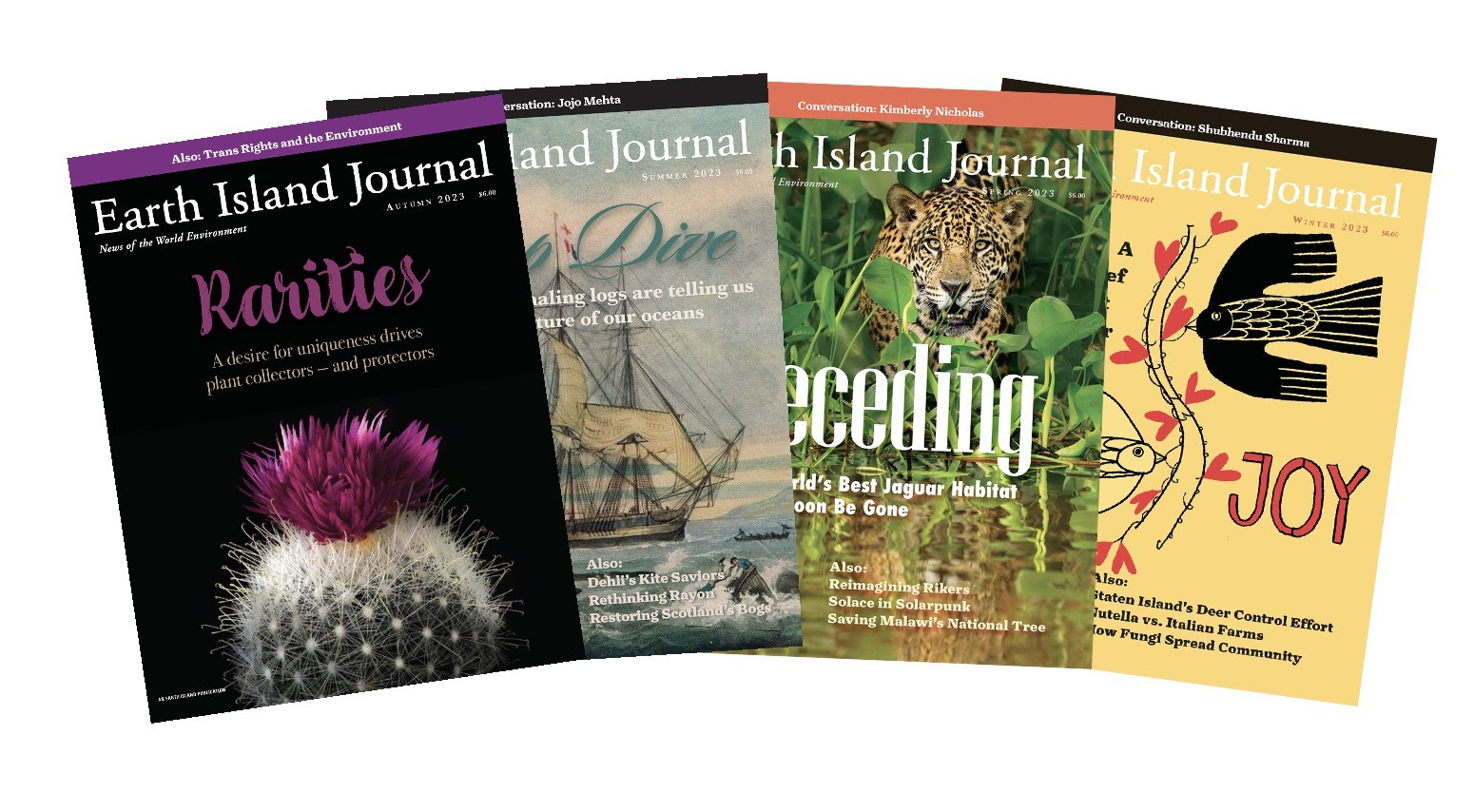
Earth Island Journal print magazines

People-Powered Journalism

Because of generous reader donations, Earth Island Journal can say things that corporate media won’t say.

Reader support gives us the independence to amplify voices and perspectives that strengthen communities, especially communities that don’t have access to corporate media.

Your support is essential to our long-term success. And with your help, we can reshape the media landscape. Won't you join us today?

Latest Podcast

On this episode of Terra Verde, host and producer Hanna Wilton speaks with Tracy Quinn of Heal the Bay and marine ecologist Dr. Zoë Kitchel about the unprecedented amount of toxic ash and debris that went into the ocean during and after the January fires in Los Angeles and the implications for coastal ecosystems and marine life. ▶️ Listen now

ICYMI

Wild Frenemies
Researchers at Cocha Cashu Biological Station in southeastern Peru set up a camera trap to study bird behavior and instead filmed an unexpected predator-prey couple wandering along the trail. Turns out, this odd pairing had been recorded before. (New York Times, gift link)

Corralling Trash
Kentucky’s “River Cowboy” has spent decades pulling 3,000 to 4,000 discarded tires from state’s waterways. Now this is a kind of swashbuckling we totally appreciate! (The Guardian)

Did a thoughtful friend forward you our newsletter?
What a great friend! Sign up here.

Share Follow
Tweet Follow
Subscribe Subscribe

Thanks for supporting Earth Island Journal, the independent media arm of the nonprofit Earth Island Institute. Reader donations to our Green Journalism Fund helps to cover the costs of our in-depth investigative reporting on environmental issues.

You are receiving this email newsletter because you signed up on our website.
Make sure we land in your primary inbox: Add Earth Island Journal to your address book.

Our mailing address is:
Earth Island Journal
2150 Allston Way Ste 460
Berkeley, CA 94704-1375

Copyright © 2025 Earth Island Journal, All rights reserved.

supporter
 
From: Editors, Earth Island Journal <edi...@earthisland.org>
Date: сб, 19 июл. 2025 г. в 03:45
Subject: The Scars We Leave Behind

------------- *  ENWL  * ------------
Ecological North West Line * St. Petersburg, Russia
Independent Environmental Net Service
Russian: ENWL (North West), ENWL-inf (FSU), ENWL-misc (any topics)
English: ENWL-eng (world information)
Send information to en...@enw.net.ru
Subscription,Moderator: en...@enw.net.ru
Archive: http://groups.google.com/group/enwl/
New digests see on https://ecodelo.org
 (C) Please refer to exclusive articles of ENWL
-------------------------------------
Reply all
Reply to author
Forward
0 new messages