|
The
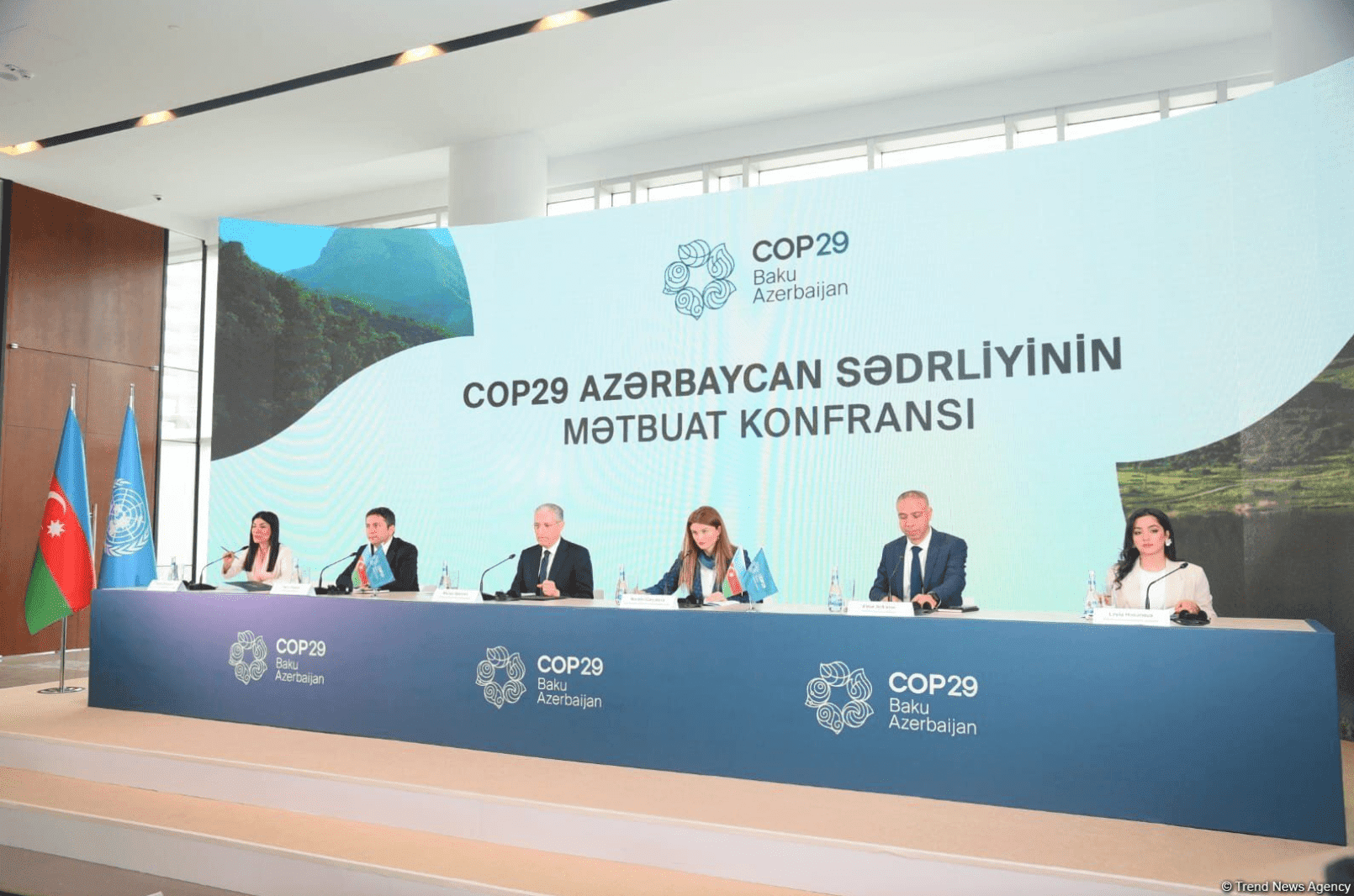
29th Conference of the Parties (COP29) to the UN
Framework Convention on Climate Change held its
inaugural press conference on April 15,
showcasing key figures such as COP29
President-Designate Mukhtar Babayev and UN
Climate Change High-Level Champion Nigar
Arpadarai. COP29 Chief Executive Officer Elnur
Soltanov highlighted the conference's focus on
accelerating the transition to green energy,
while various officials emphasized the
significance of the upcoming decisions and
Azerbaijan's commitment to climate action, as
the country prepares to host COP29 in
November.
In
Uzbekistan, a tradition of tying knots with
ribbons at "holy" places is evolving into an
environmental concern, as people increasingly
use non-biodegradable materials like napkins and
plastic bags, causing pollution in public
recreation areas such as the Botanical Garden in
Tashkent. The tradition, believed to bring
happiness, has historical roots but has expanded
due to fabricated stories and superstitions,
despite warnings and efforts by authorities to
prevent littering. Environmentalists warn that
such practices harm ecosystems, with tight knots
hindering plant growth and deterring birds,
while efforts to clean up or prevent further
littering face challenges of inadequate
personnel and widespread adoption of the
tradition across various regions.
Residents
of southern Tajikistan suffer from black smoke
and stinking emissions from lime kilns that
operate around the clock. Nine such kilns are
located in one jamoat, and the lime from them is
sold throughout the country, with waste from the
production dumped in the surrounding areas.
Despite the harmful effects on health and the
environment, local residents do not complain
about them, as many of them depend on this
production for their income.
Afghanistan's
lithium potential has drawn significant
attention, with Chinese investment in the
country's mineral resources shaping its future.
The Taliban government has revealed plans for
significant lithium extraction, potentially
bringing economic revival through job creation.
However, Afghanistan faces numerous challenges,
including US sanctions, logistical hurdles, and
security concerns, which must be addressed for
successful integration into the global lithium
market. The nation stands at a critical
juncture, where strategic decisions will
determine its trajectory as a key player in the
lithium industry.
Georgia,
Armenia, and Azerbaijan are investing heavily in
international trade corridors, but this
development is expected to worsen the already
serious air pollution problem in the South
Caucasus, fueled by a lack of environmental
regulation and the rapid increase in vehicles
since the collapse of the Soviet Union. Despite
recent efforts to improve air quality, including
measures such as fines for excessive car
emissions and promoting electric vehicles, new
infrastructure projects and increased trade
traffic pose challenges to containing pollution
levels. Stricter regulations and the adoption of
green technologies, such as electric vehicles
and sustainable building materials, are crucial
for maintaining progress in combating pollution
in the region.
The
Tau-Ken Samruk National Mining Company, backed
by the European Bank for Reconstruction and
Development (EBRD), is exploring salt lakes near
the Aral Sea for lithium deposits. The project
aims to assess whether lithium can be extracted
from the region's saltwater, similar to methods
used in South America, particularly in Chile, a
major lithium producer. Initial samples suggest
the presence of lithium, but further research is
needed to determine if extraction on an
industrial scale is viable. The EBRD has
allocated a grant of 400,000 euros to support
the project, which is expected to last two
years.
Rosrybolovstvo
has begun discussing the total allowable catch
of aquatic bioresources for 2025, including a
proposal to catch marine mammals in the Far
East. The proposal includes quotas for catching
killer whales, beluga whales and dolphins,
raising concerns among environmentalists about
their use in the entertainment industry. Public
discussions will continue until April 24, and to
participate, people should fill out a
questionnaire and send it to the addresses
listed.
|