|
Tajikistan
is facing a crisis in its power supply system,
exacerbated by recent cold weather, causing
widespread outages and hardships for the
population. Experts attribute the problem to a
combination of factors including outdated
infrastructure from the Soviet era, excessive
electricity demand, and mismanagement within the
energy sector. Despite ongoing efforts to
modernize the system, including financial
support from international organizations,
Tajikistan continues to struggle with systemic
issues that lead to recurring power failures,
impacting the daily lives of its
citizens.
Women
have become leading lights in the field of
environmental activism across Central Asia,
despite facing public resistance and gender
discrimination – and the fact that there are
almost no women political decision-makers across
the region. We are proud to say that among these
women there are two notable figures who stand
out as Board members of the CAN
EECCA.
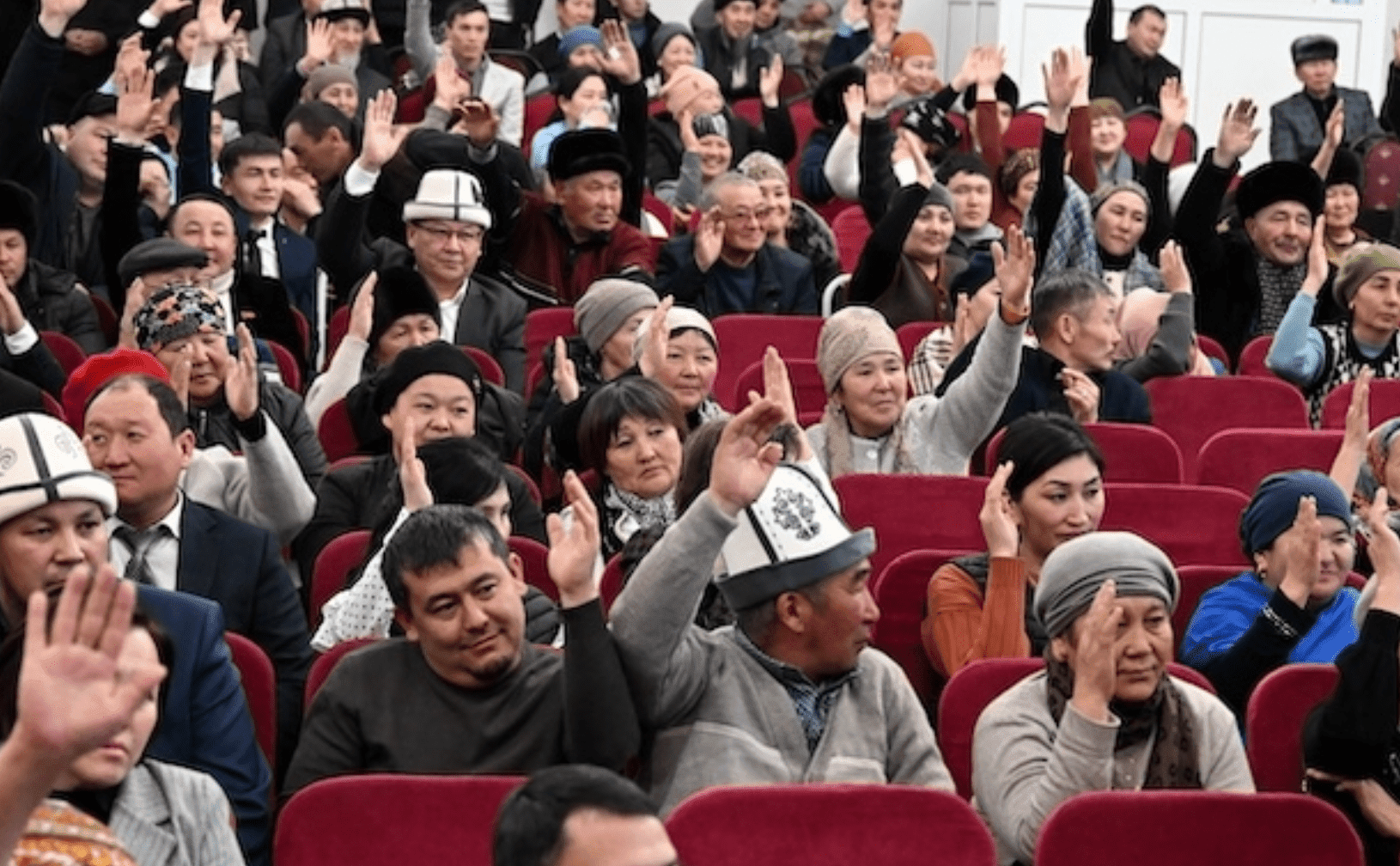
Kyrgyzstan: Officials
brush aside uranium anxieties over Kyzyl-Ompol
field
Plans by the Kyrgyzstan
government to exploit uranium and other rare
earth metals near Lake Issyk-Kul have sparked
concerns among locals, although dissent is
suppressed due to fear of reprisals. President
Sadyr Japarov attempted to allay fears during a
meeting in Balykchy, promising job creation and
emphasizing the extraction of titanomagnetite
rather than uranium. Despite assurances,
skepticism remains, with some recalling past
environmental disasters and government
scientists warning of potential contamination
risks to the lake and surrounding
areas.
On
March 1, Baku hosted the 10th meeting of the
Southern Gas Corridor Advisory Council and the
2nd meeting on “green” energy, where the issues
of increasing natural gas supplies from the
Caspian Sea region to Europe were discussed.
Azerbaijan is actively expanding the geography
of natural gas supplies to the European
continent, and its supplies already go to eight
countries, of which six are in Europe. Moldova
has also expressed interest in possible
cooperation with Baku on a submarine cable
project to transmit electricity across the Black
Sea.
A
study on the impacts of climate change on women
in Georgia, published in late 2023, emphasizes
the importance of understanding the role of
women in adapting to climate change. The work,
conducted by Mariam Devidze, revealed that
different groups of women face different climate
risks and therefore require a customized
approach in developing adaptation strategies.
The study covered both urban and rural areas of
Georgia, involving women of different age groups
and professions, which provided a better
understanding of the impact of climate change on
women's lives in the country.
Uzbekistan
and Kazakhstan have ambitious renewable energy
goals for 2030, with plans to significantly
increase wind and solar power capacity. ACWA
Power, a green energy company based in Riyadh,
has been at the forefront of wind power projects
in the region, recently securing contracts for
major wind farms in both countries. In
Uzbekistan, ACWA Power is set to construct two
wind power plants, totaling 800 megawatts, as
part of a $1.1 billion investment, while in
Kazakhstan, the company will implement a
1-gigawatt wind power project in the Jetisu
region, aligning with the countries' commitments
to increase renewable energy
production.
The
Ministry of Energy organized public
consultations on March 5, 2024, regarding a
draft law aimed at fostering innovation in the
energy sector through the establishment of
innovative testing spaces. This initiative seeks
to stimulate innovative solutions in energy
production, storage, distribution, and
consumption by providing companies with
exemptions from certain regulatory provisions
for a period of up to seven years. Supported by
UNDP Moldova and funded by various countries,
including Denmark and Sweden, the draft law aims
to accelerate the adoption of new technologies
to meet decarbonization targets and address
emerging challenges in the energy
system.
Kazakhstan
is emerging as a significant global player in
the lithium market, with substantial reserves
discovered in eastern regions, potentially worth
billions of dollars. This development aligns
with the growing demand for lithium in
power-storage technology, highlighted by
European Commission officials as essential for
green and digital technology transitions.
Kazakhstan's efforts to disclose and attract
investment in lithium mining signify a departure
from previous secrecy, with interest from both
European and Chinese investors in tapping into
the country's lithium resources.
Starting
from the 2024-2025 school year, students will
receive education on energy and climate through
modules integrated into subjects like Physics,
Geography, and Personal Development. The
curriculum aims to equip students with both
theoretical knowledge and practical skills
related to sustainable energy use and
environmental conservation. The initiative,
endorsed by government officials including
Cristina Pereteatcu and Valentina Olaru,
emphasizes the importance of educating future
generations to address energy challenges and
promote sustainable lifestyles, offering
teachers training and access to teaching
resources to support the implementation of the
curriculum.
|