UN
Global Climate Action
8
March
2023 | |
High-Level Champions'
Newsletter | |
H.E. Razan Al Mubarak, UN Climate Change
High-Level Champion for COP 28 recently
participated at the One
Forest Summit in Gabon.
Speaking at the Heads of State
Summit in the presence of Presidents Ali Bongo
Ondimba of Gabon and Emmanuel Macron of France,
Ms. Al Mubarak laid out the potential of forests
as Nature-based Solutions to climate change and
biodiversity loss saying; “We recognize the
irreplaceable value of forests for nature, for
people, for economy, for common humanity, but
also as a prime solution to address climate
change. We also recognize that there is no Paris
Agreement without protecting, without restoring,
without sustaining and managing nature.”
The
report states biodiversity-positive
carbon credits and nature certificates could
help meet the goals of both the Paris
Climate Agreement and Kunming-Montreal Global
Biodiversity Framework. It also has a
number of recommendations for the private
sector, investors, and others in the marketplace
including the need to generate and sustain
demand from individual buyers and private
investors, and to collaborate on methodologies,
certification standards and metrics.
In addition, Ms. Al Mubarak delivered the
opening address at an event organised by the
High-Level Champions and the Global Mangrove
Alliance on The
Mangrove Breakthrough. Launched
at COP 27 as part of the Sharm el Sheikh
Adaptation Agenda, the Mangrove Breakthrough
aims to secure the future of 15 million hectares
of mangroves globally by 2030.
| |
At a
time
when climate change, marine pollution and
devastation of marine life have reached
increasingly alarming levels, the recent
Our
Ocean Conference in Panama brought
together governments, businesses, and civil
society to urge action on policies to protect
our ocean’s health.
Since
its inception in 2014, participants in
over 70 countries have announced commitments
worth more than USD 108 billion and protected
more than five million square miles of ocean.
H.E. Razan
Al Mubarak delivered a virtual keynote speech
for the event - Future
of Reefs: during which she underscored the
urgent need to protect and restore coral reefs
given the ecosystem is critical to the
resilience of over one billion people
globally.
In addition, Ms. Al Mubarak highlighted the
potential of offshore wind to provide more than
enough energy to power the world four times over
in a virtual address to the session;
‘Gigawatt
Dreams to Reality: Realizing the Global
Potential of Offshore Wind to Avert a Climate
Crisis.’
During the
Our Ocean Conference, the High-Level Champions
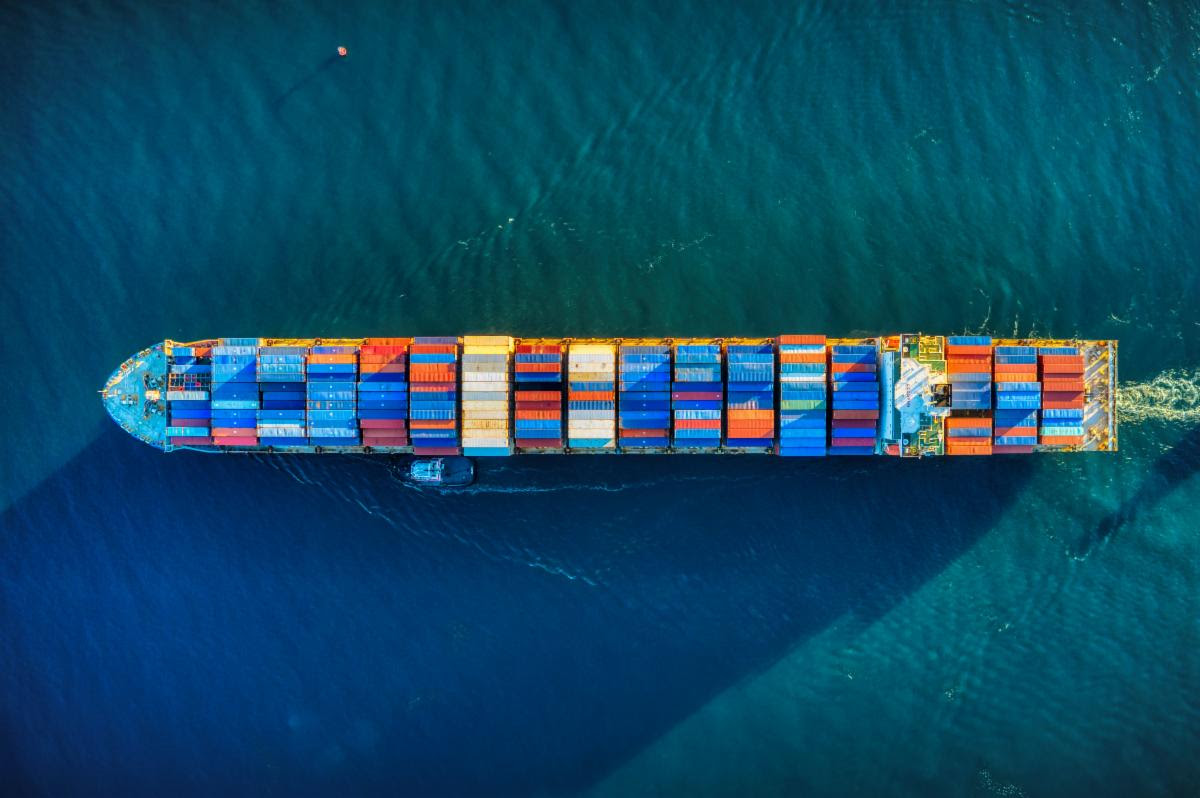
co-hosted a session on Decarbonizing shipping: A
Pathway to Achieve the Paris Climate Goals and
Promote Sustainable Blue and Green Economies.
The session highlighted how ambitious
targets and strategies to decarbonize shipping
can provide economic opportunities such as green
fuel projects or new port infrastructure in
regions like Latin America and the Caribbean
with the dual benefit of aligning with the Paris
Agreement goals and driving investment in
developing
countries. | |
The shipping sector: Racing to
Zero | |
Call to
action: Committing to science-based
targets.
Launched
during
the IMO Intersessional
Working Group on Reduction of GHG emissions from
Ships in December 2022, the Science Based Target Setting
Guidance for the Maritime Transport Sector
is the world’s first framework for companies in
the maritime sector to set near- and long-term
science-based targets in line with 1.5°C.
The SBTi Maritime Guidance gives companies
the opportunity to cut emissions at the pace
required to keep the 1.5°C goal within
reach.
Its website invites organisations within
the maritime sector to step up climate
action by setting
science-based targets and commitments.
Maersk:
Charting a course to a net zero
future
Listen to an interview
with Concepcion Boo Arias,
Maersk Director of Global
Partnerships & ESG, Public & Regulatory
Affairs in which she sets out the challenges and
opportunities for the sector in 2023.
| |
Making
Carbon Markets Work For
Africa | |
At COP 27, African countries
launched the Africa Carbon Markets Initiative (ACMI) to produce 300 million
carbon credits annually. The initiative seeks to
unlock USD 6 billion in revenue and create 30
million jobs by 2030.
To follow up on
this work and build on the momentum of carbon
markets in Africa, the UN Economic Commission
for Africa (UNECA) and Afreximbank
convened the 2023
African Business Forum under the theme
“Making
Carbon Markets Work for Africa” in Addis Ababa,
Ethiopia.
The one-day forum brought together
governments, private investors and civil society
to facilitate investments in bankable projects
that deliver meaningful climate action as well
as generate high integrity carbon credits for
Africa to accelerate investments and financing
for sustainable development.
Speaking at the African Carbon
Markets: A New Era of Growth session of the
forum, Dr. Mahmoud Mohieldin, UN Climate Change
High-Level Champion for COP 27 stressed that the
success of ACMI would put the continent on a
pathway to a net zero resilient future.
He said that carbon markets are an
innovative and sustainable solution to the
climate and development finance crisis in Africa
with analysis by UNECA showing
that a global carbon price of USD 50/tonne can
incentivise Africa to mobilise up to USD 30
billion per annum.
In addition, Dr. Mohiedlin stressed
the need to reduce dependence on debt to finance
climate action as borrowing instruments
represent over 60% of climate financing
worldwide and more than 80% of the tools for
financing climate action in developing
countries.
He also stated that instead of
separating climate action and development, a
more holistic approach is needed to tackling
climate change which integrates into all
Sustainable Development Goals
(SDGs). | |
●
UN
delegates have reached an historic agreement on
protecting marine biodiversity in international
waters. The agreement reached by delegates of
the Intergovernmental Conference on Marine
Biodiversity of Areas Beyond National
Jurisdiction (BBNJ) is the culmination
of UN-facilitated talks that began in
2004. Already being referred to as the
‘High Seas Treaty’, the legal framework would
place 30
per cent of the world’s oceans into protected
areas, put more money into marine conservation,
and covers access to and use of marine genetic
resources.
● More than 100
countries have backed Vanuatu’s attempt to seek
accountability for the climate crisis at the
world’s top court. Of the 193 United Nations
member states, 105 have now supported the
Pacific Island’s call to request that the
International Court of Justice (ICJ) gives an
advisory opinion on states’ legal obligation for
climate action and the consequences of causing
harm. Nations including countries from Europe,
Australia, Canada, Vietnam, Colombia and
Bangladesh, are co-sponsoring the draft
resolution, which must be put
to the whole UN to approve.
● At the UN Security
Council, Secretary-General António
Guterres
called on
countries to urgently reduce emissions to
"address the root cause of rising seas, the
climate crisis". Additionally, he called on
them to provide climate finance to developing
countries to help them adapt and build
resilience against this threat. Addressing the
52nd session of the UN
Human Rights Council in Geneva, he also
underlined the link between
human rights and an escalating climate crisis.
“Unless humanity kicks its addiction to fossil
fuels now, critical climate tipping points will
crush the human rights of generations to come“,
Guterres said.
● In a message
delivered at the Second Zero Carbon Cities
International Forum that was held in Tokyo,
Japan early March 2023, the UN Climate Change
Executive Secretary Simon Stiell underlined how cities are
where the fight against climate change will be
won or lost and that the Global Stocktake must
be more than “yet another synthesis report. It
must be the tool we use to get on course”, he
said.
● The
Middle East and North Africa (MENA) region is
one of the most vulnerable to physical climate
change impacts, putting human activities and
natural systems at high risk according to a report by the United Nations
Environment Programme, Finance
Initiative. It states that immediate action
to accelerate adaptation finance is critical to
address the climate adaptation gap and lessen or
prevent potential climate change risks. The
report also addresses the risks of climate
change in the MENA region, the resulting
economic impacts, and how banks are currently
responding to climate risks.The results of the
study include recommendations to scale up
finance for adaptation and resilience in the
region based on desk-based research, a survey of
regional banks, and interviews with a sample of
commercial and development finance institutions.
● A
new study has shown that foods that come from
the ocean or freshwater, known as "blue foods,"
have the potential to address several important
global issues, including nutritional deficits,
disease, and climate change. The Blue
Food Assessment is
a worldwide collaboration of more than 100
scientists whose focus is on using blue foods to
evaluate and develop healthy, equitable and
sustainable food systems.
● Indonesia
has launched the first phase of
mandatory carbon trading for coal power plants,
part of efforts by Southeast Asia's biggest
economy to boost renewable energy and achieve
net zero emissions by 2060. Coal makes up more
than half of Indonesia's power generation. The
first stage of a carbon trading mechanism will
cover 99 power plants with a total installed
capacity of 33.6 gigawatt directly connected to
power grids owned by state utility Perusahaan
Listrik Negara (PLN). Last year
Indonesia set a target for reducing carbon
emission by 31.89% on its own, or 43.2% with
international support, by 2030.That compared to
its 2015 Paris Agreement pledge to cut emissions
by 29% or 41% with international help.
● The
recent technical analysis of biennial update
reports (BURs) undertaken by the UNFCCC
secretariat has concluded that four developing
countries - Burundi, Pakistan, Vanuatu, and
Mexico are making considerable efforts to cut
greenhouse gas emissions. They have been
demonstrating that effective climate action is
possible and can be further scaled up with
adequate financial, technical, and
capacity-building support.
● Under
the Paris Agreement, all countries need to
report on how they are pulling their weight in
terms of climate action. This is essential for
global accountability and building trust. A wave
of new reports is expected by the end of 2024.
124 lead review experts from 59 countries
gathered in Bonn last month to prepare and
discuss how countries can step up the
transparency of their climate actions.
● The key findings of
a new International Renewable Energy Agency and
Climate Policy Initiative
report
stated that there were globally record levels of
investment in clean energy last year - up 19%
compared to 2021 levels. But investments
particularly in developing countries must
significantly rise to avoid the most dangerous
impacts of climate change.
● A new report by Climate Central
shows how US capacity to generate renewable
energy shot up last year. National wind and
solar capacity grew 16% compared to 2021. All
told, renewables generated enough electricity to
power 64m American households. The report comes
as the US administration starts to make billions
of dollars available for renewable energy projects.
The
administration has committed to decarbonizing
the grid completely by 2030 and getting the US
to net zero emissions by mid-century and
according to Jennifer Brady, a senior data
analyst at Climate Central; “We are moving
closer to the goals we need to reach in order to
hit net zero.”
● New
data from the International Energy Agency (IEA)
shows
that one in every seven cars sold globally is
now an EV. EVs' share of sales has risen from
one-in-70 just five years ago. At the same time,
conventional car sales have fallen by a quarter.
In addition, according to another
recent IEA
report, around 70% of
methane emissions from fossil fuel production
can be reduced with cheap and readily available
technologies.
| |
Keeping up with the
Champions | |
● At
the Women’s Pavilion at Expo City in Dubai H.E
Razan Al Mubarak shared her journey and
leadership on protecting the environment
and highlighted the role of women in the
field of climate action and nature conservation.
Watch a highlight video here.
● Dr.
Mohieldin participated in a closed-door
roundtable jointly hosted by Chatham House and
Paris
Peace Forum looking ahead to the Summit for
a New Financing Pact hosted by French
President Emmanuel Macron this June.
During the meeting, Dr. Mohieldin underlined the
detrimental effect sovereign debt distress
currently has on climate action and called for
urgent reform to the global financial
architecture to mobilise funds using innovative
means of financing such as debt-for-climate
swaps. | |
● 35th
Meeting of the GCF Board, 13-16 March
● IADB
Annual meeting 16-19 March
● International
Day of Forests 2023, 21 March
| |
| | | | |