|
Climate Action
Network
Eastern Europe, Caucasus
and Central Asia
Digest
of news on climate
change, energy
issues
| | | |
|
Someone
forwarded this digest to you?
You can
subscribe using this
link
| |
| |
|
Activists
from the Eastern Europe, Caucasus and Central
Asia region are invited to participate in the
Climate Activism Story Contest. To participate,
share your story on social media with the
hashtag #WorldWeWantEECCA and tag the page
@caneecca. The winner will receive an Ebook and
the other two places will receive solar
powerbanks.
Central Asia faces a water
crisis marked by inefficient usage and
mismanagement, with only half of the water
designated for agriculture being effectively
utilized due to poor infrastructure and wasteful
practices. This has dire consequences, as
millions lack access to safe water, and the
region's population is set to grow, exacerbating
the strain on water resources. Urgent action,
including establishing a consortium for water
and energy management, involving Afghanistan in
regional water discussions, and adopting modern
water usage practices, is necessary to avert
economic and humanitarian crises projected by
experts.
Ukraine
plans to expand the Khmelnitsky nuclear power
plant by adding four new reactors, starting work
in 2024. This is aimed at compensating for the
loss of power capacity due to hostilities with
Russia. However, there are significant
uncertainties and risks related to the safety of
building new power units under war conditions,
which raises serious concerns among
experts.
European
Environment Commissioner Virginijus Sinkevičius
visited Ukraine to discuss the Environmental
Compact, which addresses environmental
consequences of the war, with President
Volodymyr Zelenskyy. This Compact focuses on
assessing damages, facilitating green recovery,
and ensuring legal accountability for
environmental war crimes. Sinkevičius also
engaged in bilateral discussions on Ukraine's
environmental challenges and opportunities and
planned to visit areas including Chernobyl and
its surrounding forests to assess the damage
firsthand.
The
2024 Energy Community Summer School is accepting
applications until March 31st, offering
postgraduate students, researchers, and young
professionals the chance to enhance their
knowledge of the energy transition. Taking place
from July 20th to 27th at the Technical
University Moldova in Chisinau, Moldova, the
program covers various energy-related topics and
provides valuable networking opportunities.
Organized by the Energy Community Secretariat in
collaboration with several partners, the Summer
School aims to cultivate a diverse learning
environment and shape the future of the energy
sector.
Participation
in the program is free for citizens of Armenia,
Azerbaijan, Georgia, Moldova and
Ukraine.
German
companies Knauf Gruppe, GP Günter Papenburg AG,
and Roxtec have formed a consortium, along with
the German Institute for Technologies and
Economics of Lithium (ITEL), to explore and
produce lithium in Kazakhstan. This initiative
comes after HMS Bergbau AG, another German
company, agreed to invest $200 million in
lithium exploration and $500 million in building
a mining complex in East Kazakhstan in June
2023. President Kassym-Jomart Tokayev's
directive to intensify exploration and
development efforts in Kazakhstan's six
potential lithium fields underscores the
country's ambition to tap into rare metals
crucial for high-tech products, despite
challenges such as low profitability and limited
domestic demand for lithium.
| | | |
|
Communities
from South Africa, Nigeria, Mozambique, and
Uganda came together in May 2023 to testify
against Shell and TotalEnergies at the People’s
Tribunal, demanding reparations for health
crises caused by extractive projects. Their
voices highlighted oppression, displacement, and
environmental devastation, underscoring the
urgent need for climate justice. Organized by
Greenpeace International and the People’s Health
Tribunal, this initiative seeks to amplify
community demands and reshape narratives around
reparative justice beyond conventional legal
systems.
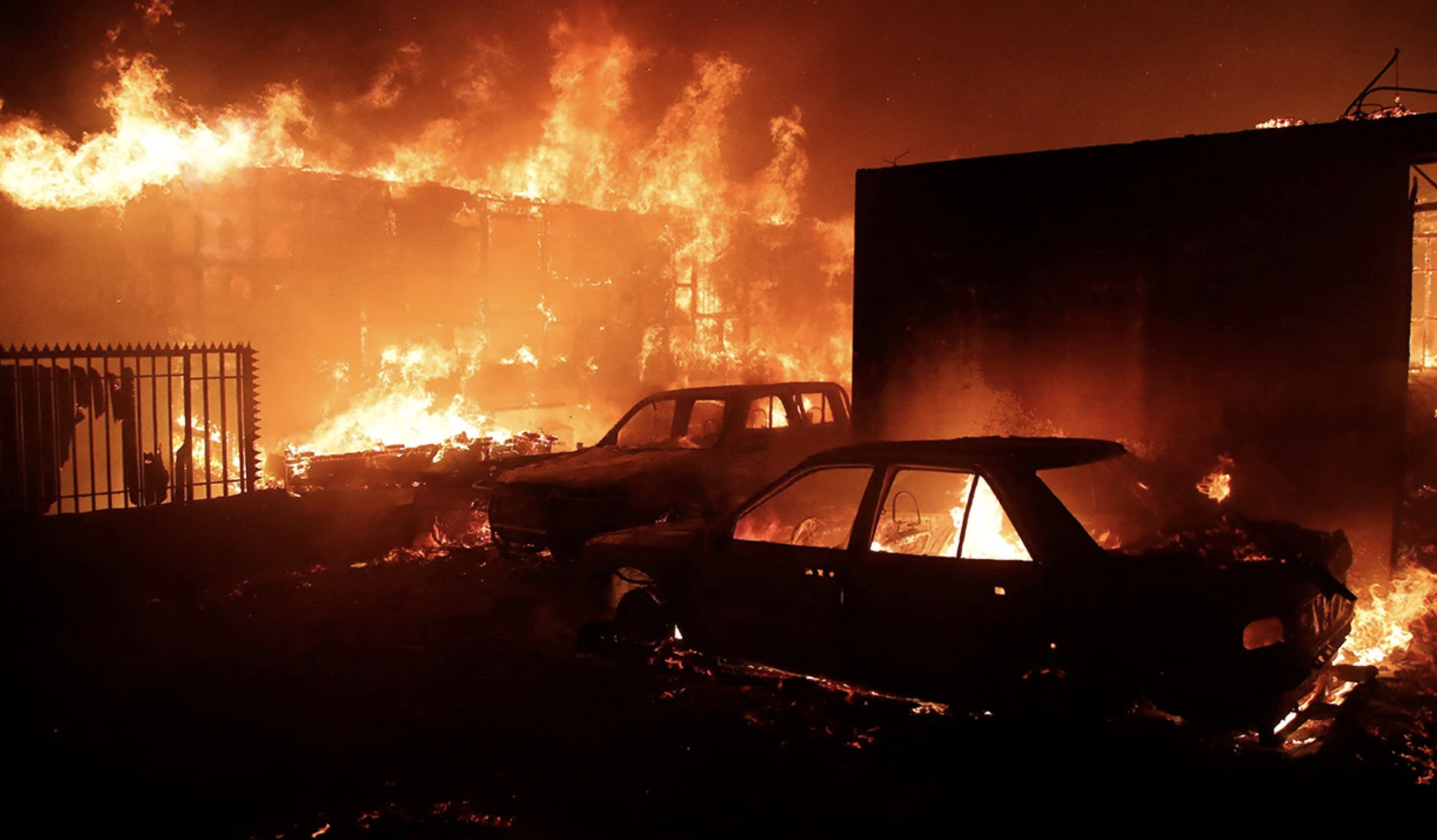
Wildfires
have wreaked havoc across Chile, Colombia, and
Argentina, claiming lives and devastating
landscapes, with climate change exacerbating the
infernos. Human actions, such as planting
non-native trees like eucalyptus, have also
contributed to the intensity of the blazes.
Experts emphasize the urgent need for preventive
measures, including reducing fuel loads and
promoting biodiverse landscapes, to mitigate
future fire risks in Latin America.
A new
report by the Center for Climate Integrity
Research (CCI) calls for plastic producers to be
held accountable for decades of deception
regarding recycling as a solution to plastic
waste management. The report reveals that
despite knowing recycling was not a viable
solution, big oil companies and the plastics
industry promoted it through fraudulent
marketing campaigns. The authors suggest that
this deception could constitute a violation of
consumer protection and environmental laws,
potentially leading to legal action against
these companies.
New
research from the Potsdam Institute for Climate
Impact research (PIK) warns that the Amazon
rainforest is on the brink of a tipping point,
with up to 47% of its area threatened by rising
temperatures, droughts, deforestation, and fires
by 2050. Already, parts of the southeastern
Amazon in Brazil have transitioned from being
carbon sinks to carbon sources due to human
pressure, indicating an unsustainable situation.
If critical thresholds like mean annual rainfall
drop below certain levels, the rainforest could
undergo abrupt transitions to Savanna-like
vegetation, with devastating consequences for
global climate systems and regional
ecosystems.
Ghana
is grappling with the detrimental impacts of
imported second-hand clothes, primarily from
Western countries, which are choking water
bodies, toxifying land, and overwhelming local
markets. Despite their historical importance to
Ghana's economy, the influx of fast fashion has
inundated markets like Kantamanto with
poor-quality garments, totaling around 152,600
tonnes annually. Greenpeace Africa and
Greenpeace Germany collaborated on a research
trip to document the situation, aiming to
intervene by returning a fraction of these
clothes to Europe and highlighting the
environmental and social costs of fashion
industry overconsumption.
Gerard
McCourt, a fisherman from Lough Neagh, Northern
Ireland, faces a precarious fishing season due
to dwindling eel numbers and declining water
quality in the lake. With a family legacy of
fishing spanning six generations, McCourt's
livelihood is at stake, as he struggles to cope
with last year's devastating season and
uncertain prospects for the future. The decline
in eel populations, compounded by environmental
degradation, threatens not only the local
ecosystem but also the economic viability of
commercial fishing in the area, casting a shadow
over the future of McCourt and his fellow
fishermen.
| |
| |
|
This
email has been sent to you, because you are a
subscriber of CANEECCA
| | | | |
Sent: Monday, February 19,
2024 4:00 PM
Subject: 🌏CAN EECCA
Newsletter: Story contest by CAN EECCA, farce of plastic industry and
lithium in Kazakhstan
|