WHO warns of global epidemic risk

Pastor Dale Morgan
WHO warns of global epidemic risk
Sharing data is crucial to curb viruses
like bird flu, the WHO says
|
With about 2.1 billion airline passengers flying each year, there is a high risk of another major epidemic such as Aids, Sars or Ebola fever.
The WHO urges increased efforts to combat disease outbreaks, and sharing of virus data to help develop vaccines.
Without this, it says, there could be devastating impacts on the global economy and international security.
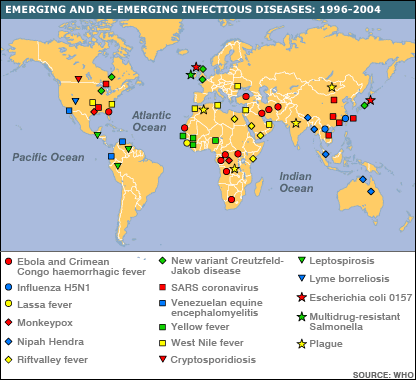
In the report, A Safer Future, the WHO says new diseases are emerging at the "historically unprecedented" rate of one per year.

 International public health security is
both a collective aspiration and a mutual responsibility
International public health security is
both a collective aspiration and a mutual responsibility 
WHO director-general
Since the 1970s, 39 new diseases have developed, and in the last five years alone, the WHO has identified more than 1,100 epidemics including cholera, polio and bird flu.
"It would be extremely naive and complacent to assume that there will not be another disease like Aids, another Ebola, or another Sars, sooner or later," the report says.
Sharing of medical data, skills and technology between rich and poor nations is "one of the most feasible routes" to health security, it says.
Openness needed
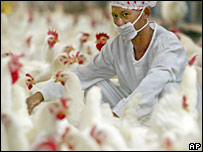
The WHO is embroiled in a dispute with Indonesia over its H5N1 bird flu virus samples.
Jakarta has refused to share its samples with the WHO amid fears that pharmaceutical companies will use them to make vaccines that are too expensive for Indonesia.
China only started sharing its H5N1 samples in June.
The WHO report also urges governments to be open about disease outbreaks, saying nearly half of all outbreak alerts it receives come from the media.
Drug resistance also poses a threat to disease control, the WHO says, blaming misuse of antibiotics and poor medical treatment, particularly in the case of tuberculosis.
In an introduction to the report, WHO Director-General Margaret Chan says co-operation is crucial to combat outbreaks.
"Given today's universal vulnerability to these threats, better security calls for global solidarity," Dr Chan says.
"International public health security is both a collective aspiration and a mutual responsibility."